
TL;DR
- Consider new construction if it fits your budget and location needs; a lower metro price per square foot cannot choose a home for you.
- Zillow reported $184 per square foot for new construction versus $228 for existing homes in the Austin metro in July 2026. Those historical figures compare different groups of sold homes, not identical properties.
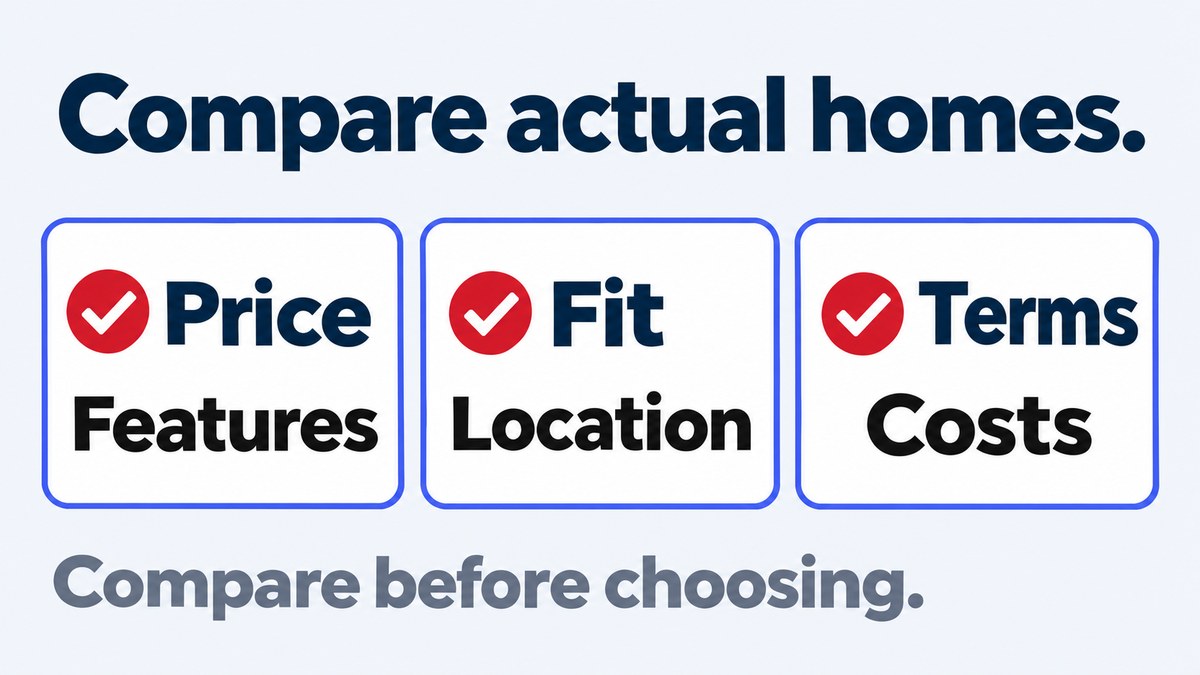
- Compare specific homes’ total price, size, lot, location, included features, financing, taxes, insurance, HOA costs and contract protections before choosing.
If you are narrowing an Austin-area home search, new construction deserves consideration when it meets your needs. Zillow’s July 2026 comparison is a useful reason to check that option. It does not mean a new build available today will cost less or offer better value than an existing home. The practical answer is to broaden your shortlist, then compare the actual homes and the costs you would take on. Zillow’s dated analysis expressly warns that its comparison is not like-for-like.
Two $500,000 homes can reverse the headline
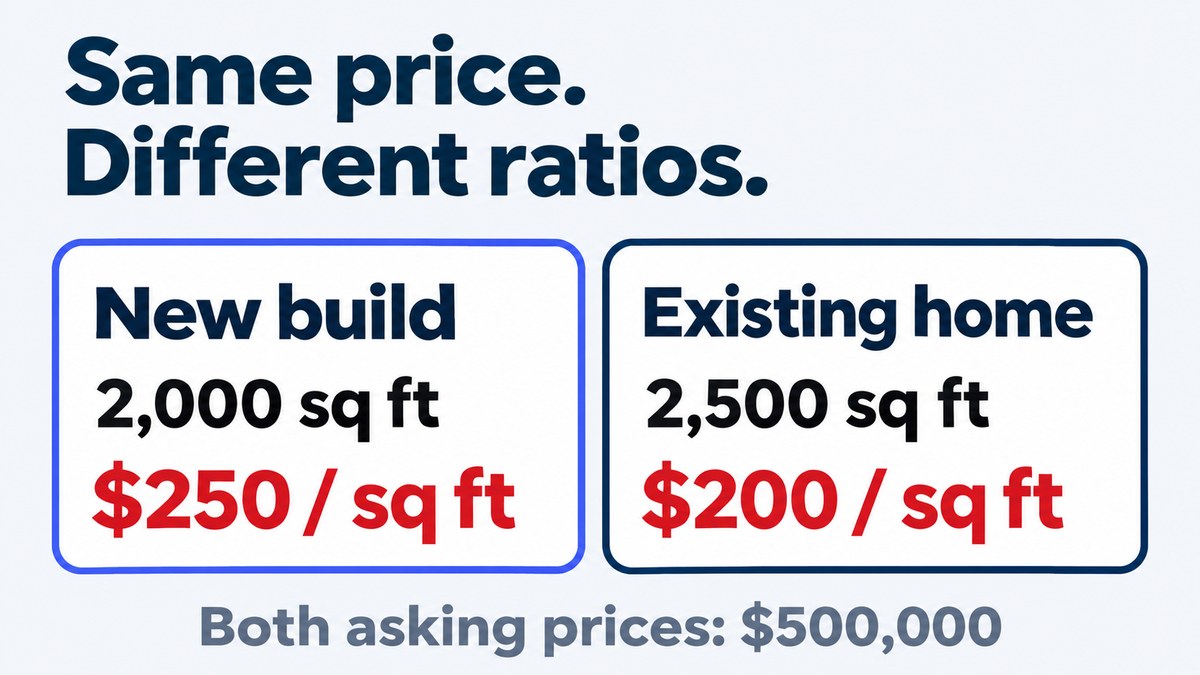
Consider this hypothetical comparison, not a market quote. Both homes are offered at $500,000, with no incentive or financing adjustment included:
| Home | Asking price | Home size | Price per square foot |
|---|---|---|---|
| New build | $500,000 | 2,000 square feet | $250 |
| Existing home | $500,000 | 2,500 square feet | $200 |
Price per square foot is the home’s price divided by its square footage. Here, the existing home has the lower figure because the same asking price buys more interior space. Choosing it does not reduce the purchase price: both still cost $500,000 before closing costs or other adjustments.
If you need the additional space and the existing home’s location, lot and condition work for you, it may be the stronger choice. If the new home’s layout and included features meet your needs better, it may justify the higher price per square foot. That judgment still depends on the particular homes’ incentive and financing terms, taxes, insurance, homeowners association (HOA) costs and contract protections.
The table excludes all those costs and terms. It explains the ratio, not the final cost of owning either home.
What Zillow’s Austin comparison actually measures
In its September 29, 2026 article, Zillow Research reported July 2026 median sale prices per square foot of $184 for newly built homes and $228 for existing homes in the Austin, TX metro area. It described that as a 19.3% new-construction discount. The figures combine single-family homes and condos.
The key limitation is explicit: “Price per square foot reflects homes sold in each segment and is not a like-for-like comparison of identical homes.” These are different groups of properties. The study does not hold each home’s size, lot, location and features constant to isolate the value of buying new.
Use the New homes search to identify possibilities within the same budget and location boundaries you use for existing homes. If none meet those boundaries, the metro statistic is not a reason to compromise them.
Compare the homes you could actually buy
Keep the $500,000 example in mind: the useful question is what each purchase would deliver and require. For each finalist, put these details side by side:
- Price and included features: Record the total price for the specific home, lot and features you want. Separate included items from additions you would have to pay for. A lower starting price is useful only if the resulting home meets your needs within budget.
- Space, lot and location: Check whether the layout solves your needs, whether the outdoor space works, and whether the actual trips you expect to make are acceptable. More square footage has limited value if it does not improve how you would live.
- Condition: Identify the work each home would need and obtain property-specific information about its cost and timing. Do not assign either home a repair allowance based solely on whether it is new or existing.
- Incentives and financing: Obtain written terms for any incentive and the financing offered with it. If an incentive depends on using a particular lender or meeting a deadline, compare the complete offer with an alternative you can actually obtain. A headline credit alone does not establish savings.
- Recurring ownership costs: Compare the property-tax estimate, insurance quote and HOA costs for each address, alongside financing costs. Keep estimates labeled as estimates; the metro price-per-square-foot figure supplies none of these amounts.
- Contract and closing protections: Establish what the proposed contract says about inspections, repairs, deposits, completion timing and delays. Have unclear terms explained before committing. A home that does not fit your required move date or acceptable contract terms may be unsuitable despite its price.
This comparison can favor either home. A new build fits when its specific location, features, total cost and terms work for you. An existing home fits when its space, lot or location offers more useful value and its condition and ownership costs remain manageable. If neither fits, keep searching rather than let the ratio break the tie.
Follow the budget beyond closing
A purchase decision needs to work after the move, too. If a financing offer includes a temporary payment reduction, compare the payment during that period with the payment after it ends. Do not treat the temporary amount as the permanent housing budget. If it is affordable only during the reduction, change the home or financing choice before committing.
For either home, distinguish money needed at closing from recurring expenses and expected work after move-in. Ask what assumptions support the tax estimate, insurance quote and HOA costs, and which amounts could change. The Zillow comparison cannot tell you what those future bills will be.
The same principle applies to timing: if a new home is unfinished, compare its proposed completion terms with your move deadline. If an existing home needs work, compare the expected work schedule with when you need to occupy it. Waiting is sensible when neither option fits your budget or timing without relying on an uncertain outcome.
Frequently asked questions
What does “median sale price per square foot” mean?
The median is the middle value when the sold homes’ price-per-square-foot figures are ordered from lowest to highest. It describes the center of that group; it is not a price every home in the group achieved.
Can I use $184 per square foot to set an offer on a new build?
It is not enough to support an offer. An offer needs evidence about the specific property and relevant comparable sales, plus the terms of the proposed purchase. Multiplying a desired home size by the historical metro figure would not account for its lot, location, features or current circumstances.
Sources
- Zillow Research: In One-Third of Major Markets, New Homes Cost Less Per Square Foot Than Existing Homes — published September 29, 2026; Austin metro figures cover July 2026; source checked November 23, 2026.
Recommended reading
- Austin Builder Incentives vs. Resale Homes: Which Deal Is Actually Better?
- Buying an Austin-Area New Build? Verify the Property-Tax Estimate Before Closing
Comparing a new build with an existing Austin-area home? Contact Vladimir Baibus · ATXCasa, LPT Realty with the homes you are considering and your budget and move deadline. I can help you compare their price, fit and purchase terms and identify the property-specific cost questions to resolve before choosing.