
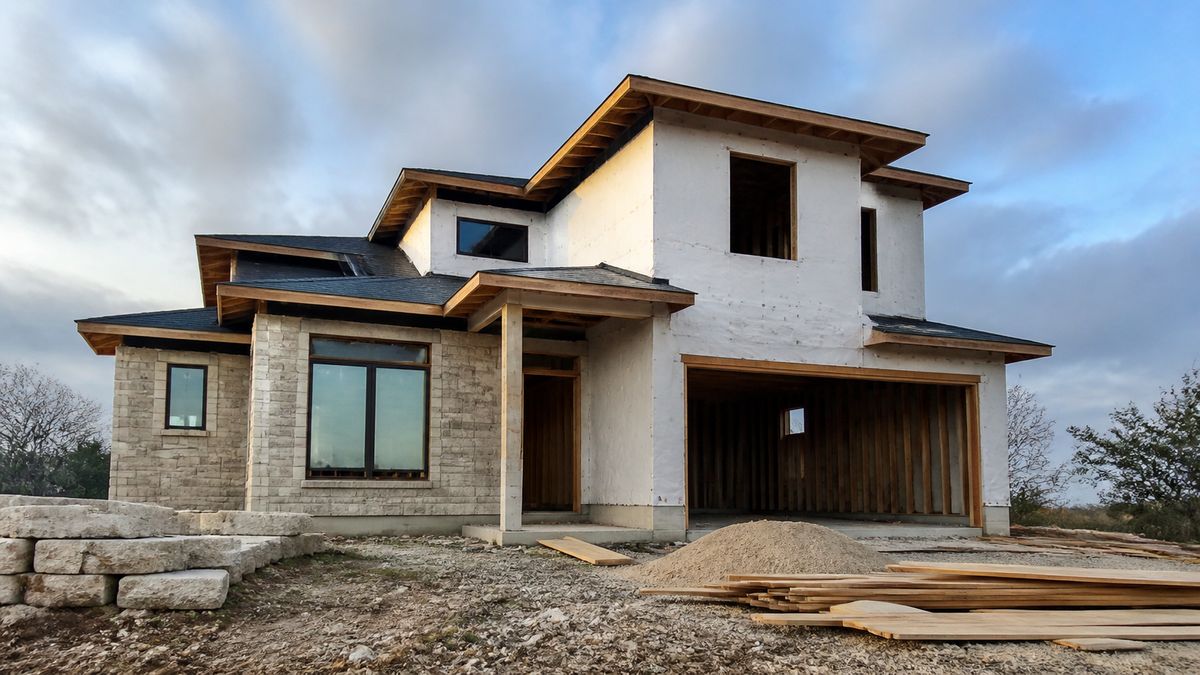
If you are buying a newly built home around Austin, do not assume the property-tax amount in the quoted mortgage payment reflects the finished house. Ask the lender which property value and tax rate it used, then compare that estimate with a realistic full-year tax calculation for the completed home. If the county record still shows only land or partial construction, the initial escrow amount can look artificially low.
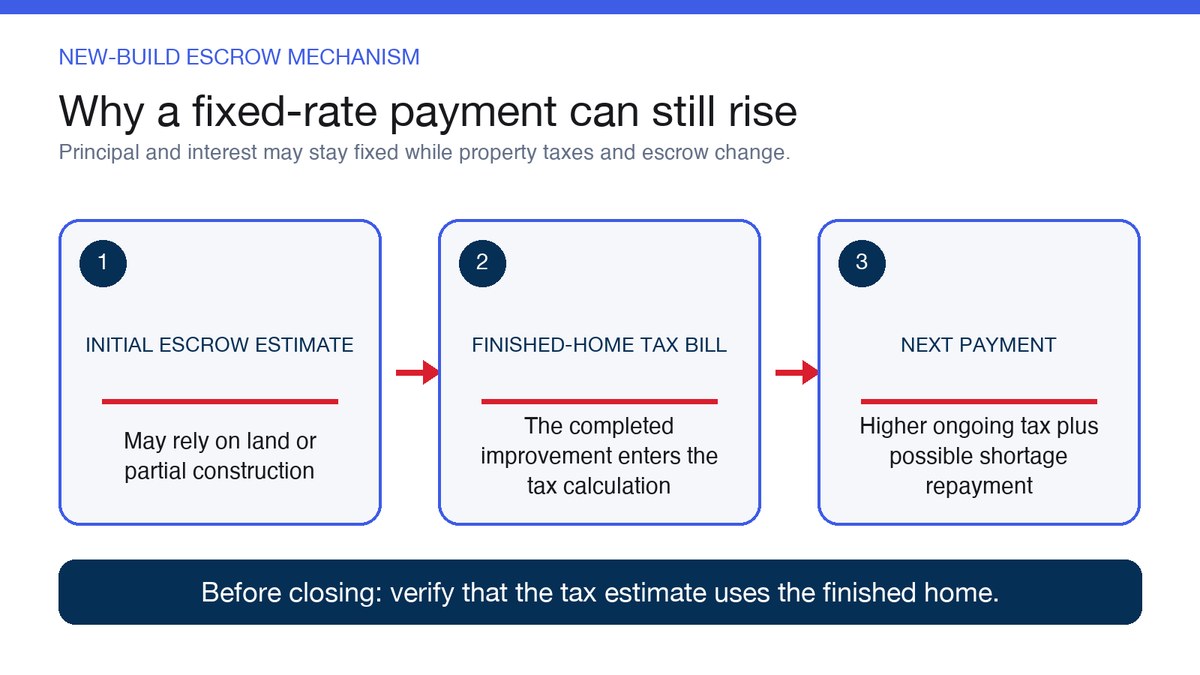
The risk is not that a fixed mortgage rate suddenly changes. Principal and interest may remain fixed while the tax portion of the payment rises. If the servicer later pays a larger tax bill than the escrow account collected, the next payment can include both the higher ongoing tax amount and repayment of the shortage.
Three situations that look similar but are not
The house was incomplete on January 1. Texas appraisal districts generally value taxable property as of January 1. If construction was incomplete then, the tax record may reflect land plus only part of the improvement. A lender that relies too heavily on that record can understate the finished home’s annual taxes.
The house was already complete, and the lender used a finished-home estimate. In that case, the first escrow payment may already be reasonably close to the expected tax bill. The buyer still needs to verify the value, exemptions, tax rate, insurance, and special assessments, but the land-only problem may not exist.
The payment changed for another reason. Homeowners insurance, tax rates, exemptions, or a routine escrow analysis can also change the total payment. This article addresses the new-construction valuation gap. It is not a diagnosis of every escrow increase.
Why a new-build tax estimate can lag behind the house
The Texas Comptroller explains that appraisal districts generally appraise property at its market value as of January 1. For new construction, the appraisal can include the land and whatever portion of the improvement existed on that date. A home completed later in the year can therefore close with a tax record that does not yet resemble the completed property.
The next appraisal can add the finished improvement. A homestead exemption may reduce taxable value, but it does not make the house disappear from the calculation. The residence-homestead appraisal cap also does not simply limit every first full assessment to a 10% increase; Texas guidance says the limitation takes effect after the owner qualifies, and new improvements are treated separately.
The mortgage paperwork should be checked independently. The Consumer Financial Protection Bureau tells borrowers to verify whether property taxes on the Loan Estimate are accurate. Its disclosure guidance says estimated taxes should use the taxable assessed value after closing, including known improvements or construction. A low tax estimate is not a lender discount and does not make one loan cheaper.
The four-number check to perform before closing
You do not need to predict the final tax bill perfectly. You need to determine whether the quoted payment is using a plausible finished-home estimate.
- Find the value used in the lender’s estimate. Ask for the annual property-tax amount, the property value behind it, the combined rate, and any exemption assumption in writing. On the Loan Estimate, review the “Estimated Taxes, Insurance & Assessments” and projected-payment sections.
- Open the county appraisal record. Look at land value, improvement value, market value, appraised value, and exemptions. If the improvement value is zero or obviously represents only partial construction, do not treat that tax record as the finished-home forecast.
- Build a finished-home scenario. Use a defensible estimate of the completed property’s taxable value and the applicable taxing entities. Include county, school, city or other local taxes as applicable, and identify MUD, PID, HOA, or other assessments separately rather than hiding them in one percentage.
- Compare the monthly difference. Divide the realistic annual tax estimate by 12 and compare it with the monthly tax amount in the loan paperwork. Ask the lender to explain a material gap before you rely on the advertised payment.
A simple example in dollars
Assume a completed new home is expected to be valued at $450,000, but the current appraisal record shows $120,000 because it includes land and only partial construction. For illustration, assume the applicable combined property-tax rate is 2.5% before exemptions.
| Illustrative calculation | Incomplete record | Finished-home scenario |
|---|---|---|
| Value used | $120,000 | $450,000 |
| Annual tax at 2.5% | $3,000 | $11,250 |
| Monthly tax amount | $250 | $937.50 |
| Monthly gap | $687.50 | |
The point is not that this rate or value will apply to your property. The point is that a payment built on the incomplete record could be hundreds of dollars below the finished-home scenario. If the servicer later pays the larger bill after collecting the smaller amount, the temporary increase can be larger than $687.50 because the payment may also include shortage repayment.
This example is educational, not a tax estimate or lending quote. Values, exemptions, tax rates, completion dates, escrow methods, and assessments vary by property and loan.
What to do when the estimate looks too low
First, ask for the assumption—not a reassurance. “The payment should be fine” does not answer the question. Ask: “What annual property-tax bill, taxable value, and combined rate are included in this payment, and does that value include the completed home?”
Second, request a corrected scenario. If the estimate uses an incomplete assessment, ask the lender to show the payment using a reasonable finished-home value and all known taxing entities. Compare that full payment with the buyer’s actual budget and with competing properties.
Third, treat any unexplained gap as future housing cost. Do not spend the apparent monthly savings or an unexpected escrow refund until the tax assumptions have been reconciled. Ask the lender or servicer what options it offers for updating the escrow analysis or accepting voluntary funds. Keep the money accessible until the actual obligation is clear.
Finally, file eligible exemptions with the correct appraisal district. Confirm the application and effective timing directly with the county. An exemption can matter, but it is not a substitute for checking whether the lender started with the right property and tax assumptions.
How this changes an Austin-area new-home decision
A builder rate incentive can still be valuable. It should be compared with a property-tax estimate that reflects the home you are actually buying. Otherwise, the attractive payment combines a real financing benefit with a temporary tax understatement.
When ATXCasa compares a new build with another home, the useful number is the full payment under realistic assumptions: principal and interest, mortgage insurance when applicable, finished-home property taxes, homeowners insurance, HOA dues, and special-district costs. Read the related guide to comparing Austin builder incentives with resale homes and the existing Austin-area city property-tax comparison.
Frequently asked questions
Can the payment increase even with a fixed-rate mortgage?
Yes. The principal-and-interest payment may remain fixed while the escrow portion changes because of property taxes, insurance, assessments, or a shortage identified during escrow analysis.
How can I tell whether the tax record shows only the lot?
Review the county appraisal record’s land and improvement values. A zero or unusually small improvement value can indicate that the finished structure was not fully reflected. Confirm the record and its effective date with the appraisal district.
Will a homestead exemption prevent the second-year increase?
Not necessarily. An exemption may reduce taxable value, but a newly completed improvement can still enter the appraisal. Confirm qualification, timing, and current values with the appraisal district instead of assuming the exemption will preserve the original escrow estimate.
What should I compare between two lenders?
Match the loan type, down payment, points, credits, and lock period, then compare the annual tax and insurance assumptions. The CFPB cautions that one Loan Estimate showing lower taxes and insurance does not make that lender’s offer a better deal.
Considering a new construction home around Austin? Message Vlad Baibus at ATXCasa to put the lender’s tax assumption, full payment, and competing homes side by side before closing.
This article provides general real-estate education, not tax, legal, lending, or financial advice. Confirm property-specific figures with the appraisal district, taxing entities, lender or servicer, and appropriate licensed professionals.