
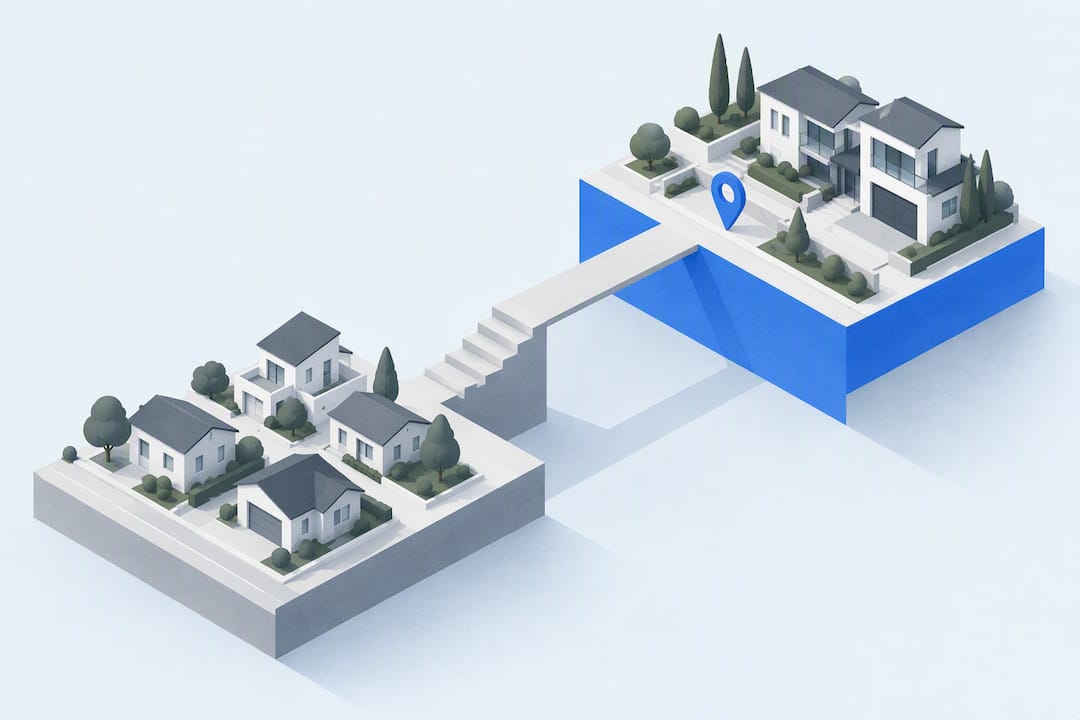
If you want walkability, parks, and South Congress energy, look at Zilker, Bouldin Creek, and Travis Heights in 78704. If you want that same cultural pull at a lower price, look at St. Elmo or the Menchaca corridor in 78745. If you want more house and a family pipeline, Circle C Ranch and Shady Hollow in 78748/78749 deliver space the core simply can’t. The trade-off in every case is the same: location and lifestyle versus square footage per dollar.
TL;DR:
- Homes in the 78704 core are highly walkable but come with premium prices that reflect their proximity to parks, cultural sites, and vibrant neighborhoods.
- The 78745 area offers similar cultural benefits at a lower price, with larger lots and older ranch homes providing entry-level options for those priced out of the core.
- Family-oriented neighborhoods in 78748 and 78749 provide larger homes, community amenities, and green spaces, though commutes to downtown can take 30 to 40 minutes during peak hours.
- Key decision factors include walkability, school zones, lot size, commute time, flood risk, inventory levels, and property taxes, which vary sharply by neighborhood.
- Buyers should verify specific parcel details, neighborhood price patterns, and local flood history before making an offer, using neighborhood analysis and parcel-level checks.
Table of Contents
- South Austin Neighborhoods in the 78704 Core: Zilker, Bouldin Creek, Travis Heights
- What Makes 78745 a Better Value in South Austin?
- Are 78748 and 78749 Good for Families in South Austin?
- How Do You Choose Between South Austin Neighborhoods?
- What Do South Austin Homes Cost and What About Property Taxes?
- What Should You Check When Touring South Austin Homes?
- Atxcasa’s Perspective on Evaluating South Austin Neighborhoods
- Get Local Help Before You Tour South Austin
- Sources
- FAQ
South Austin Neighborhoods in the 78704 Core: Zilker, Bouldin Creek, Travis Heights
The 78704 core is what most people picture when they say “South Austin.” Zilker sits against Barton Springs and the greenbelt trail system, Bouldin Creek runs along South First with its bungalow streets and coffee shops, and Travis Heights climbs the hill above South Congress with some of the city’s best skyline views. This is the walkable version of South Austin, and it carries a premium price.
Housing here is a mix of original 1930s to 1950s bungalows, newer infill builds squeezed onto narrow lots, and condo or townhome developments stacked along the busier corridors. You’re paying a premium for proximity, and that premium shows up fast once you start touring.
- Barton Springs Pool and the Zilker greenbelt are walkable from most of 78704, a genuine rarity in Austin
- South Congress and South Lamar put dining, live music, and retail within a 10 to 15-minute walk from many blocks
- Expect thin inventory in the most desirable pockets, with material price gaps within short distances between adjacent streets
- Quieter interior streets trade some walkability for lower noise; corridor-facing homes get the energy but also the traffic
If lifestyle and proximity top your list, this is where to concentrate your search. Local market analysts frame the South Austin choice as exactly this trade, and 78704 sits firmly on the lifestyle side of the ledger.
What Makes 78745 a Better Value in South Austin?
78745 picks up right where 78704 leaves off, geographically and culturally, but at a noticeably softer price point. St. Elmo has become the transitional area everyone talks about, with breweries and food trucks moving in alongside older ranch homes. The Menchaca corridor and pockets near South Park Meadows offer a similar story: proximity to the core’s culture without the core’s price tag.
Housing stock ranges from 1960s and 1970s single-story homes on decent-sized lots to newer townhome clusters built to capture demand spilling south from 78704.
- St. Elmo and the Menchaca corridor deliver cultural adjacency to 78704 at a real discount
- Older ranch homes often sit on larger lots than anything comparable closer in
- Newer townhome developments trade yard space for lower maintenance and tighter budgets
- School and zoning boundaries vary block by block here, so verify assignments on an address-by-address basis before assuming a home falls in a preferred zone
For buyers priced out of the core but unwilling to give up its energy entirely, 78745 is often the right call.
Are 78748 and 78749 Good for Families in South Austin?
Circle C Ranch, Shady Hollow, and Bauerle Ranch make up the southernmost stretch most buyers consider, and they solve a problem the core can’t: space. These master-planned communities were built around family life from the start, with HOA-managed pools, trail systems, and green space woven into the layout rather than bolted on later.
- Circle C Ranch offers multiple neighborhood pools, tennis courts, and a well-established trail network connecting to Slaughter Creek
- Shady Hollow and Bauerle Ranch offer similar amenity packages at a slightly softer price point than Circle C
- Homes here run larger on average, with more buyers finding four-bedroom layouts and real backyards for the same budget that buys a two-bedroom condo closer to downtown
- Commutes lean on Mopac and I-35 access points, and rush-hour trips downtown can run 30 to 40 minutes depending on the exact block
Families choose this band for the school pipelines as much as the square footage, though pipeline reputation still needs address-level confirmation before you commit.
How Do You Choose Between South Austin Neighborhoods?
Every South Austin neighborhood guide eventually boils down to the same short list of decision factors. Here’s the order that actually matters when you’re narrowing your search:
- Walkability. Core pockets often score in the 70 to 85 range, while many outer neighborhoods score under 40. Decide honestly whether you’ll use that walkability or just like the idea of it.
- Schools. Confirm which school district serves the address first. For an Austin ISD address, use the district’s Find Your Assigned School tool; a neighborhood name or ZIP code does not establish the assignment.
- Lot size and layout. If square footage and yard space matter more than proximity, the southern bands will stretch your budget further than the core ever will.
- Commute. Time an actual drive during rush hour rather than trusting a map estimate. Mopac and I-35 both back up predictably on weekday mornings.
- Flood risk. Check the property address in FEMA’s Flood Map Service Center and the City of Austin’s ATXFloodPro. These provide distinct federal and local floodplain information, and maps can change; neither replaces a property-specific assessment.
- Inventory and competition. Thin supply in tight pockets means bidding pressure even for pre-approved buyers, so know your financing contingencies before you tour.
- Property taxes. Rates and assessed values shift year to year, and they belong in your monthly budget math from day one.
Pro Tip: Build a ranked checklist before your first tour and score each house against it on the spot. It’s far too easy to fall for one great kitchen and forget you wanted a quieter street.
Narrow your list to two neighborhoods before you start touring. Trying to compare five areas at once usually means you end up comparing houses instead of neighborhoods, which defeats the purpose.
What Do South Austin Homes Cost and What About Property Taxes?
Price bands shift sharply as you move south. The 78704 core commands the highest per-square-foot pricing in South Austin, reflecting its walkability and proximity to downtown. 78745 runs meaningfully softer, and price gaps between adjacent neighborhoods commonly exceed $200,000 to $300,000 over just a few miles of distance. The outer bands in 78748 and 78749 trade some of that premium for larger lots and newer construction.
The September 2, 2026 hearing notice hosted by Travis County concerned a proposed Central Health tax rate. Central Health is a separate taxing entity. That notice documents a proposal, not an adopted Central Health or Travis County rate, so it does not establish the rate to use in your budget.
To estimate property taxes, identify every taxing entity that applies to the address, including any applicable entities beyond the county, city and school district. Confirm each entity’s adopted rate and the property’s taxable value after applicable exemptions; taxable values may differ by entity. Rates are quoted in dollars per $100 of taxable value: divide each taxable value by 100, multiply by that entity’s rate, then add the resulting annual taxes. Divide the total by 12 for a monthly tax estimate. For your monthly housing budget, include mortgage principal and interest, insurance and any HOA charges, without counting taxes or insurance twice if included in escrow. Our breakdown of Austin’s 2026 property tax and utility changes walks through the current numbers in more detail, and our comparison of Austin-area property taxes by city is worth a look if you’re weighing South Austin against nearby suburbs.
What Should You Check When Touring South Austin Homes?
A tour tells you things a listing photo never will. Work through this list every time:
- Walk the street at the time of day you’d normally be home, not just during your showing window.
- Check for sidewalks and shade trees, both of which affect daily livability more than most buyers expect.
- Look for visible drainage patterns after recent rain, especially near creek-adjacent lots.
- Listen for road noise from nearby arterials like South Lamar or Slaughter Lane.
- Note what’s directly behind or beside the property, including commercial uses or undeveloped lots.
- Drive your actual commute at rush hour, not the map app’s optimistic estimate.
- Time a school run if you have kids, from the front door to the actual campus.
- Ask the seller’s agent about recent roof, foundation, or HVAC work.
- Ask directly about flood history and check the address in FEMA’s Flood Map Service Center and Austin’s ATXFloodPro. A mapped flood zone alone does not establish the property’s condition or insurance cost.
- Request the HOA’s rules and fee schedule if the neighborhood has one.
Atxcasa’s Perspective on Evaluating South Austin Neighborhoods
Neighborhood guides tell you the character of a ZIP code. They don’t tell you whether a specific parcel floods, whether the school zone actually matches the boundary map, or whether the block you’re touring has quietly outpaced its neighborhood’s median price. That’s the gap Atxcasa works to close, with parcel-level checks, neighborhood price-pattern analysis, and direct touring support for buyers narrowing a South Austin search. Our analysis of neighborhood price patterns shows how much variation hides inside a single ZIP code. If you’re weighing two specific streets, ask us for an address-level check before you write an offer.
— Vladimir
Get Local Help Before You Tour South Austin
Reading about Zilker versus Circle C Ranch only gets you so far. There are local alternatives to generic portal listings for South Austin house hunting that provide Austin-specific price-pattern data and neighborhood analysis built from actual local transactions.

If you’re deciding between the core and the outer bands, our guide to neighborhood price patterns across the Austin metro can help you see where a specific block sits relative to its ZIP code average. And if South Austin’s price bands are stretching your budget, our rundown of suburbs worth considering in 2025 lays out the space-for-price trade beyond the city limits. Visit Atxcasa and request a neighborhood deep dive or a parcel-level check on the specific address you’re considering.
Sources
- How to choose between East Austin, South Austin, and North Austin
- Moving to Austin for families · Family Home Finder
FAQ
What Is the Best South Austin Neighborhood for Families?
Circle C Ranch and Shady Hollow in 78748/78749 tend to fit families best, thanks to master-planned amenities like pools and trail systems along with larger lot sizes. Barton Hills and Zilker are also strong family picks for buyers who prioritize walkability and park access over extra square footage.
Is 78704 Worth the Price Premium Over 78745?
It depends on whether walkability and proximity to South Congress and Barton Springs matter more to you than square footage. Price gaps between the two ZIP codes can exceed $200,000, so the premium only makes sense if you’ll actually use the location daily.
How Do South Austin Property Taxes Work?
Your annual property tax bill combines county, city, and school district rates applied to your home’s assessed value, and Travis County has proposed a rate increase for 2026 that buyers should factor into monthly budgeting. Rates and assessed values change yearly, so check current figures before finalizing a budget.
Should I Worry About Flooding in South Austin?
Properties near Barton Creek and Williamson Creek carry real flood risk in certain stretches, and checking the FEMA flood map for the specific parcel is a necessary step before making an offer. This matters more in older neighborhoods built before current drainage standards.
How Fast Do South Austin Homes Sell?
Desirable pockets in 78704 and parts of 78745 often move quickly, and even pre-approved buyers should expect competitive bidding on well-priced homes in tight inventory conditions. Confirm your financing is fully lined up before you start touring seriously.