
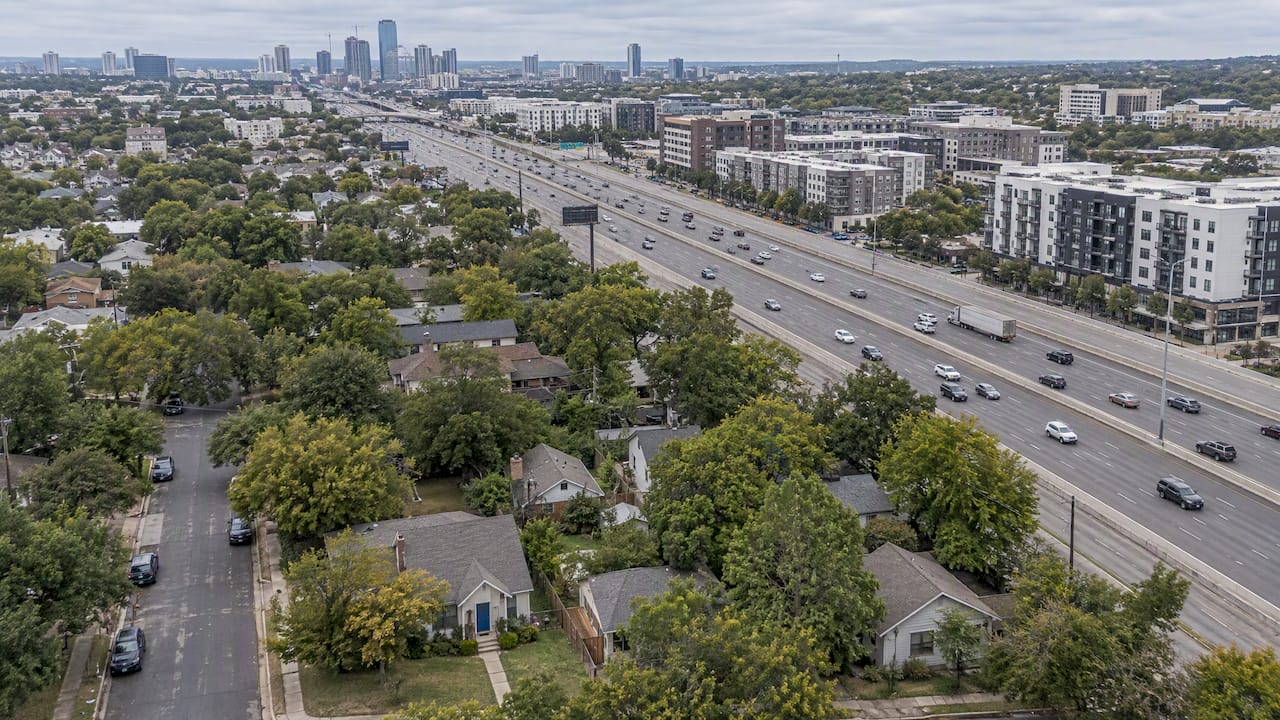
North Austin usually suits buyers who prioritize predictable commutes, newer construction, and higher owner-occupancy suburbs like Round Rock and Cedar Park. South Austin tends to fit buyers who value walkability, eclectic dining, and close-in character, often accepting older housing stock and more rental competition. Either way, near-term I-35 construction and new transit-oriented plans will shape your daily commute through the next few years.
TL;DR:
- TxDOT’s Interstate 35 projects add managed lanes and rebuild ramps, with phases extending through 2028 and 2029; test your peak commute during roadwork.
- CapMetro Rapid serves the North Lamar and South Congress corridors, but commuters whose jobs lie beyond those routes will probably still need a car.
- Compare county tax rates with home prices: effective rates are about 1.34% in Travis County, 1.49% in Williamson County, and 1.58% in Hays County.
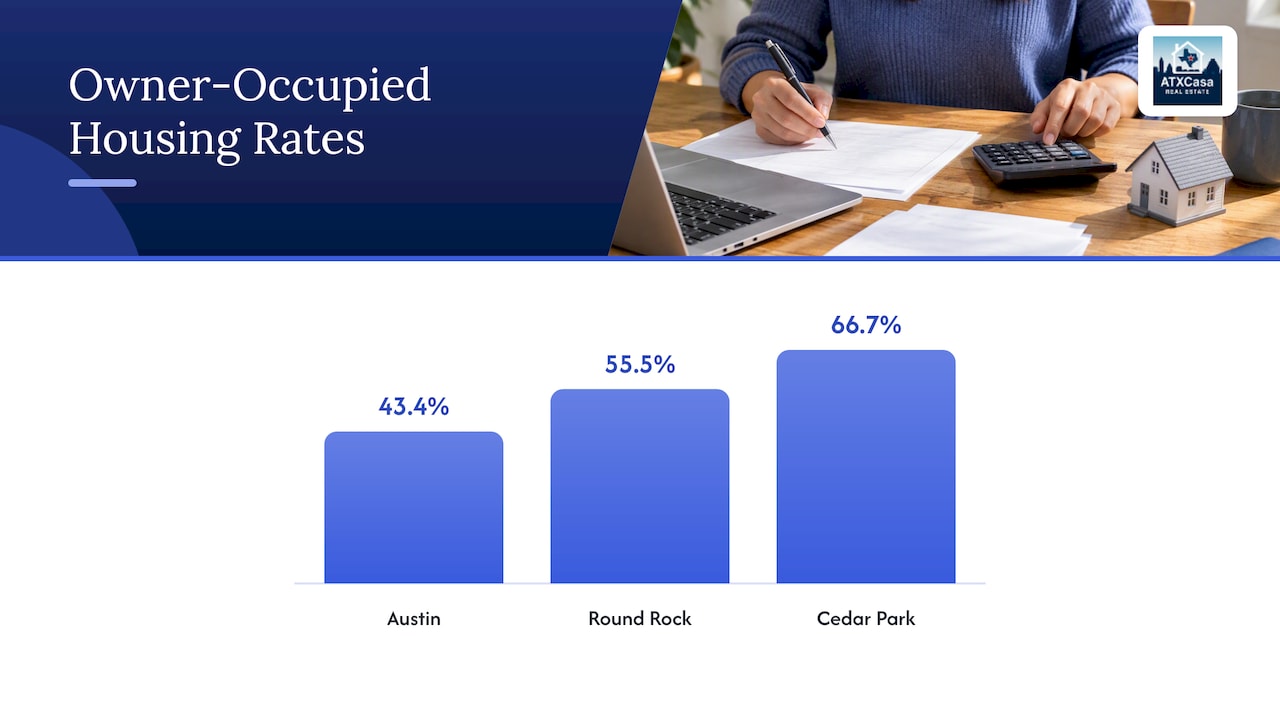
- Owner occupancy reaches 55.5% in Round Rock and 66.7% in Cedar Park, compared with 43.4% in Austin, reflecting more renters in the city.
- School and safety conditions vary by zone and block; verify assigned schools and local safety information for each address instead of trusting area reputations.
Table of Contents
- At-a-glance north vs south Austin: six quick comparisons
- What neighborhoods and housing types look like on each side
- Commute realities: driving corridors, transit options, and construction timelines
- Lifestyle and amenities: parks, dining, schools, and local culture
- Ownership costs: how price patterns and county tax rates affect monthly costs
- Representative neighborhoods: north vs south with who they fit
- How ATXCasa helps buyers pick the right side
- Demographic and cultural differences between North and South Austin
- School district ratings and educational opportunities in each area
- Safety and crime statistics comparison
- Economic factors including job opportunities and major employers in each region
- Development and future growth trends impacting North and South Austin
- Surprises new residents often report after moving
- How ATXCasa can help you start a tailored neighborhood search
- FAQ
- Sources
At-a-glance north vs south Austin: six quick comparisons
Before you tour a single house, it helps to see how the two sides stack up on the factors that matter most day to day.
- Commute profile: North Austin residents commonly head toward The Domain, Round Rock, or Cedar Park employment hubs via MoPac or US-183; south side commuters lean on I-35 or South Lamar into downtown.
- Housing stock: North Austin and its suburbs skew toward newer construction and subdivisions; south-central neighborhoods mix older bungalows with infill rebuilds.
- Cost tendencies: Suburban north communities show higher owner-occupancy rates, while south-central areas carry more rental turnover near urban cores.
- Family fit: North suburbs generally offer larger lots and newer schools; south Austin offers proximity to parks and urban amenities but smaller yards.
- Nightlife and culture: South Congress and South Lamar carry Austin’s eclectic, walkable dining and music scene; north Austin centers more on retail and corporate campuses.
- Transit and growth: In May 2025, the City said Council had approved station area vision plans for the North Lamar and South Congress Transit Centers. The plans are roadmaps that envision equitable transit-oriented development within a half-mile of each center; they do not by themselves establish that new housing or amenities are completed.
What neighborhoods and housing types look like on each side
North Austin reads like a growth corridor. Areas such as North Burnet/Gateway (NBG) are being replanned for dense, mixed-use development, while Round Rock and Cedar Park offer established suburban subdivisions with newer builds. Census data shows owner-occupied housing at roughly 55.5% in Round Rock and 66.7% in Cedar Park, both notably higher than the city of Austin’s 43.4%. That gap tells you something simple: north suburbs lean toward long-term homeowners, while the core city carries a larger rental population.
South Austin tells a different story. Neighborhoods closer to the river and South Congress mix original 1950s and 1960s homes with newer infill construction, creating a patchwork of architectural styles and price points. Lot sizes tend to be smaller than in the northern suburbs, but proximity to downtown and Lady Bird Lake keeps demand steady.
A few patterns worth noting as you search:
- North Austin and its suburbs favor new construction, HOA-governed subdivisions, and larger average lots.
- South-central Austin favors renovation and infill opportunities, with smaller lots and more architectural variety.
- North suburbs commonly attract families and first-time buyers seeking predictable costs; south Austin attracts buyers who prioritize walkability and willing to pay a premium for location over square footage.
Buyers chasing a specific layout or yard size should expect to trade one priority for another: space and predictability up north, character and proximity down south.
Commute realities: driving corridors, transit options, and construction timelines
Three corridors define most Austin commutes: I-35 running north-south through the core, MoPac (Loop 1) skirting the west side, and US-183 connecting northeast employment centers. Each carries distinct congestion patterns depending on time of day and destination.
- I-35 remains the most direct north-south link but also the most congested, especially near downtown interchanges.
- MoPac serves commuters heading toward the northwest tech corridor and the Domain area with fewer stoplights but recurring bottlenecks near Lady Bird Lake.
- US-183 connects north Austin suburbs to the airport and east-side employment but sees heavy congestion during peak hours.
For the North segment of I-35 Capital Express, TxDOT says the project runs from SH 45 North to US 290 East, adds one high-occupancy vehicle (HOV) managed lane in each direction, and reconstructs bridges and entrance/exit ramps. TxDOT lists early 2029 as the anticipated completion, weather permitting, and says frontage-road work is expected through 2026. Check live closure information for the route you would use.
Among CapMetro’s Rapid routes, Rapid 801 connects Tech Ridge and Southpark Meadows via UT and downtown, traveling on North Lamar and South Congress. CapMetro describes Rapid service as coming every 10-15 minutes; confirm the current timetable, alerts, walk access, and connection from the final stop to your destination for your specific trip.
Before committing to a neighborhood, drive your actual commute at peak times, including a worst-case scenario with active roadwork. A test drive on a Tuesday morning tells you more than any map ever will.
Lifestyle and amenities: parks, dining, schools, and local culture
Daily life differs sharply depending on which side of town you choose. North Austin suburbs offer newer community parks, master-planned trail systems, and family-oriented recreation centers, while the south side leans on established green space like Zilker Park and the Barton Creek Greenbelt.
- North Austin and its suburbs concentrate retail, chain dining, and corporate campuses near The Domain and Round Rock.
- South Austin carries the city’s most recognized dining and nightlife corridors, including South Congress and South Lamar.
- Families weighing school options should compare district boundaries directly, since ratings vary block by block rather than strictly by north or south.
Outdoor access also differs in character: northern suburbs favor newer, amenity-rich neighborhood parks, while south Austin residents get walkable access to riverside trails and longstanding green spaces closer to downtown.
Ownership costs: how price patterns and county tax rates affect monthly costs
Where you buy affects more than your mortgage. Census QuickFacts shows owner-occupied housing at about 43.4% in the city of Austin, compared with 55.5% in Round Rock and 66.7% in Cedar Park, a sign that the northern suburbs function more as ownership markets while the urban core carries more renters.
County tax rates compound these differences. Travis County’s effective property tax rate runs around 1.34%, Williamson County around 1.49%, and Hays County around 1.58%. A home in Williamson or Hays County can carry a noticeably higher annual tax bill than a similarly priced home in Travis County, so factor county lines into your budget comparison, not just list price.
Representative neighborhoods: north vs south with who they fit
- North Burnet/Gateway (NBG): An urbanizing district with a city-backed master plan for mixed-use, transit-supportive growth; fits buyers who want early access to a changing, higher-density area.
- The Domain: A retail and employment hub in north Austin; fits buyers who want walkable amenities tied to major employers without a downtown commute.
- Round Rock and Cedar Park: Family-suburban markets with higher owner-occupancy rates; fits buyers prioritizing newer construction, larger lots, and stable long-term ownership.
- South Congress: Eclectic, walkable, and dense with dining and retail; fits buyers who want urban character and don’t mind paying a premium for location.
- South Lamar and Barton Hills: Close to downtown and the Barton Creek Greenbelt; fits buyers who want park access without leaving the central city.
- St. Elmo and Slaughter Lane: More accessible pricing with proximity to south-side retail and services; fits buyers who want south Austin access on a tighter budget.
How ATXCasa helps buyers pick the right side
We built a tech-driven, data-first approach to matching buyers with the right side of town, rather than pushing a generic sales pitch.
A short checklist before you commit:
- Drive your actual commute at peak times, including a construction detour scenario.
- Check school attendance boundaries directly rather than relying on neighborhood reputation alone.
- Pull a tax and cost snapshot for the specific county, not just the city.
- Ask for recent comparable sales in your target neighborhood before you make an offer.
Pro Tip: Request a neighborhood trend report before you tour homes, it saves time by narrowing your search to blocks that actually match your budget and commute tolerance.
Demographic and cultural differences between North and South Austin
North Austin’s population skews toward families and professionals drawn by corporate campuses and newer suburban infrastructure in Round Rock and Cedar Park. These communities tend to feel more residential and planned, with growth driven by employment centers rather than historic character.
South Austin carries a different cultural identity, shaped by decades of independent music venues, food trailers, and a mix of longtime residents alongside newer arrivals drawn to its walkable, eclectic feel. The contrast shows up in everyday texture: north Austin growth areas like North Burnet/Gateway are being actively planned for density and transit access, while south-central neighborhoods carry an established identity that newer development has to work around rather than create from scratch.
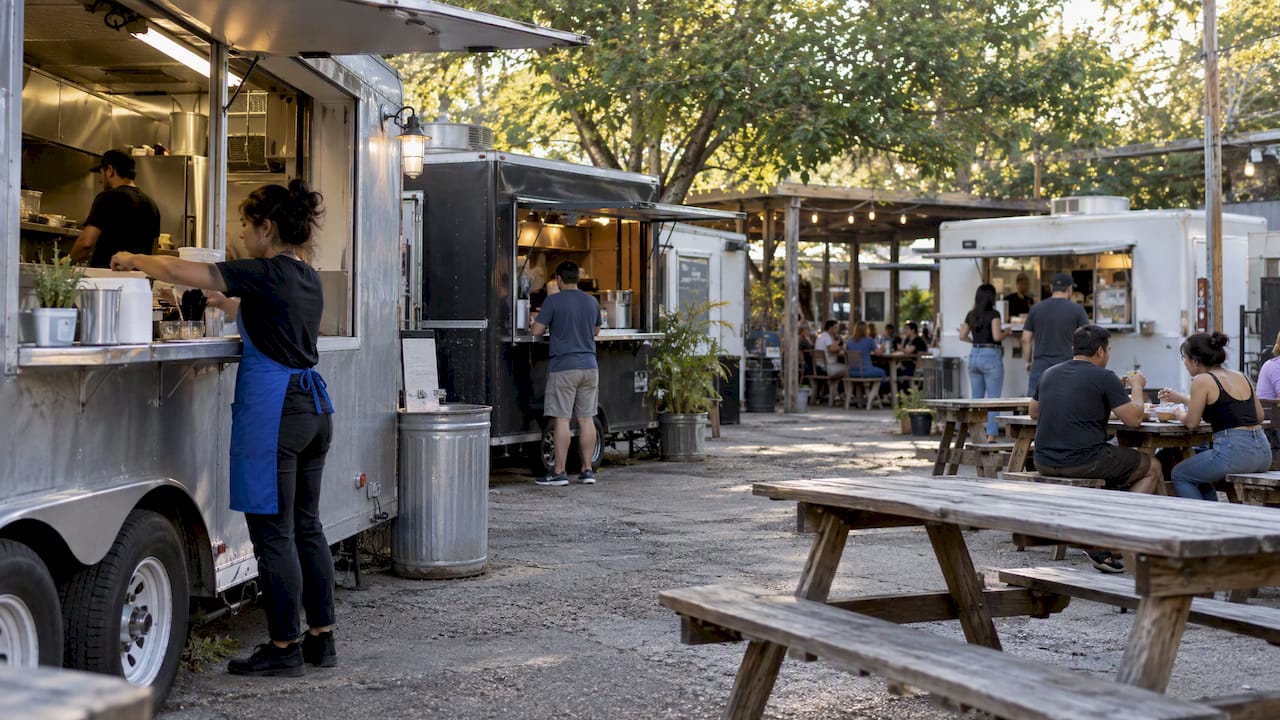
Neither side is more “Austin” than the other, but they attract different buyers. Those drawn to a newer, more predictable suburban rhythm tend toward the north. Those drawn to the city’s original creative and culinary reputation tend toward the south.
School district ratings and educational opportunities in each area
School quality in Austin varies by specific attendance zone more than by broad geography, so buyers should never assume one side of town automatically outperforms the other. North Austin suburbs, particularly in Round Rock and Cedar Park, often appeal to families seeking newer school facilities tied to recent residential growth.
South Austin families typically weigh proximity to downtown and established neighborhood character against school boundaries that can shift from block to block. Because district lines don’t always follow obvious north-south divisions, the most reliable approach is to check the specific elementary, middle, and high school assigned to a property address before making an offer, rather than relying on a neighborhood’s general reputation.
Safety and crime statistics comparison
Crime patterns in Austin vary by specific neighborhood and corridor rather than falling into a clean north-south split. Both sides of the city include a mix of established residential streets and busier commercial corridors, and safety perceptions often track more closely with a block’s density and traffic than with its position relative to the river.
Buyers comparing specific addresses should request localized safety information for the exact streets they’re considering, since citywide or even zip-code-level statistics can obscure meaningful differences between adjacent blocks.
Economic factors including job opportunities and major employers in each region
North Austin anchors much of the region’s corporate and tech employment, with The Domain functioning as a major office and retail hub, and Round Rock serving as home to established manufacturing and technology employers. Cedar Park has grown alongside this corridor, adding jobs tied to the broader northwest Austin employment base.
South Austin’s economy leans more toward hospitality, creative industries, and small business, reflecting its cultural identity as a dining, music, and retail destination. While fewer large corporate campuses sit on the south side, its proximity to downtown keeps demand strong for buyers who prioritize a short commute into the central business district over suburban office parks.
Development and future growth trends impacting North and South Austin
North Austin’s growth centers on the North Burnet/Gateway master plan, a roughly 2,300-acre area the city is actively replanning for higher-density, transit-supportive, mixed-use development. That kind of planned growth signals a long runway of new housing and commercial space in the corridor over the coming years.
South Austin’s growth looks different. Rather than large-scale replanning, change tends to arrive through infill construction and renovation of existing lots, particularly near the South Congress Transit Center, where the city’s station area vision plan aims to increase walkable housing options near transit. Both the North Lamar and South Congress transit hubs are central to Austin’s equitable transit-oriented development strategy, meaning buyers near either corridor may see rising density and amenity investment over the next decade.
Surprises new residents often report after moving
New residents often underestimate how much construction noise and shifting commute times affect daily routines, especially near I-35. Test your actual commute at the times you’ll drive it before signing anything.
— Vladimir
How ATXCasa can help you start a tailored neighborhood search
Choosing between north and south Austin comes down to matching your commute tolerance, budget, and lifestyle priorities to the right streets, not just the right zip code. We built our approach around local, data-driven neighborhood research so you can skip generic listings and focus on homes that actually fit how you live and work.
Our neighborhood guides and specific area pages, like our Barton Creek listing page, show the kind of local detail we bring to every search. If you’re ready to compare specific properties on either side of town, visit ATXCasa to start a tailored search with a local agent who knows both corridors well.
FAQ
Is Austin, Texas considered conservative or liberal?
Austin is widely recognized as one of the more politically liberal cities in Texas, often described as a blue city within a historically red state. Surrounding suburbs and counties, including parts of Williamson and Hays County, tend to lean more conservative than the urban core.
What is the nicest city in Texas to live in?
“Nicest” depends heavily on personal priorities like climate, job market, and lifestyle, so there’s no single official ranking that fits every buyer. Austin consistently draws interest for its combination of tech employment, outdoor access, and cultural scene, while nearby suburbs like Round Rock and Cedar Park appeal to buyers prioritizing family-friendly, lower-density living.
Is Austin, Texas considered north or south Texas?
Austin sits in Central Texas, functioning as a geographic and cultural bridge between North Texas cities like Dallas and South Texas cities like San Antonio. It’s not typically classified as part of either the North Texas or South Texas regions.
What towns surround Austin, Texas?
Austin is surrounded by a mix of suburban cities and towns, including Round Rock and Cedar Park to the north and communities extending toward Hays County to the south. These surrounding areas offer alternatives to city living, often with different tax rates and housing patterns depending on the county.
Sources
- U.S. Census Bureau QuickFacts: Cedar Park city, Texas
- Austintexas
- I-35 Capital Express South construction factsheet (TxDOT)