
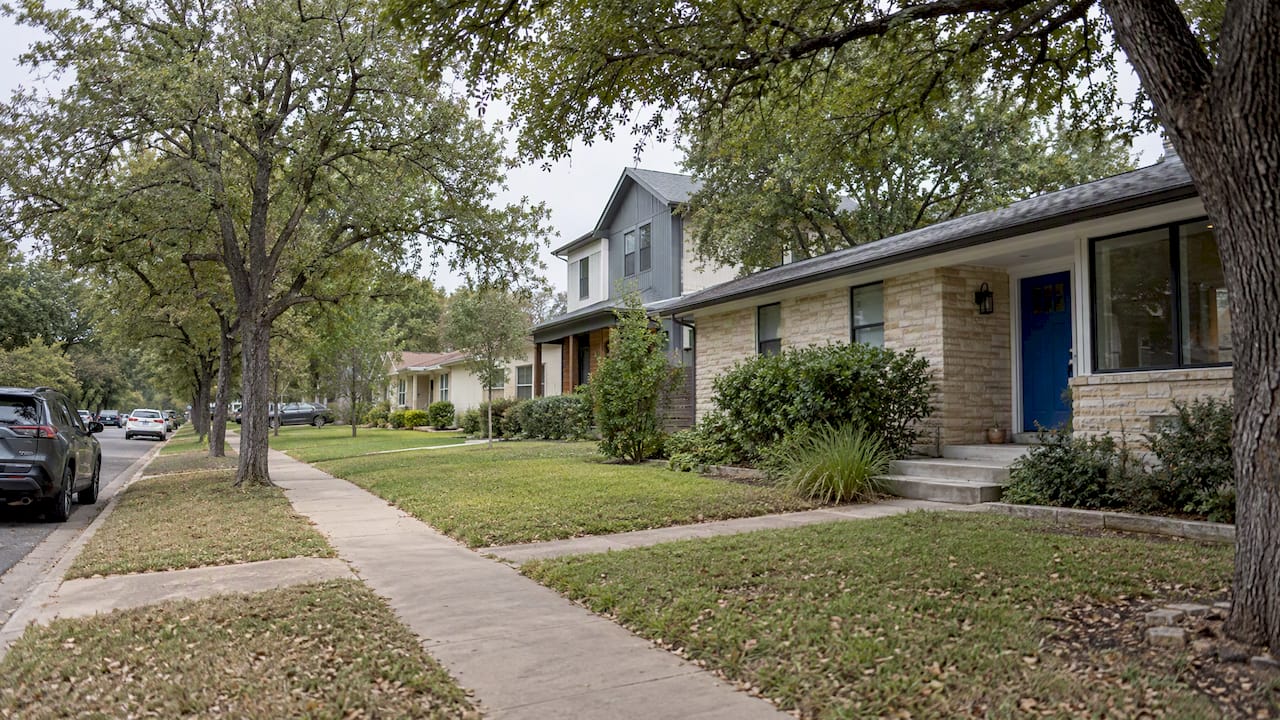
When buyers ask about North Austin neighborhoods, they usually mean two different things: the inner-north pockets close to downtown like Allandale and Crestview, and the northern suburbs stretching through Cedar Park, Round Rock, Leander, Georgetown, and Liberty Hill. Each area fits a different buyer, from urban commuters to growing families chasing new construction and open space.
TL;DR:
- The CapMetro Red Line map identifies stations at Crestview, Highland, Lakeline and Leander. CapMetro describes Rail as a commuter train between Leander and downtown; its current service page lists scheduled operating days and hours and says trains run every 15–30 minutes, with exceptions. Verify the current schedule, the actual home-to-station connection and the return trip before relying on rail.
- Lakeline Park offers a trail loop measuring 2.5 miles and a universal playground; Old Settlers Park spans 670 acres and has phased closures.
- Confirm school zones for each property and ask about construction timelines, HOA rules, noise, and planned road work before making an offer.
- Leander and Liberty Hill skew toward newer homes, while Round Rock and Georgetown offer older houses alongside new builds; compare housing stock against your budget.
Table of Contents
- Shortlist and Map: Inner North vs. Northern Suburbs
- Neighborhood Profiles: What Each Area Actually Offers
- Transit and Commute: What the Red Line Really Changes
- Parks and Recreation Shaping Daily Life
- How to Choose: A Practical Checklist for Buyers
- What We’re Seeing Across North Austin Right Now
- Let Us Help You Target the Right North Austin Listings
- FAQ
- Sources
Shortlist and Map: Inner North vs. Northern Suburbs
North Austin splits cleanly into two groupings, and knowing which one fits your priorities saves a lot of weekend touring. The inner-north neighborhoods sit inside or near the Loop 1 (MoPac) and I-35 corridors, typically 10 to 20 minutes from downtown depending on traffic. The northern suburbs sit farther out along US-183, I-35, and SH-45, with commute times running 30 to 50 minutes at peak hours.
Here’s how the two groupings break down:
- Inner north: Allandale, Crestview, Brentwood, and Highland, all close to downtown with established tree-lined streets and midcentury housing stock.
- Northern suburbs: Cedar Park, Round Rock, Leander, Georgetown, and Liberty Hill, each offering newer construction, larger lots, and master-planned community amenities.
The CapMetro Red Line map identifies Crestview, Highland, Lakeline and Leander stations on Route 550, a 10-station service between Downtown and Leander. Use CapMetro’s current map and trip planner to test the actual connection for a specific address. Major corridors like I-35, MoPac, and 183 intersect these areas at different points, which matters more for daily commute planning than the neighborhood label itself.
Neighborhood Profiles: What Each Area Actually Offers
Each of these places has a distinct character, and the right fit usually comes down to commute tolerance, housing type, and how much new construction you want nearby.
- Crestview. Best for commuters and first-time buyers; character is walkable and increasingly dense with midcentury bungalows mixed with infill builds; transit access includes a Red Line station within walking distance for many blocks; standout amenity is the Crestview shopping and dining strip near the rail stop; typical housing runs small single-family homes and townhomes.
- Allandale. Best for families wanting established streets close to downtown; character is quiet, leafy, and residential; transit access relies mainly on driving or bus routes rather than rail; standout amenity is proximity to Northwest Park and good access to central Austin; typical housing is single-family ranch-style homes on larger lots than most inner-city areas.
- Northwest Hills. Best for buyers wanting hill-country feel without leaving city limits; character is wooded and hilly with winding streets; transit access is limited, so most residents drive; standout amenity is proximity to greenbelt trails; typical housing is larger single-family homes built from the 1960s through the 1980s.
- Cedar Park. Best for families prioritizing parks and newer schools; character is suburban with a growing town-center feel; transit access includes a Red Line station at Lakeline plus park-and-ride lots; standout amenity is Lakeline Park, which includes a 2.5-mile trail loop and a universal playground; typical housing is single-family subdivisions with a mix of starter and move-up price points.
- Round Rock. Best for buyers who want established suburban infrastructure and job access near major employers; character is mature suburban with a historic downtown core; transit access depends mostly on I-35 and local roads; standout amenity is the ongoing buildout at Old Settlers Park, a 670-acre regional park; typical housing spans from older ranch homes to newer master-planned communities.
- Leander. Best for buyers chasing new construction at relatively lower price points; character is rapidly growing with large subdivisions and open land still nearby; transit access includes the Red Line’s northern terminus; standout amenity is Lakewood Park, which includes a splash pad, dog park, and lake access; typical housing is predominantly new single-family construction.
- Georgetown. Best for buyers wanting small-town character with suburban convenience; character blends a historic square with newer development on the edges; transit access relies on driving, since rail service does not extend this far; standout amenity is the walkable downtown square and nearby lake access; typical housing ranges from historic homes near downtown to large new-build communities farther out.
- Liberty Hill. Best for buyers prioritizing space and lower density over commute convenience; character is semi-rural transitioning to suburban as development accelerates; transit access is driving-only; standout amenity is acreage and newer subdivisions with larger lot sizes; typical housing includes new construction on bigger parcels than closer-in suburbs offer.
Transit and Commute: What the Red Line Really Changes
The CapMetro Red Line runs roughly 32 miles between Leander and downtown Austin, with stops at Crestview, Highland, Lakeline, and Leander among others, connecting northern suburbs and inner-north neighborhoods to downtown in 2026. Service frequency and schedule make it a commuter option rather than an all-day transit system, so driving still fills most gaps.
- Check actual walking distance to a station before assuming a listing is “transit-friendly.”
- CapMetro lists Park & Ride facilities at Lakeline Station and Leander Station, both served by Route 550; verify designated parking, service hours and the current trip plan before depending on either facility.
- I-35, MoPac, and 183 remain the default routes for anyone not within walking distance of a station.
- Test the commute at actual rush hour, not midday, before committing to a neighborhood.
Parks and Recreation Shaping Daily Life
Parks are a major reason families choose specific North Austin suburbs over others. Old Settlers Park in Round Rock covers 670 acres and is partway through a multi-year, bond-funded improvement project that includes phased trail and road closures.
- Lakeline Park in Cedar Park offers a 2.5-mile trail loop and a universal playground for families with mixed-ability needs.
- Lakewood Park’s city page lists a splash pad, dog park, trails, skate park, basketball and volleyball courts, fishing pier and kayak rentals. The same page currently says the kayak launch and rental service are temporarily unavailable, so check the city page before planning water access.
- Most suburban neighborhoods also include smaller amenities like splash pads and dog parks within individual subdivisions.
Pro Tip: Check a city’s parks department page for current closure notices before touring a home near a major park project.
How to Choose: A Practical Checklist for Buyers
Narrowing a North Austin search comes down to a short list of trade-offs, not a long list of preferences.
- Decide your realistic commute tolerance, then test it at peak hours rather than trusting a map estimate.
- Confirm school zones for any specific address, since boundaries vary even within the same suburb.
- Match housing type and budget to the suburb, since Leander and Liberty Hill skew newer and Round Rock and Georgetown mix older and new stock.
- Walk the nearest park loop to judge real walkability, not just proximity on paper.
- Ask your agent about construction timelines, HOA rules, and noise sources before writing an offer.
Pro Tip: Ask directly about upcoming bond projects or road work during a tour; a quiet street today can look different in two years.
What We’re Seeing Across North Austin Right Now
Demand keeps shifting toward neighborhoods with both park access and a realistic transit option, which explains steady interest in Cedar Park and Leander alongside the inner-north rail stops, as analyzed in the Chino Valley Market Report | BLDG Realty. We’d tell any buyer touring this corridor to time visits around rush hour and to ask pointed questions about active construction before falling for a listing photo.
— Vladimir
Let Us Help You Target the Right North Austin Listings
We use local market insight to help you shortlist and tour North Austin neighborhoods without wasting time on the wrong ones.

| What you get | Why it matters |
|---|---|
| Neighborhood-specific listing alerts | You see new inventory in your target areas first |
| Data-driven pricing guidance | You negotiate from an informed position |
| Local tour scheduling support | You spend less time on homes that don’t fit |
Start with our North Austin neighborhood listings to see current inventory near the areas covered here.
FAQ
What towns are in North Austin?
North Austin commonly includes inner-city neighborhoods like Allandale, Crestview, Brentwood, and Highland, along with northern suburbs such as Cedar Park, Round Rock, Leander, Georgetown, and Liberty Hill. The exact boundary depends on who’s drawing the map, since “North Austin” is more of a practical label than an official city designation.
Is Austin racially diverse?
Austin’s population includes a broad mix of racial and ethnic groups, as reflected in U.S. Census QuickFacts demographic tables for the city. Diversity varies by neighborhood, so buyers interested in specific demographic patterns should review Census data for individual zip codes.
What is the best neighborhood in Austin, Texas?
There’s no single best neighborhood since the right fit depends on commute tolerance, budget, and whether you want urban density or suburban space. Crestview suits commuters wanting rail access, while Cedar Park and Leander suit families wanting newer homes and larger parks.
What area is 78701?
Zip code 78701 covers downtown Austin, which lies south of the North Austin neighborhoods and suburbs discussed here. It’s a dense, urban core with high-rise living rather than the single-family and suburban housing stock found throughout North Austin.
Sources
- CapMetro rail
- Old Settlers Park improvements to cause ongoing impacts within park — City of Round Rock
- Lakeline Park — City of Cedar Park
- Lakewood Park — City of Leander
- U.S. Census Bureau QuickFacts: Round Rock city, Cedar Park city, Georgetown city, Austin city