
TL;DR
- Gather current insurance-policy documents, property-title records and tax records before severe weather.
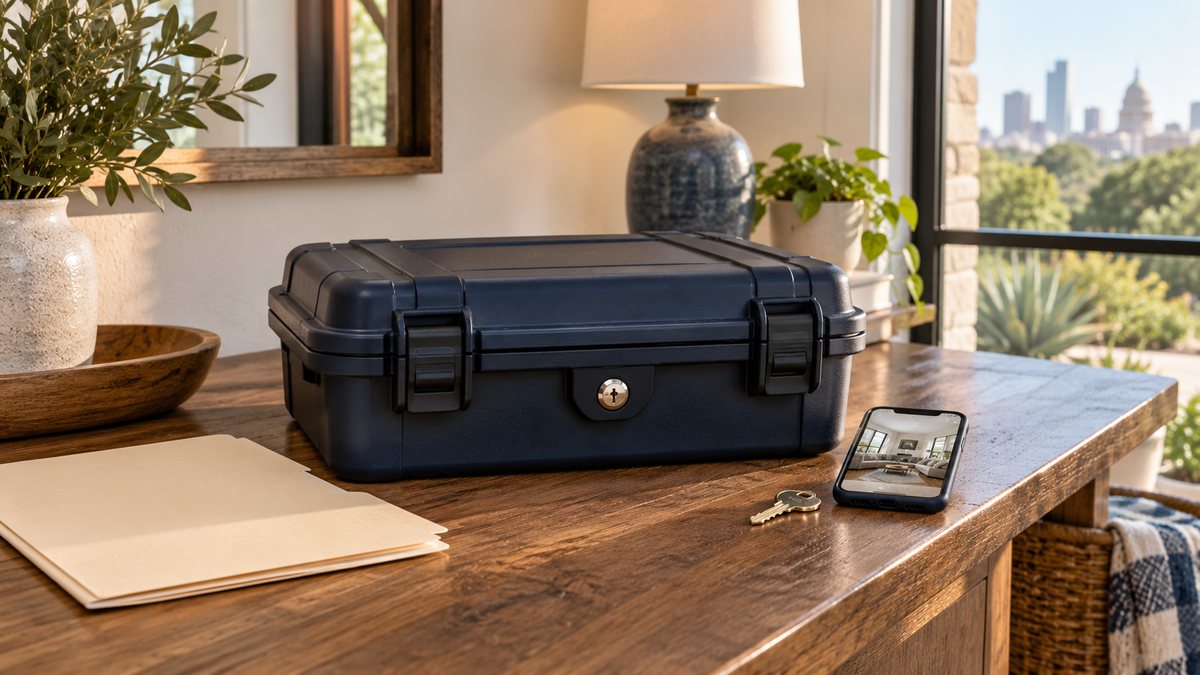
- Keep important records in waterproof and fireproof containers; consider scanned copies on a secure device or in the cloud.
- Create a dated photo or video inventory of your home and belongings. It can help support later insurance and property-loss tax claims.
- Records do not guarantee coverage or tax relief. Policy terms and applicable tax requirements still control the outcome.
If you own an Austin-area home, preparing for a storm includes protecting the records you might need afterward. The useful choice is to assemble a protected packet now, while you can still document the home and its belongings. Loose paper files alone may leave you with less documentation if they are damaged.
The IRS’s September 3, 2026 preparedness reminder recommends protecting important records and documenting property. This is national guidance applied to Austin homeowners, not an announcement of an Austin disaster declaration.
What a protected packet changes after a storm
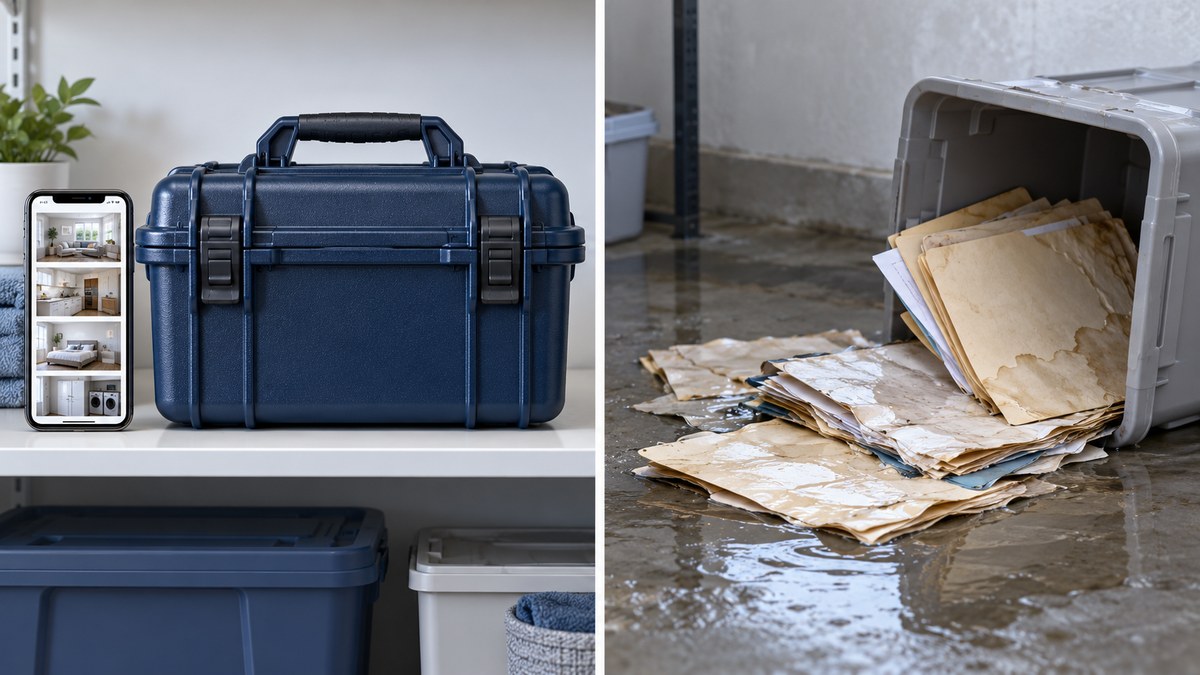
Consider a hypothetical comparison: two Austin homeowners have the same home, insurance terms, belongings and future storm damage. One has current policy documents, a property title, tax records and dated room-by-room photos in protected paper storage, with secure electronic copies. The other keeps the only records as loose paper files and has no visual inventory.
If the loose files are damaged, the second homeowner may have less documentation available. The first has the types of records and property documentation the IRS identifies as potentially helpful for insurance and property-loss tax claims. That is the benefit this preparation provides.
The comparison does not establish a larger payout, a tax deduction or faster processing. Coverage and tax treatment remain contingent on policy terms, losses, reimbursement and any applicable official relief. The cost of preparation is the effort to gather, protect and keep sensitive records current.
Build a packet with records you can identify
Use this checklist to organize what you already have. The document categories come from the IRS reminder; the filing steps below are practical suggestions for making the packet usable.
- Insurance-policy documents: Save the current policy, including its declarations page—the summary of the policy—and any documents that change its terms. Check that the saved version is for the home and policy period you intend to document.
- Property-title records: Gather the documents identifying your ownership of the home. Keep readable copies with the packet so they are available alongside the insurance records.
- Tax records: Include tax returns and other important tax and financial records. Use recognizable file names so you can distinguish reporting years without opening every document.
- A dated visual inventory: Photograph or record the home and belongings room by room. Label the files by room and date so someone reviewing them can understand what they show.
The IRS says photos or videos of homes and other property can help support later property-loss tax claims and insurance claims. They document what you can show; they do not determine what a policy covers.

Choose storage that protects the records and stays accessible
The IRS says to keep tax returns, insurance policies, property titles and other important records in waterproof and fireproof containers. It also advises considering scanned paper records stored on a secure device or in the cloud. These are complementary ways to prepare: protected paper preserves a physical set, while electronic copies provide another way to retrieve the information.
A secure device may suit a household that wants direct control of its copies, but it needs its own protected storage. Keeping it beside the paper packet leaves both in the same location. A cloud service gives you a copy separate from the home, but you need to protect the account and retain a way to access it.
For either electronic option, open the saved files to check that they are complete and readable. Avoid putting tax and ownership documents in a publicly shared folder. Choose a setup you can maintain; a scan you cannot find or open is a weak backup.
Keep the packet useful as the home changes
For an Austin-area homeowner, the practical next step is the same whether the property is a long-term home or one you expect to sell: gather the records and document its current condition before a loss. This recommendation applies national preparedness guidance to your household; it does not imply that a particular Austin property is covered for a future storm.
As a maintenance habit, review the packet when your insurance renews, and add dated images after changes to the home or belongings. Label policy periods and inventory dates rather than leaving several unidentified versions. Keep earlier records organized instead of treating this checklist as permission to discard them.
If damage occurs later, use the packet to help document the property and the records relevant to the loss. Then check the actual policy and any applicable IRS announcement. Preparing evidence now and determining eligibility after a loss are separate decisions.
Frequently asked questions
Does an uninsured loss automatically qualify for a tax deduction?
No. The IRS says uninsured or unreimbursed losses may be eligible subject to tax-law requirements. Disaster tax relief varies by disaster, and taxpayers should review the applicable IRS announcement. A record packet does not establish eligibility for a casualty-loss deduction, federal assistance or disaster tax relief.
Is there a starting point for a written belongings list?
Yes. The IRS reminder points to disaster-loss workbooks that can help compile a room-by-room belongings list. Use that structure to organize descriptions alongside your photos or video, so the inventory includes both visual documentation and a written reference.
Sources
- Internal Revenue Service: “IRS Reminder: Disaster preparedness starts with tax records,” IR-2026-104, September 3, 2026. National guidance; news releases may not be updated after release.
If a sale is part of your plans, contact Vladimir Baibus · ATXCasa, LPT Realty, for help fitting this records checklist into your Austin-area home-sale preparations. The Seller guide is another starting point for that broader decision.