
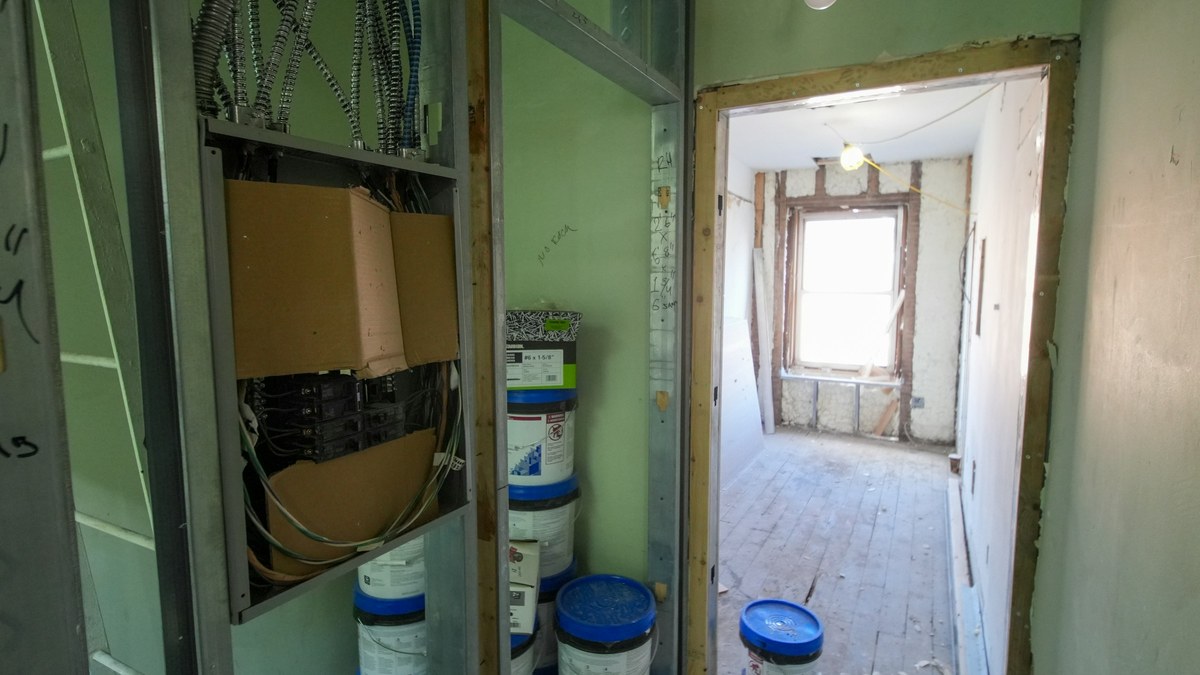
An expired City of Austin permit is not automatically a reason to abandon a home, but it is not paperwork to ignore. Before the option period ends, identify the permit, match its approved scope to the work that actually exists, and find out what the City requires to close or reactivate it. The City says the current property owner is responsible for expired permits—even when someone else owned the home when the permit was issued.
That creates a practical buyer decision: can the seller resolve a clearly understood issue on a workable timeline, or are you being asked to inherit an open-ended project? A verbal explanation such as “that permit is old” does not answer the question.
First, separate three different records
An expired permit means a permit record exists, but the project did not reach a completed status before the permit expired. The missing step might be an inspection, documentation, a correction, or something more substantial. The status alone does not reveal the effort required.
Unpermitted work means the visible improvement may not have a matching permit at all. That is a different investigation. A bathroom, addition, electrical panel, HVAC replacement, or detached structure should not be assumed approved simply because it has existed for years.
An open code case is also separate. Austin’s Citizen Connect tool can show complaint and code-case information by address. A clean permit search does not prove there is no code issue, and a code case does not by itself explain the permit history.
The useful question is not “Does this address have a red flag?” It is “Which record applies, what physical work does it describe, and what must happen next?”
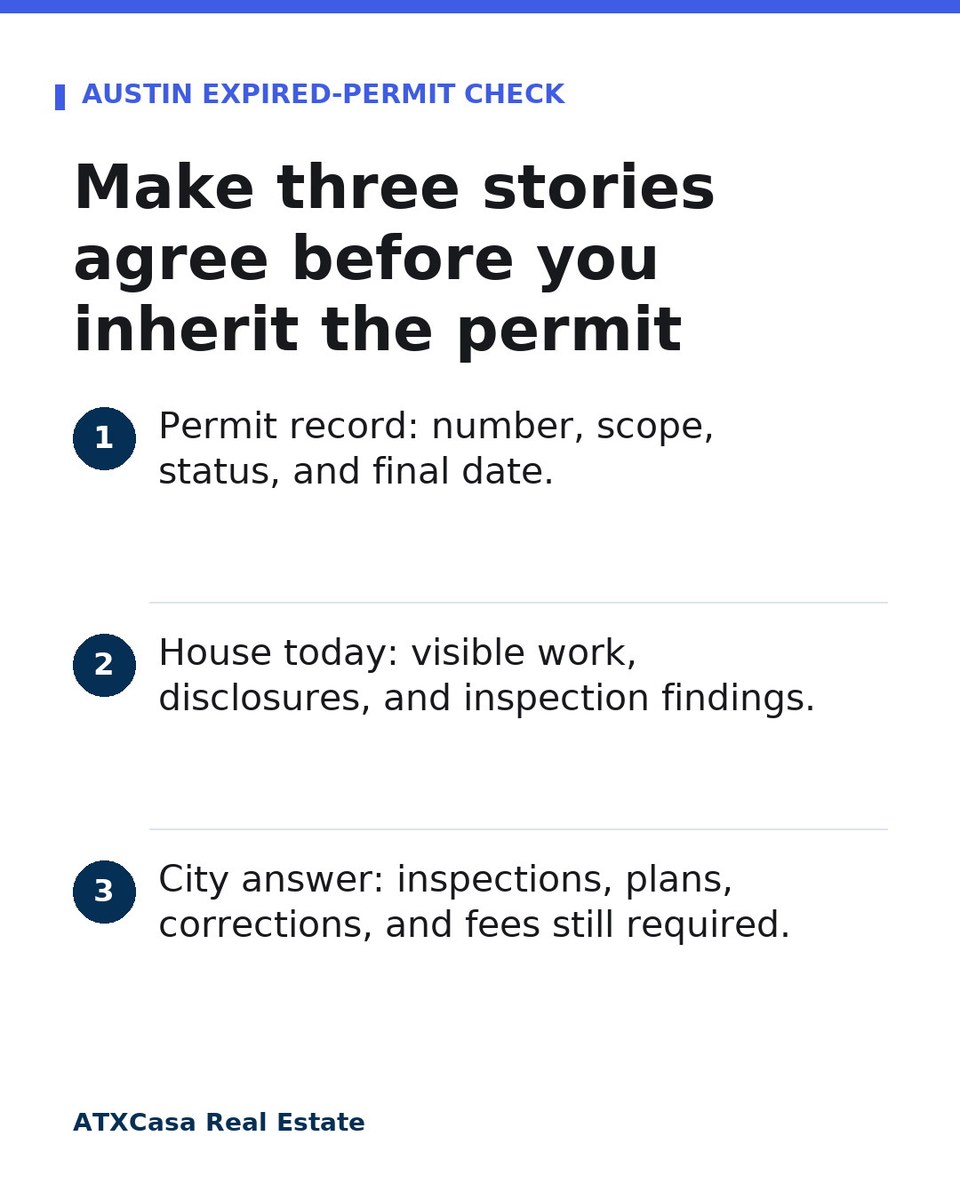
The five-step check before you inherit the problem
1. Confirm the property is in the City of Austin’s jurisdiction
An Austin mailing address does not always mean the City of Austin issued the permits. Confirm the jurisdiction before relying on a City search. Properties in another city or an unincorporated area can use different permitting systems and rules.
2. Pull the permit history and record the exact details
Search the address in the City’s AB+C Public Search and Property Profile tools. For every relevant record, save the permit number, permit type, description or scope, status, issue date, and any final date shown. Property Profile is useful for an initial review, but the City cautions that its information may not reflect very recent changes.
Do not stop after finding one permit that sounds close. A remodel can involve separate building, electrical, mechanical, and plumbing permits. The visible project and the records need to be reconciled as a group.
3. Match the record to the house
Compare the permit description with the seller’s disclosures, inspection report, invoices, plans, and the work you can see. If the permit says “interior remodel” but the property also has a converted garage or detached living space, one record may not explain every change.
This is where an inspector, contractor, engineer, or other qualified professional may be needed. A public record can tell you what was filed. It does not certify that the current construction matches the approved plans or is safe.
4. Get the resolution path in writing
The City says an owner or the contractor listed on the permit can request reactivation of an expired permit, and fees may apply. It also warns that an expired permit may need to be resolved before new permits can be issued. Those general rules still do not tell you what this address needs.
Ask the Development Services Department or the appropriate City contact what the record requires now. Useful questions include:
- Can this permit be reactivated, or must a new application be filed?
- Which inspections, plans, corrections, or fees remain?
- Does another related permit or code case also need attention?
- Could the unresolved record delay a future remodel or addition?
Keep the response with the transaction file. “The seller’s contractor thinks it is easy” is not the same as a property-specific answer from the authority that controls the permit.
5. Assign the risk before the option period ends
Once the next step is understood, decide how it affects the purchase. Depending on the contract, timing, and professional advice, the parties might discuss seller completion, additional due-diligence time, a price or credit adjustment, or a different decision about the home. Do not choose a remedy before you understand the work.
A small administrative closeout and an undocumented addition are not equivalent. The amount of uncertainty—not merely the word “expired”—should drive the response.
A practical example
Suppose the permit search shows an expired electrical permit from a kitchen remodel. The listing photos confirm a remodeled kitchen, but the seller has no final inspection report. A useful investigation would connect four facts:
- the permit number and approved electrical scope;
- the current kitchen work and panel condition;
- the inspection or correction that remains; and
- who will complete it, by when, and at whose cost.
If those facts can be documented, the buyer can evaluate a defined task. If the physical work does not match the permit or the City requires new plans and corrections, the decision has changed. The issue is no longer an old record; it is an unresolved construction project.
What to request from the seller
- permits and inspection records for additions, conversions, major remodels, HVAC, electrical, plumbing, roofing, and other relevant work;
- approved plans, contractor invoices, warranties, and final documentation when available;
- the seller’s written explanation of any expired or incomplete record;
- access for appropriate inspections or specialist review; and
- documentation when the City confirms that a permit has been finalized, withdrawn, or otherwise resolved.
Do not assume the listing agent, seller, inspector, or City search is individually responsible for assembling the entire story. The buyer’s job is to make the records, disclosures, and physical condition agree well enough to support a decision.
When an expired permit may be manageable
The issue may be manageable when the permit scope is clear, the work matches the record, the remaining step is confirmed, a qualified person can complete it, and the timing fits the transaction. It becomes harder to price when records conflict, plans are missing, finished areas do not match the approved use, or the City cannot describe a straightforward closeout path without further review.
That is why the best time to investigate is during due diligence, not after closing when the current owner already holds the responsibility.
Frequently asked questions
Does an expired Austin permit automatically mean the work is unsafe?
No. The expired status shows that the permit did not reach completion in the City’s records. It does not by itself prove whether the work is safe, defective, or merely missing a final administrative step. Verify the physical work and the City’s required next action separately.
Can a buyer reactivate an old permit after closing?
The City says a property owner can request reactivation of an expired permit, subject to the applicable process and fees. That does not guarantee a simple approval. Determine what the specific permit requires before agreeing to inherit it.
Could an expired permit affect a future project?
Yes. The City says expired permits may need to be resolved before new permits can be issued. Buyers planning an addition, ADU, or major remodel should treat that as part of the project’s feasibility review.
Where should I start the search?
Start with the City’s AB+C Public Search and Property Profile for permit history, then use Citizen Connect for complaint and code-case information. Confirm the correct jurisdiction and ask the City about any ambiguous or unresolved record.
Buying an Austin home with a permit question? Message Vlad Baibus at ATXCasa for help organizing the property records, seller questions, and professional follow-up before your option period ends.
This article provides general real-estate education, not legal, engineering, code, or construction advice. Rules and property conditions vary. Confirm transaction rights with the appropriate professionals and property-specific requirements with the permitting authority.