
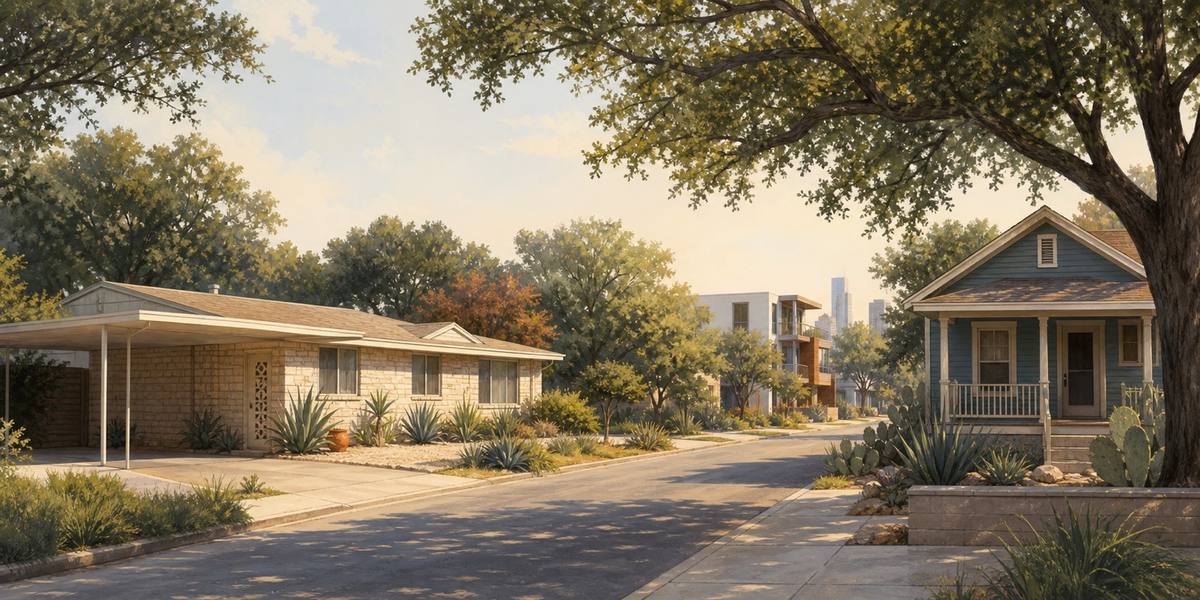
“East Austin” is not a neighborhood choice. It is a choice between very different kinds of homes and very different ownership experiences. A buyer looking at Holly or East César Chávez is often looking at an older, close-in house on a smaller lot, where the surrounding built environment is still changing. A buyer looking around Windsor Park may be comparing 1950s and 1960s ranch homes—some beautifully rebuilt, some still waiting for their expensive chapters. Mueller is a different proposition again: newer, planned, mixed-use housing on the former airport site.
Start with the home type you want, the parking you need, and the repairs you are willing to manage. Those requirements help narrow the search; a property’s condition and immediate surroundings determine whether it stays on your shortlist.
The useful question: what kind of East Austin home are you buying?
Here is the cleanest way to start a search. Decide which of these four propositions you prefer:
| If you want… | Start looking at… | Be honest about… |
|---|---|---|
| An established, close-in setting and an older home with real character | Holly and East César Chávez | Smaller lots, limited off-street parking in places, and a neighborhood where new development is part of the picture. |
| An urban, central-east setting with an evolving commercial/residential edge | Central East Austin around the 11th and 12th Street corridors | Not every block offers the same housing or pace of change; the corridor and the residential streets are different searches. |
| A single-story home that may reward a thoughtful renovation | Windsor Park and nearby University Hills | Many houses are postwar ranches or cottages. A great remodel can be a gift; an incomplete one can become your project. |
| A newer, more intentionally planned environment | Mueller | You are choosing a compact planned community and its housing mix, rather than the irregularity of older individual lots. |
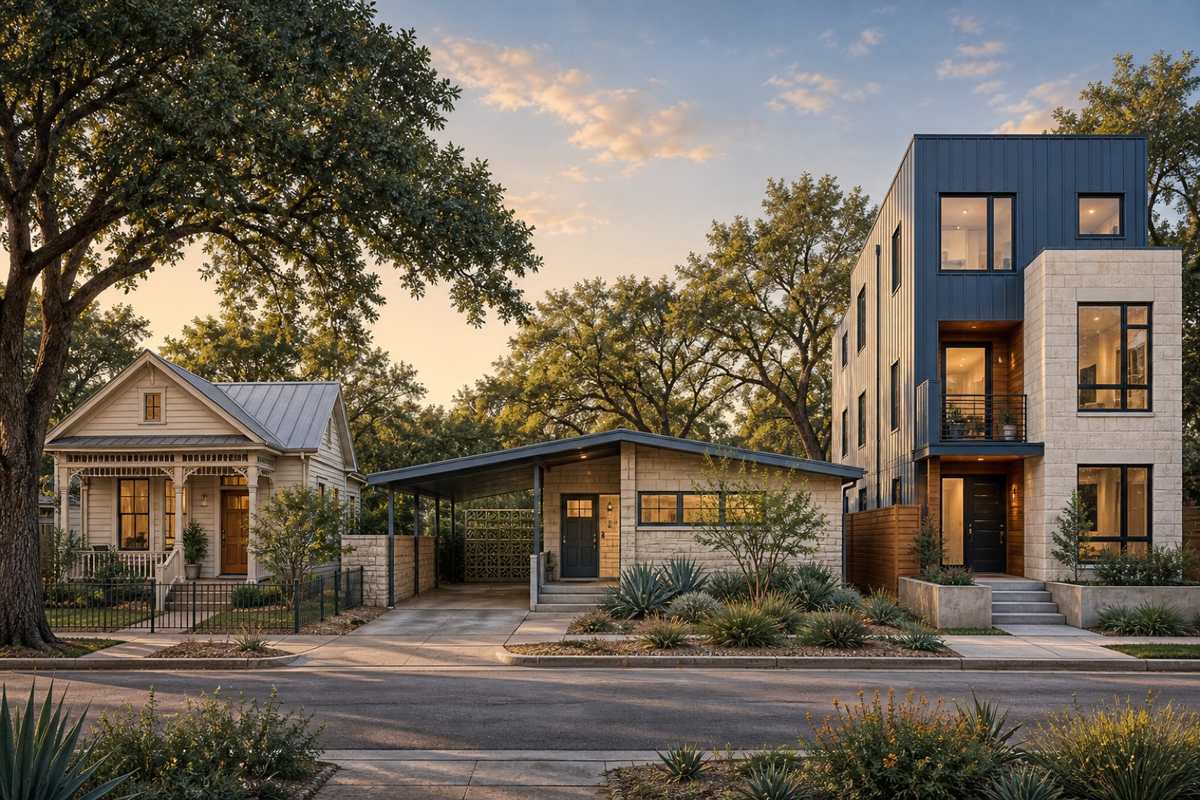
This is not a ranking. It is a way to stop comparing apples, ranches, cottages, and a former-airport redevelopment as if they are interchangeable because each sits somewhere east of I-35.
Holly and East César Chávez: buy close-in because that is the point
For many people, the appeal here is simple: an older home in a close-in part of the city, near the river corridor and the energy of East César Chávez. But the purchase is rarely just about the home’s finish level. It is about accepting an older neighborhood fabric and deciding whether that is a feature for you.
The City’s Holly Neighborhood Plan was adopted December 13, 2001. Treat it as historical planning context, with present-day conditions checked at the property. For example, imagine a renovated bungalow that meets your layout needs but has no driveway or garage. If off-street parking is essential, attractive finishes cannot resolve that mismatch. If you can use the available parking arrangement comfortably, the home may still fit your priorities.
One documented example of planning change is Council’s February 9, 2023 approval of Ordinance 20230209-071. It changed the future land-use map designation for specified properties, including 2309 East 2nd Street and 2320 East César Chávez Street, from Single Family and Civic to Mixed Use. That map describes intended future uses; this parcel-specific action does not establish that construction will occur. If a nearby site matters to your purchase, identify the affected parcels and distinguish a proposal from an approval before deciding whether the possible uses fit your preferences.
Who this fits: buyers who genuinely value a close-in, older-home setting and are comfortable paying attention to a property’s immediate block, parking setup, additions, and the built environment around it. It is a poor fit for someone who wants a uniform subdivision feel or assumes every home can be treated like a blank-slate renovation.
Central East Austin: choose the street, not the headline
The City lists the Central East Austin Neighborhood Plan as adopted December 13, 2001. That establishes its historical planning context; it does not tell you how a particular street functions today. When comparing homes around the 11th and 12th Street corridors, make the immediate surroundings part of the comparison.
Visit the block when you expect to leave for work and return home. Check whether parking, driveway access and nearby activity work for your routine. A home near businesses may suit someone who values that proximity; a residential side street may suit someone who prefers less activity outside. For any identified nearby land-use case, confirm the address, proposed use and approval status. Reconsider the shortlist if those facts conflict with your needs, while remembering that an approval guarantees neither construction nor a resale outcome.
Who this fits: buyers who want an in-town home and appreciate a neighborhood with visible history and change—but who will choose the exact street and home with care, rather than buying a ZIP code story.
Windsor Park: the postwar ranch decision
The City lists the University Hills/Windsor Park neighborhood plan materials with August 2007 adoption dates. Those documents provide historical context, rather than a current inventory of available homes. If a Windsor Park ranch appeals to you, focus the comparison on its layout, remaining systems and documented changes.
A single-story ranch may suit a buyer who likes the layout and wants to improve the house over time. Separate cosmetic updates, such as paint and cabinets, from additions, garage conversions, structural changes or changes to living area. For altered space, request the work history and applicable permit records, then have a qualified inspector or relevant specialist assess unresolved questions. The useful question is: what work is documented, what condition is it in, and what would I still need to repair or verify?
Imagine comparing ranches with similarly attractive kitchens. One has dated invoices and applicable permits for roof and electrical work; the other has records only for cosmetic updates. The first gives you specific work to have inspected, although records alone do not prove quality. For the second, request disclosures, work dates and contractor information, then obtain an assessment of unresolved systems and repair estimates before committing. If you want little immediate work, favor the home whose documented and inspected condition supports that goal. A home with remaining repairs may still fit if you can fund and manage them after closing.
Who this fits: buyers who want a house with a recognizable postwar structure and can distinguish between a remodel they admire and a renovation they understand.
Mueller: choose the planned version of East Austin
Mueller is the redevelopment of the former Robert Mueller Municipal Airport. The City describes just over 700 acres planned as a compact, pedestrian-oriented community with a mix of uses and housing for different incomes; Council adopted the redevelopment-and-reuse plan in 2000. Its neighborhoods were planned alongside parks, retail and offices. The City’s Tax Increment Financing Reinvestment Zone No. 16 project description lists approximately 4,600 housing units. That approximate project figure should not be read as a current occupied-home count or inventory of homes for sale.
Mueller’s planned environment can suit a buyer who wants housing, parks and businesses arranged within a coordinated development. The trade-off is whether a particular home’s layout, outdoor space and surroundings fit the way you want to live. Check its age, maintenance history and condition individually; the redevelopment plan does not establish those facts. If your priority is an older house you can reshape over time, compare the specific work each property would require or allow before choosing.
Who this fits: buyers who want newer housing in a compact, mixed-use part of the city and prefer a more defined development pattern to the variability of an older neighborhood.
What about price, Tesla, the airport, and “future potential”?
Those are reasons people start searching east, but they are not a reason to choose a house. A broad claim that East Austin is “up-and-coming” tells you almost nothing about whether a small older home in Holly, a ranch in Windsor Park, or a newer Mueller property is a good buy for you. Tesla’s factory, the airport, and regional job growth may matter to some households, but they do not turn a specific home into a good fit or guarantee appreciation.
The better lens is simpler: choose East Austin because you want a particular combination of home type and location—not because you expect a neighborhood label to do the investment work for you.
The short version: pick your trade-off on purpose
- Choose Holly or East César Chávez if the close-in, older-home experience is worth accepting smaller-lot and changing-context realities.
- Choose Central East Austin if you want a central location with history and an urban edge, then select the block—not just the area name.
- Choose Windsor Park if a postwar ranch or cottage is the kind of house you can see yourself improving, maintaining, and living in.
- Choose Mueller if newer, planned, mixed-use housing is more attractive to you than older-house variability.
Once you have named that trade-off, search current Austin-area listings using your home-type, parking and renovation requirements. For help comparing actual homes against those needs and identifying the property questions that could change your shortlist, talk with Vlad Baibus at ATXCasa.
Frequently asked questions
Are East Austin homes mostly teardowns?
No. East Austin includes older cottages, postwar ranches, renovated homes, newer construction, multifamily housing, and planned communities. Whether an older house is worth preserving, renovating, or replacing is a property-specific question that depends on condition, documentation, the lot, and the buyer’s goals.
Which East Austin area is best for a buyer who does not want a major renovation?
Mueller is a logical starting point for buyers who prefer newer, planned housing. In older areas such as Holly, East César Chávez, and Windsor Park, individual homes range from carefully renovated to project-ready, so the home—not the neighborhood name—should drive that decision.
Why do buyers choose Windsor Park?
One reason is its housing stock: many homes are one-story 1950s and 1960s ranches, with some older cottage-style homes. That appeals to buyers who prefer an existing single-family structure and want to assess renovation potential case by case.