

TL;DR
- FHFA’s House Price Index measures average price changes across repeat sales or refinancings. It does not tell you what one Austin-area home will sell for.
- Do not apply an index percentage to a home’s prior price and treat the result as its likely sale price.
- Before setting an offer or list-price expectation, compare the home’s condition, location, features, current competing listings and relevant recent closed properties.
If you are buying or selling an Austin-area home, a house-price headline can make a proposed price feel justified—or wrong. The useful answer is narrower: the Federal Housing Finance Agency’s House Price Index, or FHFA HPI, provides market context. It does not supply a price opinion for your address. Treating it as one can lead you to overpay, reject a reasonable offer or list at a price the property comparisons do not support.
A 5% index change does not settle this home’s price
Consider a hypothetical Austin-area home with dated finishes and a higher asking price than nearby updated homes. You also see a 5% year-over-year increase in an applicable FHFA index. That percentage is an assumption for this example, not a current Austin statistic.
The index describes an average change for its geography. It does not establish that this home’s prior price should rise by 5%, or that its asking price is reasonable. FHFA describes the HPI as a broad measure based on repeat transactions, rather than a valuation of this property. See FHFA’s methodology overview.
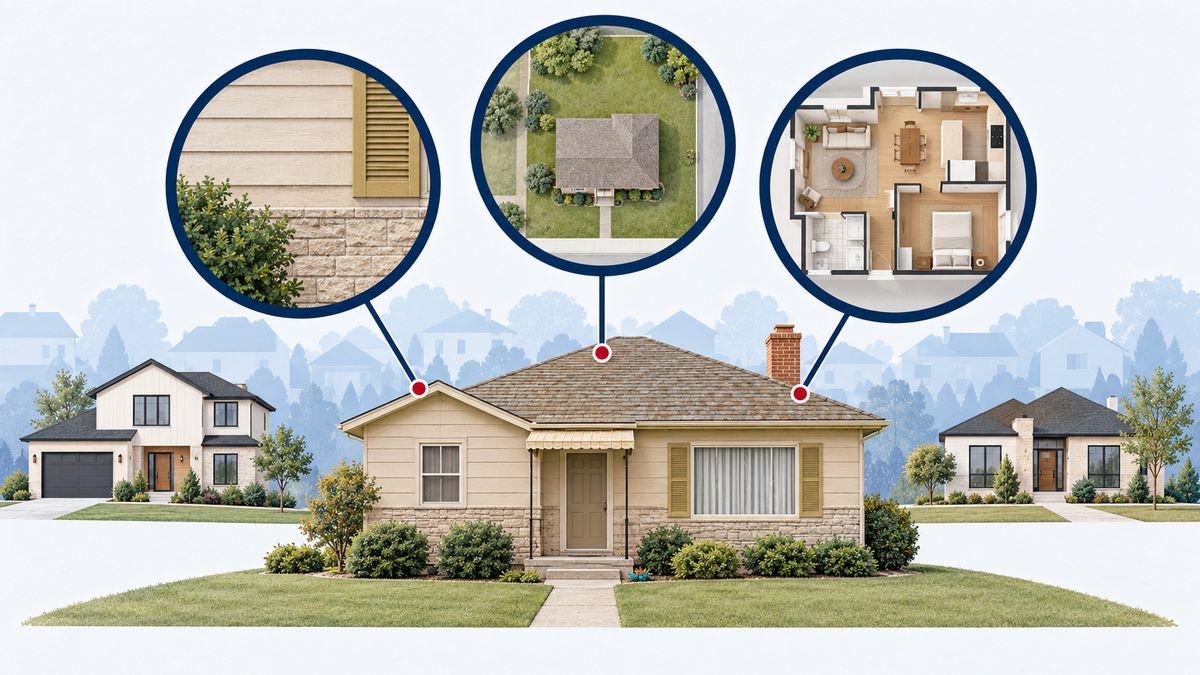
Before deciding on an offer or list price, compare the home’s specific condition, location, features, current competing listings and relevant recent closed properties. “Closed” means the sale has completed; a comparable is a property similar enough to help assess the home you are pricing.
Suppose that review finds the nearby updated homes also have similar locations, sizes and features, and relevant recent sales do not support the subject home’s higher asking price. The practical response is to question that premium. A buyer can base an offer on those comparisons; a seller can reconsider the asking price. The index increase does not resolve the mismatch.
The recommendation changes if closer comparisons reveal a meaningful advantage, such as a different lot or layout, and relevant closed sales support a higher price. Dated finishes alone would not settle the answer either. This is a hypothetical decision process, not a claim about a particular Austin neighborhood or a fixed discount for cosmetic work.
What FHFA’s repeat-sales index actually measures
FHFA calls the HPI a “weighted, repeat-sales index.” In plain language, it measures average price changes in repeat sales or refinancings on the same properties. That makes it useful for understanding movement over time; it does not turn the average into a price for each home. Source: FHFA House Price Index.
FHFA says its data come from repeat mortgage transactions on single-family properties with mortgages purchased or securitized by Fannie Mae or Freddie Mac since January 1975. That is a defined transaction source, not a description of every home offered for sale today. Source: FHFA’s data description.
The benefit is a consistent way to discuss broad price change. The limitation for a buyer or owner is equally important: the methodology page does not establish how your home’s condition, precise location or features affect its price. Property comparisons take more work, but they address the actual offer or listing decision.

Build the Austin-area comparison before choosing a price
For an Austin-area search, do not treat homes as interchangeable simply because they appear under the same metro heading. Choose comparisons that match the property and the alternatives a buyer would realistically consider.
- Compare condition, location and features together. Write down the differences between the subject home and each proposed comparable. An updated kitchen does not erase a different location, lot or layout. If the differences are substantial, look for a closer match before drawing a price conclusion.
- Separate active competition from completed sales. Use the Home search to identify current alternatives, then compare relevant recent closed properties. Asking prices show what sellers are requesting; completed transactions provide evidence of what buyers and sellers agreed to.
- Identify what would change your decision. If the asking price exceeds the relevant closed comparisons, look for a property-specific reason. If that reason is missing, a buyer can negotiate or choose another home, while a seller can reconsider the price.
Once a home is listed or a buyer’s search continues, revisit the comparison when relevant new listings or closed sales appear. A price expectation should respond to evidence about the home and its competition. Neither an old index headline nor an initial comparison guarantees the eventual sale price.
Frequently asked questions
Would a ZIP-code index be specific enough to price my home?
FHFA reports HPI geography at national, census-division, state, metro-area, county, ZIP-code and census-tract levels. A smaller area can narrow the geographic context, but it still reports an index rather than a valuation of your address. Check the geography and reporting period before using any figure. Source: FHFA HPI coverage.
Should I wait for the next HPI release before making an offer or listing?
If you have relevant recent closed comparisons and a clear picture of current competing listings, another broad index reading will not answer the missing questions about this particular home. If your comparisons are weak or important property facts remain unresolved, take time to clarify those facts; the next headline cannot substitute for them.
Sources
- Federal Housing Finance Agency: FHFA House Price Index® — methodology, transaction source and geographic coverage; verified evidence checked October 14, 2026. No current Austin index reading or forecast is used.
Recommended reading
- What Austin Homebuyers Can Learn from Recent Sold Listings
- How to Use Austin Sold Homes Data to Price Your Property
Considering an Austin-area offer or sale? Contact Vladimir Baibus · ATXCasa, LPT Realty with the property address and proposed price for help comparing the home’s condition, location, features, current competition and relevant recent closed properties—so your next price decision rests on evidence about the home.