
Austin’s tech workforce drove the city’s housing boom, and the same workforce now benefits from a cooler market. Pay is high, new apartment supply has pushed rents down, and prices have stopped climbing. The decision that matters is no longer whether you can find a home. It is which part of the metro fits your paycheck, your commute and your timeline. I run ATXCasa, and I built this guide from public labor and housing data so you can test any neighborhood against your own salary.
TL;DR
- Austin had 139,820 STEM jobs in 2024, up 17% since 2019, and the median STEM wage was $104,540.
- Home prices rose faster than incomes from 2019 to 2024, but the market has cooled since mid-2022 and rents have fallen.
- Software developers in the metro averaged $143,630 a year in May 2025, which sets a realistic housing budget well above the metro-wide norm.
- Where you work should drive where you search: commute, school district and property tax rate change the true monthly cost more than list price does.
- Compare any listing with recent sold prices, not asking prices.
Table of Contents
- How big Austin’s tech workforce is
- What tech jobs pay compared with the metro
- How tech hiring pushed prices up
- What changed: supply caught up
- Choosing where to live as a tech worker
- Renters, buyers and investors: what applies to you
- Our perspective
- Work with ATXCasa
- FAQ
- Sources
How big Austin’s tech workforce is
Opportunity Austin’s analysis of federal data counts 139,820 STEM jobs in 2024, about 11.1% of all employment, up 17% (more than 20,000 jobs) since 2019. The median annual STEM wage was $104,540.
The narrower IT sector grew even faster. Workforce Solutions Capital Area reports that software publishing, IT services and computer systems design added 30,000 jobs since 2020, reaching nearly 95,000 workers, a 46% increase. The same report counts more than 5,100 IT employer sites in 2024, against 2,400 in 2014.
The Dallas Fed’s regional profile adds that professional, scientific and technical services employment rose 35.5% from December 2019 to December 2024, while information-services payrolls grew 20.3%.
For a buyer or renter, the point is simple: a large pool of well-paid households competes for the same housing, and many of those jobs are spread across several counties rather than one downtown.
What tech jobs pay compared with the metro
The Bureau of Labor Statistics publishes occupation wages for the Austin-Round Rock-San Marcos metro, which covers Bastrop, Caldwell, Hays, Travis and Williamson counties. Its May 2025 release shows 31,960 software developers earning a mean of $143,630 a year. The broader computer and mathematical group averaged $122,150, or $58.73 an hour. These figures exclude self-employed workers, and annual amounts assume 2,080 working hours.
These are averages, so entry-level pay will sit below them and senior pay above. Use them as a starting range, not a promise.
A worked budget example
Here is a simple calculation. Assume you spend about 28% of gross income on housing, which is an illustrative assumption on my part, not a lender requirement.
| Gross salary | Monthly gross | 28% housing budget |
|---|---|---|
| $122,150 (computer and math mean) | about $10,179 | about $2,850 |
| $143,630 (software developer mean) | about $11,969 | about $3,351 |
That budget has to cover principal, interest, property tax, insurance and any HOA dues. In Texas the property tax line is large, and it varies by the taxing units on each address. I cover how the city’s 2026 budget affects it in Austin’s property tax and utility increase.
How tech hiring pushed prices up
The Dallas Fed describes strong in-migration and housing-supply constraints that became pronounced in early 2020 and helped elevate home and rental prices, with housing costs rising faster than many workers’ paychecks.
Two numbers show the scale. The Dallas Fed reported in 2023 that the single-family median price rose from $333,106 before the pandemic to a $523,597 peak, a 57% increase. At the prices and mortgage rates of that time, only 21% of area families could afford to buy.
JPMorgan Chase Institute looked at income against price from 2019 to 2024. In the suburbs, home prices rose about 53% while the age-adjusted median income of 25 to 44 year-olds grew about 42%. In the urban core, prices rose 29% while incomes grew about 43%. The Institute concludes that higher mortgage costs outpaced income growth, including in urban Austin.
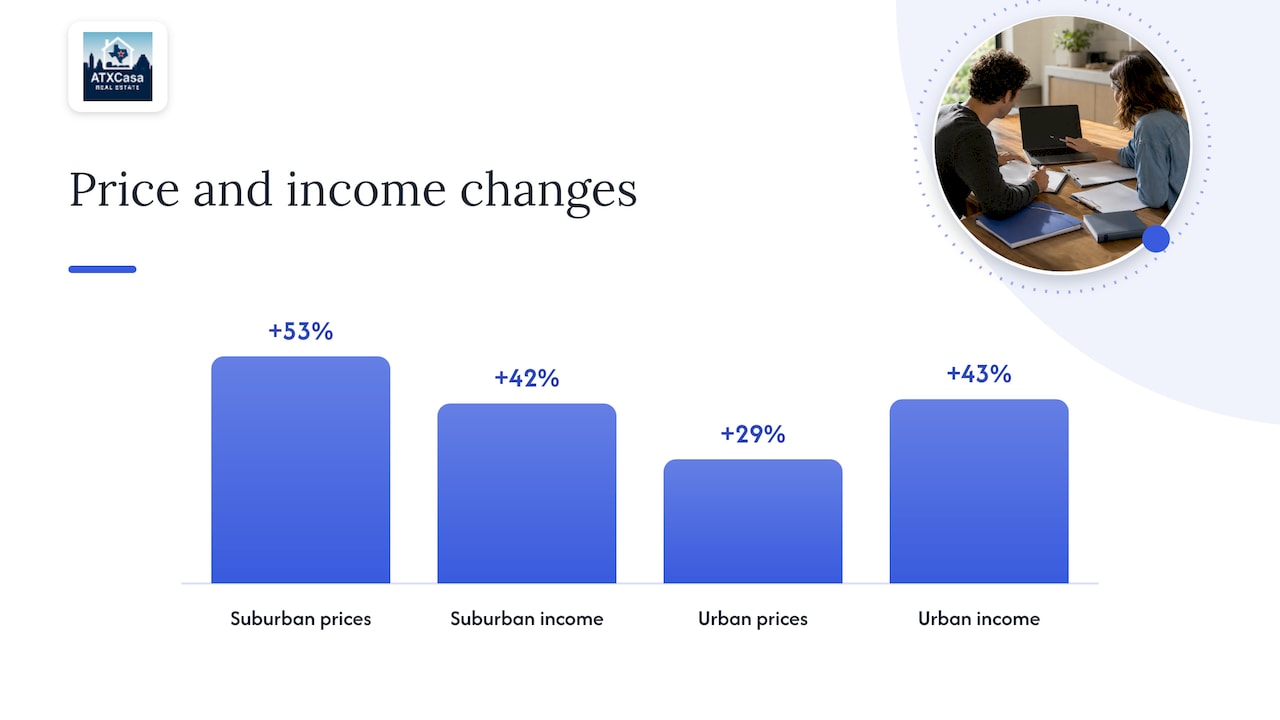
The takeaway for a tech buyer: high salaries helped, but rates did the damage. Your affordability depends as much on the loan terms you lock as on the price you negotiate.
What changed: supply caught up
The Dallas Fed notes the residential market slowed after mid-2022, with prices and rents declining and months of supply above pre-pandemic levels. Months of supply is the number of months it would take to sell all active listings at the current sales pace, and a higher number gives buyers more leverage.
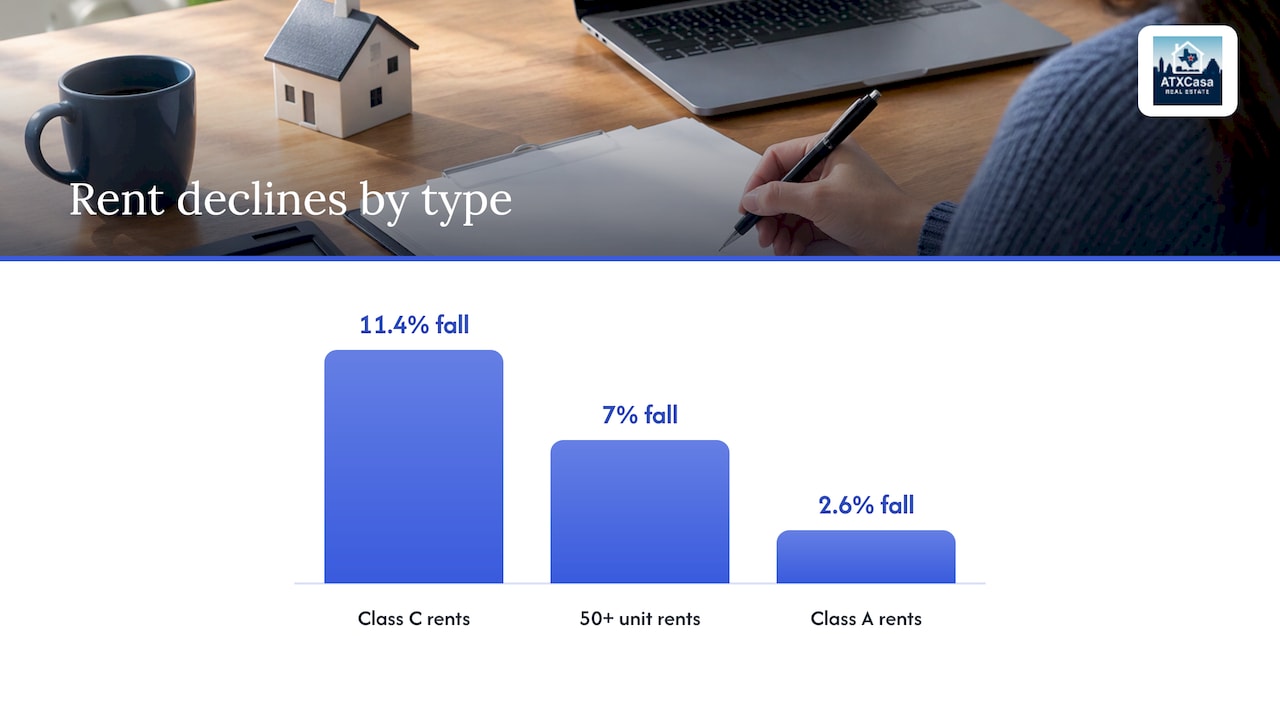
Pew’s March 2026 analysis explains part of the rent decline. Austin added 120,000 housing units from 2015 to 2024, a 30% increase, against 9% growth nationally. Rents in buildings with 50 or more units fell 7% from 2023 to 2024: 11.4% in Class C buildings and 2.6% in Class A.
The Dallas Fed’s 2026 outlook is mixed. Technology remains a growth strength, but the residential market has cooled, and weak office and multifamily conditions may weigh on investment and rent growth in the near term.
For current local numbers, I track them in these pages:
- Austin home prices for price trends and negotiating room
- Austin housing inventory for supply and months of inventory
- Austin rental market for rents, vacancy and concessions
Choosing where to live as a tech worker
The metro’s job centers are spread out, so a neighborhood that suits one employer can be a poor fit for another. Work through these steps in order.
- Map your commute first. Test the drive at your real hours, not midday. If you work hybrid, count the days you commute, because a longer drive three days a week can be worth a lower price.
- Set a monthly budget, not a price cap. Include tax, insurance and HOA dues. Two homes with the same list price can differ by hundreds of dollars a month once the school district and special taxing districts are added.
- Compare sold prices. Asking prices show what sellers hope for. Closed sales show what buyers paid. My neighborhood price patterns article walks through that comparison across the metro.
- Weigh the suburbs against the core. The JPMorgan data shows suburban prices rose faster than urban prices, which is part of why Cedar Park, Round Rock and Georgetown deserve a side-by-side look with in-town options, not an assumption that farther out means cheaper.
- Check the building or lot, not just the area. Foundation, drainage and age of major systems matter in Central Texas, and they are the hidden pitfalls that listing photos do not show.
Rent figures need context
Published average rents often come from large, professionally managed apartment communities. Areas dominated by houses and older small buildings may read low or not appear at all, and a median on new leases will differ from an average across all leases. When you compare two sources, check which measure each one reports before deciding a number is wrong.
Renters, buyers and investors: what applies to you
First-time buyers. The softer market is your advantage. More inventory and fewer bidding wars mean you can ask for inspection time, repairs or closing-cost help. If you are weighing a lease against a purchase, my rent versus buy timing guide lays out the break-even logic.
Families relocating for a job. Start from the employer’s location and the school district, then widen the search along the commute you can tolerate. Plan a trip to see two or three areas in a single weekend and compare them on the same budget.
Investors. Tech wages support rental demand, but the Dallas Fed’s caution on multifamily and rent growth means you should underwrite with flat rents, not rising ones. Check vacancy, concessions and the rent for comparable units, not the asking rent on a listing.
Sellers. Buyers in this market are negotiating, so pricing correctly from the first day matters more than leaving room to cut. See how to price your home in Austin.
Our perspective
Our view is that Austin’s tech economy is still the reason to be here, and the cooler market is the reason to act deliberately now. Salaries in the metro are strong, supply has caught up, and rents have eased. Those conditions reward the buyer who works from data instead of from headlines.
That is how we work at ATXCasa. Our approach pairs nearly two decades of IT experience with local market data, so pricing and neighborhood advice start from numbers: sold prices, inventory, months of supply and the true monthly cost of a specific address. For sellers, we use AI-powered marketing designed to give a listing maximum exposure.
My read for a tech buyer: do not shop by city name. Shop by commute, monthly cost and what comparable homes actually sold for. If those three line up, the neighborhood is right.
Vladimir
Work with ATXCasa
If you are moving to Austin for a tech role, or you are a local selling, investing or buying, ATXCasa helps clients buy, sell and invest across the Austin area, including Cedar Park, Round Rock and Georgetown. You get personalized guidance that covers neighborhood trends and hidden home pitfalls, with a transparent process. Start at atxcasa.com or read the broader Austin housing market overview.

FAQ
Can a typical tech salary afford a home in Austin?
It depends on the role and the loan terms. At the 28% illustration above, the BLS mean for software developers supports roughly $3,351 a month in housing costs, and the computer and math mean supports about $2,850. Your down payment, rate and property tax determine how much house that buys.
Are Austin rents falling because of tech layoffs or new supply?
Pew attributes much of the decline to construction. Austin added 120,000 units from 2015 to 2024, and large-building rents fell 7% from 2023 to 2024. The Dallas Fed also notes that rents had declined for three years as of its profile.
Should I live near my employer or farther out?
Start with how many days you commute. A fully in-office schedule puts a premium on proximity, while a hybrid schedule can justify a farther suburb with a lower monthly cost. Compare sold prices and total monthly costs in each area before choosing.
Is Austin still a good place to invest in rentals?
Tech employment remains a strength, but the Dallas Fed describes a cooler residential market and weak multifamily conditions that may weigh on rent growth near term. Underwrite with flat rents and check local vacancy and concessions for the specific property.
Sources
- STEM Occupational Employment & Salaries, Opportunity Austin
- IT/Tech snapshot, Workforce Solutions Capital Area
- Austin–Round Rock–San Marcos regional profile, Dallas Fed
- Occupational Employment and Wages in Austin-Round Rock-San Marcos, BLS
- High-tech hotspot Austin works to solve labor, housing, Dallas Fed
- Income growth and housing affordability in Austin, JPMorgan Chase Institute
- Austin’s surge of new housing construction drove down rents, Pew