
If you are searching for housing near Apple’s Austin campus, you are almost certainly looking at northwest Austin along West Parmer Lane, and the practical choice comes down to three things: how far you are willing to drive, whether you want to rent or buy, and which side of the Travis and Williamson county line you land on. I will walk through where the campuses sit, how the surrounding areas differ, how to compare them with your own numbers, and what investors should check before buying.
TL;DR
- Apple’s Austin presence is concentrated on West Parmer Lane in northwest Austin, with an older operations campus and a newer 133-acre campus less than a mile apart.
- The areas people compare most are the Parmer Lane corridor in Austin itself, plus Round Rock, Cedar Park and Georgetown, each with a different price and commute profile.
- Compare options with a single worksheet: total monthly housing cost, real drive time at your own hours, and what you give up in each area.
- Investors should weigh Apple’s documented job base against local supply and rent data, not against the campus name alone.
- Our neighborhood price pages show what homes actually sold for, which is a better guide than listing prices.
Table of Contents
- Where Apple’s Austin campuses are
- The areas people compare
- Renting or buying near Apple
- How to compare options with your own numbers
- Commute and daily life
- For investors: what to check near an Apple campus
- Our perspective
- Work with ATXCasa
- FAQ
- Sources
Where Apple’s Austin campuses are
People searching “Apple campus” in Austin usually mean one of two sites, and they sit very close together.
The newer campus is at 6900 W. Parmer Lane, on a 133-acre tract in Williamson County, part of the roughly 8,000-acre Robinson Ranch property. The existing Americas Operations Campus is at 5501-5505 W. Parmer Lane, less than a mile away, according to the same reporting.
That proximity simplifies your search. You do not need to decide between two distant work sites. You need to decide which direction from the Parmer Lane corridor suits your budget and daily routine.
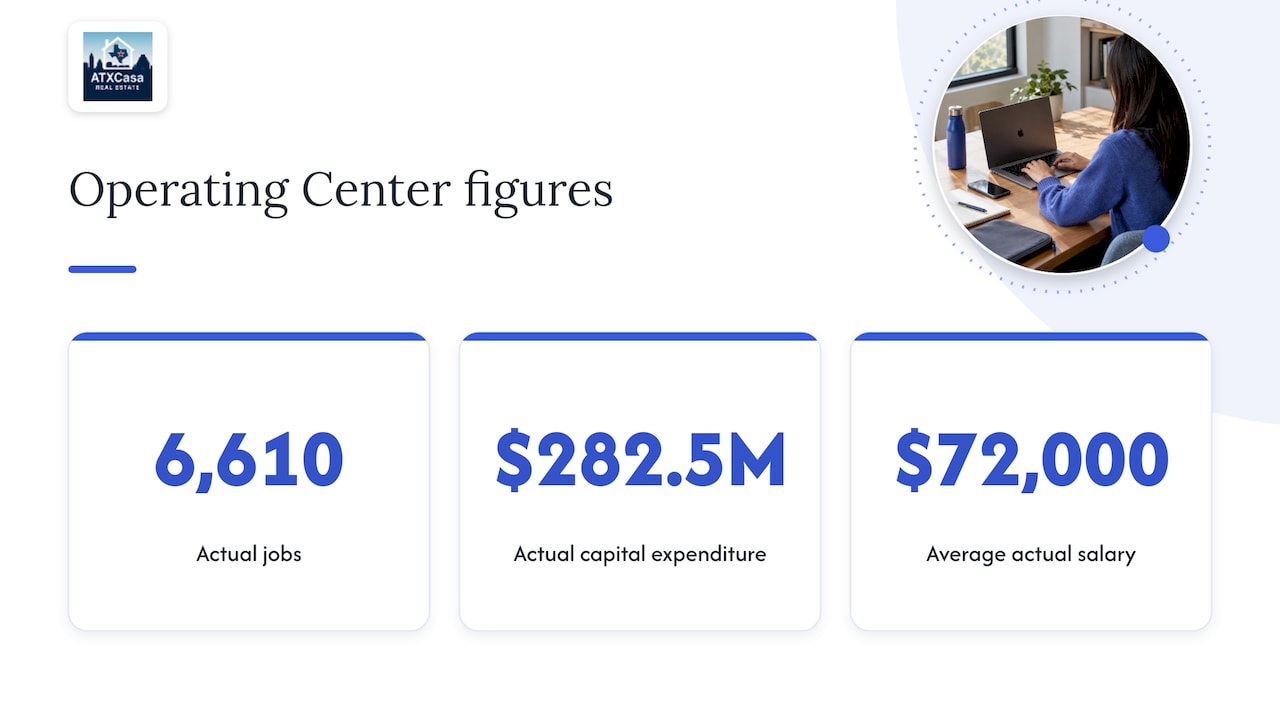
The city’s own economic development records give a sense of scale for the older site. An Austin city agreement document lists Apple’s Operating Center at 5501 W. Parmer Lane in Council District 6 with 6,610 actual jobs, $282.5 million in actual capital expenditure and an average actual salary of $72,000. The agreement was approved in March 2012 and is expected to be completed in December 2026. That is a long-standing employer, not a one-time announcement, and it matters when you think about demand for nearby housing over years rather than months.
The areas people compare
The northwest corridor developed as a place where office campuses, retail and large residential communities grew up together. One commercial real estate report on the Parmer Lane corridor notes that suburban communities have acted as a pressure valve for housing prices that put some areas inside Austin city limits out of reach. That is the dynamic I see in client conversations: people start with a pin on the map near Apple, then widen the circle once they see prices.
Here is how I group the options.
Inside Austin, close to Parmer Lane
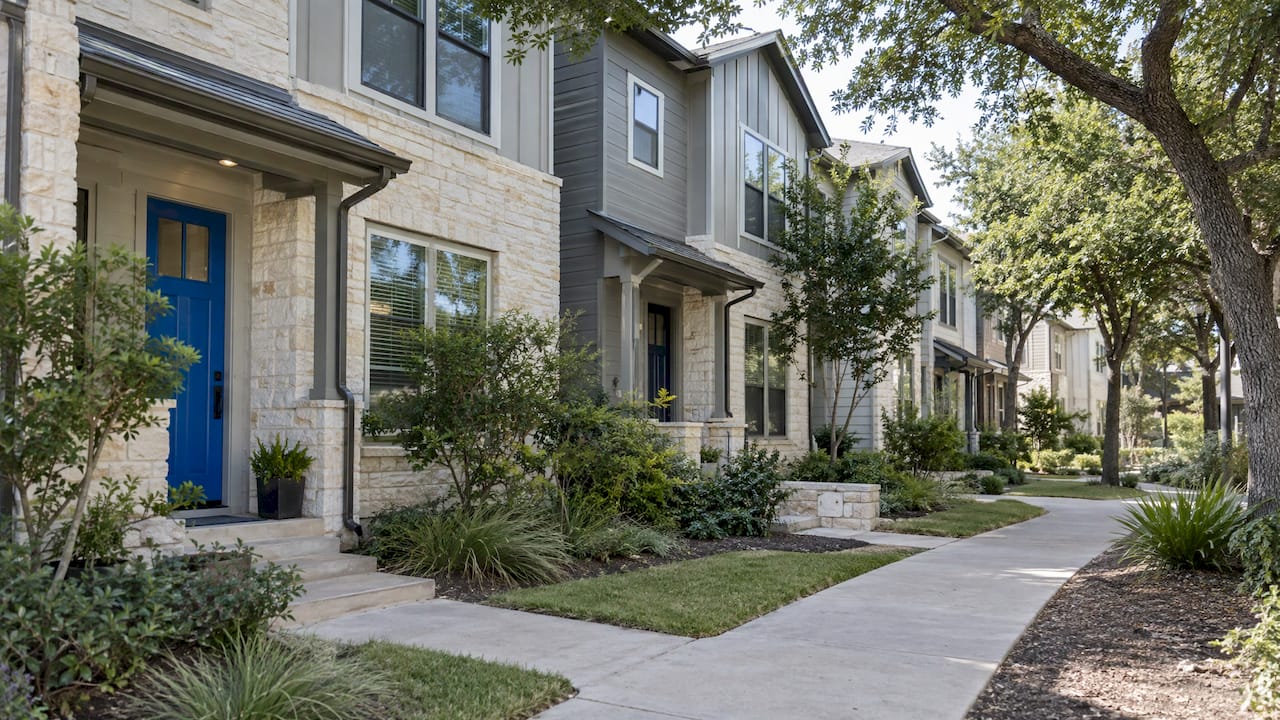
These are the neighborhoods in far north and northwest Austin that sit within a short drive of the campus. The housing mix leans toward large apartment communities, townhomes and single-family homes built over the past few decades. If your priority is the shortest possible commute and you are comfortable renting at first, this is where most newcomers begin.
Round Rock
Round Rock sits to the northeast of the campus area and offers established neighborhoods, a wide range of newer subdivisions and its own commercial centers. It tends to suit families who want a defined school district and a suburban setting while keeping a workable drive to Parmer Lane.
Cedar Park and Leander side
Cedar Park is to the west and northwest. Buyers choose it for newer homes, parks and a strong retail base. The drive to Parmer Lane depends heavily on the route and the hour, which is why I tell people to test it before committing.
Georgetown and farther north
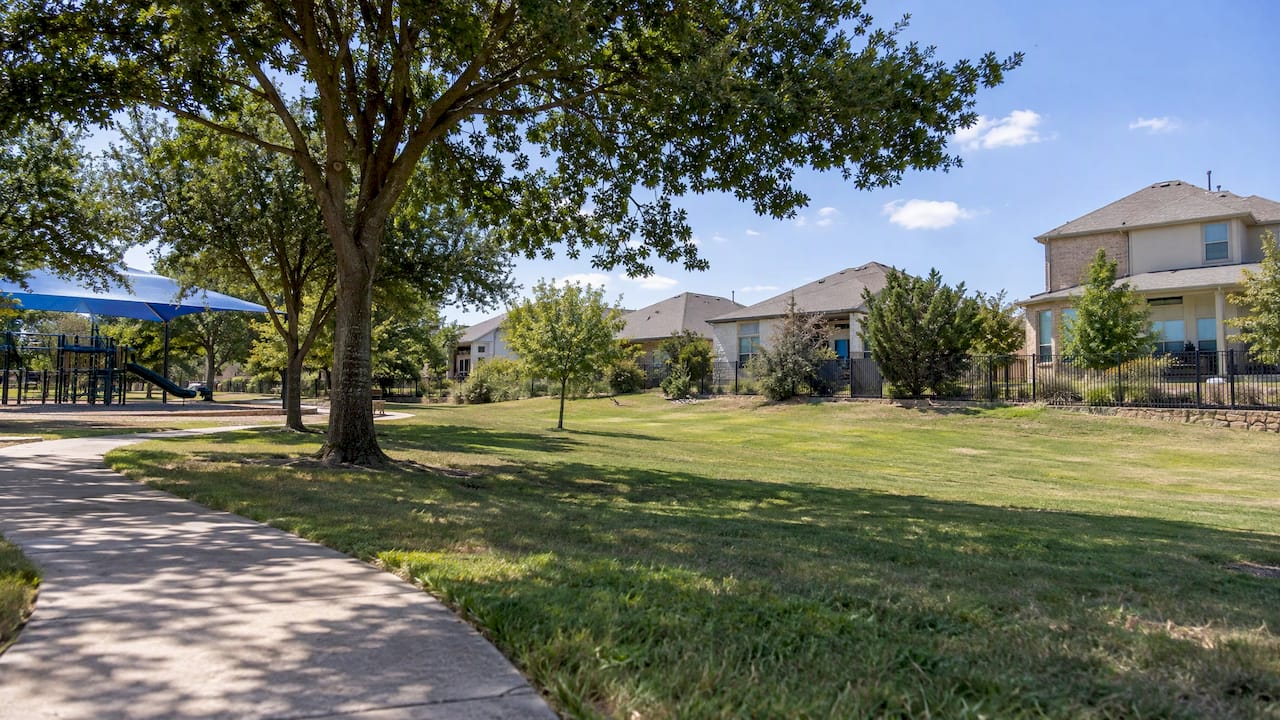
Georgetown offers more space and a distinct town center, with a longer drive. It fits buyers who work hybrid schedules or who value lot size and a quieter setting over the shortest commute.
For a deeper look at how these suburbs differ for buyers, our guide to Austin suburbs to consider buying in covers the trade-offs, and the Neighborhoods & Lifestyle section collects our area write-ups.
Renting or buying near Apple
Many people moving for an Apple role have a start date and limited time to look. That pushes toward renting first, and I think that is a sound approach for most. A 12-month lease lets you learn the commute and the neighborhoods before you buy.
Buying makes sense sooner when you already know you are staying, when your household needs more space, or when your lease rate would be close to a mortgage payment. In either case, the same principle applies: compare total monthly cost, not the headline rent or the list price.
If you are renting, a few points are worth checking:
- Lease length and renewal terms. Ask how renewal pricing is set. Our piece on comparing your real options at rent renewal explains how to benchmark an increase against the market.
- Fees and concessions. Compare the net cost over the full lease, not just the monthly figure.
- Distance in drive time, not miles. A mile on Parmer Lane at rush hour is not a mile on a quiet street.
If you are buying, start with what homes actually sold for. Our neighborhood price patterns analysis shows what sold-home data reveals across the metro, and our Austin home prices overview explains the current negotiating room for buyers.
How to compare options with your own numbers
Published rent and price ranges for the Apple area vary widely by source, date and home type, and any single figure goes stale quickly. Rather than quote a number that may be out of date, I recommend building your own comparison. It takes about an hour and gives you a better answer than any article.
Step 1: Pick three to five candidate areas
Include at least one area closer to Apple than you think you need and one farther out. The contrast is what teaches you.
Step 2: Calculate total monthly housing cost
For renters, add rent, utilities, parking or pet fees and renter’s insurance. For buyers, add principal and interest, property taxes, homeowner’s insurance and any HOA dues. Property tax rates differ by taxing entities, so check the specific address rather than assuming a county-wide figure.
Step 3: Drive the commute at your real hours
Drive from each candidate address to Parmer Lane at the time you will actually travel, on a weekday, on two different days. Note the time, the route and where it slows down. If your schedule is flexible or partly remote, your tolerance may be higher, and that opens up more of the map.
Step 4: Score daily life
List what matters: schools, grocery access, parks, noise, walkability, pet-friendliness. Weigh them. A family with school-age children will weigh schools much more heavily than a single renter will.
Step 5: Compare in one table
Here is a simple template I use with clients. Fill in your own figures.
| Area | Monthly housing cost | Drive to Parmer Lane at your hours | Top three priorities met | What you give up |
|---|---|---|---|---|
| Area A | ||||
| Area B | ||||
| Area C |
The last column is the one people skip. Every option costs you something, whether it is time, space, age of the home or access to amenities. Naming it early prevents regret later.
Commute and daily life
The drive is the main reason people choose a specific side of town. Parmer Lane connects to major routes in the region, and your best route depends on where you start. I would avoid relying on a metro-wide average, since commutes vary a great deal by corridor and hour. Test your own route instead.
For schools, amenities and daily rhythm, the details differ block by block and district by district. School assignments in particular depend on the exact address, so confirm the zoned campus with the relevant school district before you make an offer or sign a lease. This is a step I never skip with families moving in from out of state.
For investors: what to check near an Apple campus
An anchor employer supports housing demand, but it does not guarantee returns on any individual property. The questions that matter are about the building, the submarket and your financing.
Employment base. The city agreement records cited above show that the Parmer Lane operations center has a substantial documented job base. That is a useful data point for long-term demand, though it says nothing about your specific rent or resale price.
Supply. Multifamily supply has shaped rents in the region. Institutional Property Advisors’ research notes that the Austin multifamily market has faced recent supply-side pressure, while the long-term outlook stays positive because of employment fundamentals and a slowdown in new deliveries expected for 2026. For a single-family or small multifamily buyer, that means checking how many competing units are being built or leased up nearby.
Market indicators. A general framework helps keep you honest. This overview of indicators of profitable real estate markets lists signals such as job growth and supply trends that you can test against local Austin data.
Financing. Investor purchases often use different loan products than owner-occupied homes. If you are weighing a fix-and-flip, bridge or short-term rental purchase, it helps to understand the options for investor loans in Texas before you write an offer, since terms affect your cash-on-cash return.
Local data. Check months of inventory, active listings, median price and the close-to-list price for the specific area. Our Austin housing market page and the Market Insights category track these measures, and the August 2025 recap for Travis and Williamson counties shows how we read them county by county. Because the Apple campuses straddle both counties, that split matters. For new builds, see New Construction & Investment.
A simple way to use months of inventory: divide active listings by the number of homes sold in a month. If an area has 300 active listings and 100 sales a month, that is 3 months of inventory. Lower numbers generally favor sellers, higher numbers favor buyers. Run it for the specific submarket, not the whole metro.
Our perspective
Searches like this one come from people with a deadline and a lot of unknowns. They know where they will work. They do not yet know where they will live, and the map around Parmer Lane is more varied than it first looks.
We approach it as a data problem first. Vlad spent nearly two decades in IT before becoming a Realtor, and that shapes how we work: we look at sold prices, inventory and days on market, then layer in the things data does not capture, such as how a street feels at 5 p.m. or which home has a hidden maintenance issue.
Our view is that the best choice near Apple is rarely the closest address. It is the one that balances commute, monthly cost and daily life for your household. We built our guides around the questions clients actually ask, and we aim to keep the local market data current so you are not relying on a generic national portal.
My read: rent first if you are relocating on a short timeline, use the first few months to drive your real commute, and then buy with sold-price data in hand.
Vladimir
Work with ATXCasa
If you are relocating for an Apple role or investing near the Parmer Lane corridor, we can help you compare areas in Austin, Round Rock, Cedar Park and Georgetown using local sold-price data, and guide you through buying, selling or investing from first search to closing.
Start at ATXCasa to tell us your timeline and budget, and we will point you to the neighborhoods worth touring first.
FAQ
Where is Apple’s campus in Austin?
Apple’s newer campus is at 6900 W. Parmer Lane in Williamson County, on a 133-acre tract. The existing operations campus is at 5501-5505 W. Parmer Lane, less than a mile away. Both are in the northwest Austin Parmer Lane corridor.
Which areas are most popular for people working at Apple in Austin?
People commonly compare far north and northwest Austin, Round Rock, Cedar Park and Georgetown. The right one depends on your budget, how long a drive you accept and whether schools or space matter most. Drive each route at your actual commute hours before deciding.
Should I rent or buy when I start a job at Apple?
Most relocating employees do well with a 12-month lease first, since it lets you learn the commute and neighborhoods. Buy sooner if you know you are staying and your monthly cost would be comparable. In either case, compare total monthly cost rather than rent or list price alone.
Is buying an investment property near Apple a safe bet?
No single employer guarantees returns on a specific property. The documented job base supports long-term demand, but you still need to check local supply, rents, inventory and your financing terms. Run the numbers for the exact submarket and talk with a licensed agent and lender before you buy.
Sources
- Revised Apple Northwest Austin campus site plan, Community Impact
- Monumental tech campus projects on the Parmer Lane corridor, Access Partners
- City of Austin economic development agreement document
- Austin Multifamily Market Report, Institutional Property Advisors
- Signs of Profitable Real Estate Markets: 8 Key Indicators
- Real Estate Investor Loans in Texas