

If you’re buying in Austin and plan to use City down payment assistance (DPA), verify eligibility before counting it toward your purchase. The property must be within Austin Full Purpose city limits, and you must complete City-listed homebuyer education and obtain mortgage approval from a participating lender. For a mortgage covered by the Closing Disclosure requirement, the lender must provide that form at least 3 business days before closing; CFPB lists exceptions, so the rule does not apply to every deal.
TL;DR:
- Plan for 3% to 20% down plus closing costs of 2% to 5%; a $350,000 home may require $17,500 to $87,500 upfront.
- The City page retrieved October 15, 2026 lists up to $40,000 for down payment, closing costs and prepaid expenses, a $440,000 sales-price cap, and household income at or below 80% of Median Family Income.
- Build a realistic closing window into the offer when assistance or underwriting may take longer, and preserve inspection contingencies for repairs, credits, or withdrawal.
- Review the Closing Disclosure against the Loan Estimate at least three business days before closing, and verify wire instructions by calling your title company directly.
Table of Contents
- Printable Austin Homebuying Checklist: Pre-Approval to Move-In
- How to Turn Your Income and Savings Into an Austin Budget
- Mortgage Options and Why Pre-Approval Matters in Austin
- City of Austin Down Payment Assistance: Eligibility and Steps
- Austin Market Snapshot and How to Choose a Neighborhood
- How to Assemble an Offer and Negotiate in Austin
- Inspection Checklist and What to Do With the Findings
- Final Closing Steps: Documents to Expect and Protect
- Immediate Post-Close Tasks for Austin Homeowners
- ATXCasa’s Local Perspective on Buying Your First Austin Home
- Ready to Start Your Austin Home Search?
- FAQ
- Sources
Printable Austin Homebuying Checklist: Pre-Approval to Move-In
Buying a house in Austin follows a predictable sequence, and knowing the rough timeline for each stage helps you plan your savings, your search, and your stress levels accordingly.
- Finances and pre-approval: Gather pay stubs, tax returns, and bank statements, then get pre-approved. This can take time.
- Down payment assistance check: Confirm that the property is within Austin Full Purpose city limits and that you qualify, including mortgage approval from a participating lender, before counting on City of Austin assistance.
- Homebuyer education: Complete a City-listed homebuyer education course and obtain its official Certificate of Completion before qualifying for DPA.
- Home search and visits: Timeline varies widely based on inventory and your criteria.
- Offer and contract: Submit a competitive offer with clear contingencies, usually finalized within a few days of finding the right home.
- Inspection period: Inspection and negotiation timelines depend on the contract.
- Closing: The time from signed contract to closing depends on your loan type and lender workload.
- Post-close tasks: File your homestead exemption, switch utilities, and set up your maintenance reserve.
For a covered mortgage loan, your lender must provide your Closing Disclosure at least 3 business days before closing, giving you time to compare it with your Loan Estimate and question changes before signing. CFPB lists exceptions for reverse mortgages, home equity lines of credit, certain manufactured-home loans and certain homebuyer-assistance loans, which receive other disclosures.
How to Turn Your Income and Savings Into an Austin Budget
Your realistic price range starts with your income, not with what a listing site tells you that you can afford. A commonly used starting point multiplies your annual gross income by roughly 2.5 to estimate a workable purchase price, according to Freddie Mac’s budgeting guidance, though your actual ceiling depends heavily on debt, down payment size, and current rates.
Building a cushion into your math before you start touring homes keeps you from falling for a listing that technically qualifies but quietly strains your monthly cash flow.
Your monthly housing payment in Austin includes more than principal and interest. CFPB guidance on budgeting for a home purchase breaks it into these pieces:
- Mortgage principal and interest based on your loan amount and rate.
- Property taxes, which in Texas run higher than many states and vary by district.
- Homeowner’s insurance, plus flood insurance if your property sits in a mapped flood zone.
- HOA fees, common in many newer Austin subdivisions and some urban condos.
- Ongoing maintenance and repairs, which rarely show up in pre-purchase calculators but show up fast after you move in.
Upfront, you need cash for your down payment and closing costs. Down payments commonly range from 3% to 20% of the purchase price, and closing costs typically add another 2% to 5%, meaning a $350,000 home could require anywhere from $17,500 to $87,500 in combined upfront cash depending on your loan program and down payment choice.
Pro Tip: Before you calculate what you can borrow, calculate what you can comfortably live with. Run your numbers assuming a slightly higher property tax bill than your target neighborhood currently shows, since Texas valuations can shift year to year.
A simple worksheet helps here: list your current savings, subtract an emergency cushion, then subtract a renovation or repair set-aside before you ever look at the remaining amount as “available for a down payment.”
Mortgage Options and Why Pre-Approval Matters in Austin
Getting pre-approved, not just pre-qualified, is the single step that makes your offer credible in Austin’s competitive pockets. Pre-qualification is a quick estimate based on self-reported numbers, while pre-approval involves actual verification of your income, assets, and credit, giving sellers real confidence that your financing will close.
First-time buyers typically choose between fixed-rate and adjustable-rate mortgages. A fixed rate locks your interest rate for the life of the loan, which suits buyers planning to stay put and value predictable payments. An adjustable-rate mortgage starts with a lower introductory rate that adjusts later, which can work for buyers confident they will move or refinance before the adjustment period hits, though it carries more long-term uncertainty.
Shopping multiple lenders matters more than most first-time buyers expect. The CFPB’s home loan toolkit recommends asking multiple lenders for Loan Estimates so you can compare:
- Interest rate and annual percentage rate.
- Lender fees and origination charges.
- Estimated closing costs and cash to close.
- Whether the lender offers escrow for taxes and insurance.
Pro Tip: Ask whether your loan officer is on the City’s participating-lender list. The City requires mortgage approval from a participating lender as part of its DPA application process, so confirm participation before relying on assistance.
If you plan to rely on DPA, this certification question is not optional. The City’s program requires a participating, City-approved lender, and assuming your bank qualifies without confirming it has caused real delays for buyers who found out too late in the process. For buyers weighing whether paying for mortgage points makes sense against your monthly savings, a breakdown of mortgage points can help you test the math before you commit.
City of Austin Down Payment Assistance: Eligibility and Steps
The City’s homebuyer resources page, retrieved October 15, 2026, lists up to $40,000 for eligible buyers’ down payment, closing costs and prepaid expenses. The purchase price cannot exceed $440,000, and the property must be within Austin Full Purpose city limits. Use that page to check current eligibility; the linked program update materials do not substantiate the previously described $88,000 proposal.
Eligibility generally centers on a few core requirements:
- Income limits: The City defines an eligible low-income household as one at or below 80% of Median Family Income.
- First-time buyer status: The City lists first-time buyers who have not owned a home in the last 3 years, as well as displaced or divorced applicants. Confirm which eligibility category applies to you.
- Occupancy requirement: The property must become your primary residence, not a rental or investment purchase.
- Eligible property types: The property must be a single-family home or condominium within Austin Full Purpose city limits; an address elsewhere in the Austin metro does not meet that geographic condition.
Applying follows a specific sequence:
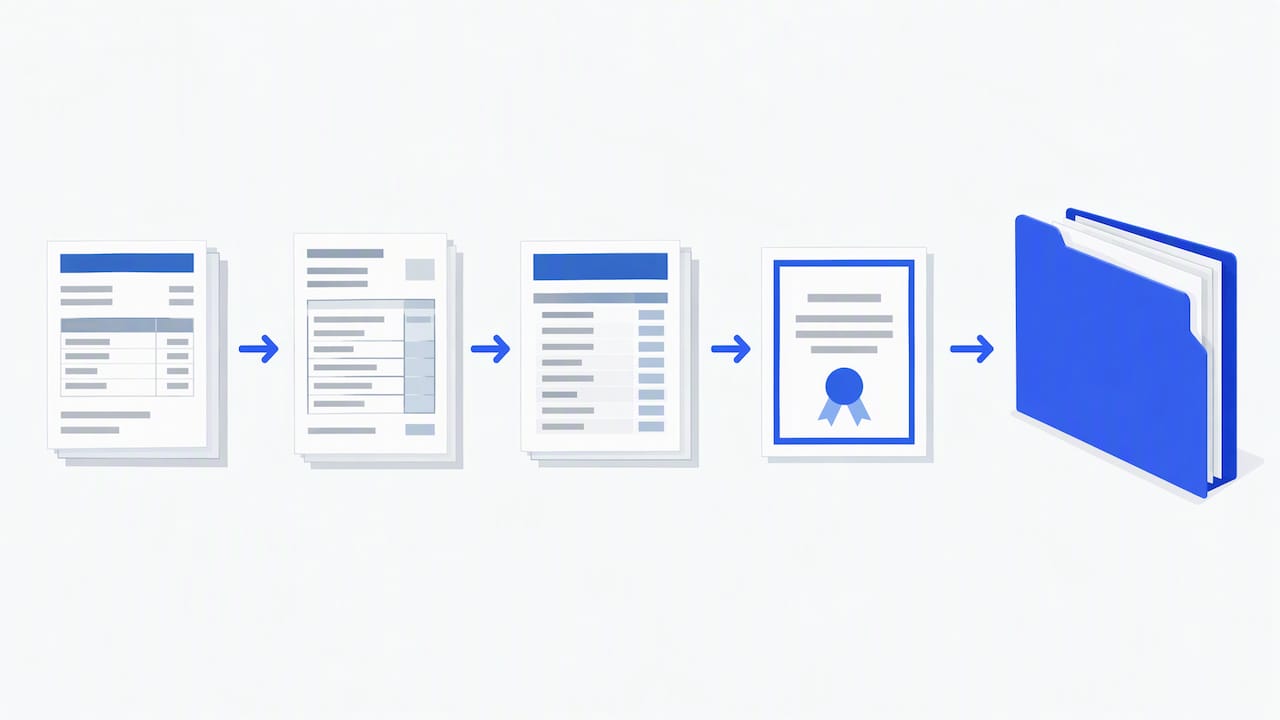
- Complete a City-listed homebuyer education course and obtain its official Certificate of Completion.
- Obtain approval for a mortgage loan from one of the City’s participating lenders.
- After the required documents are confirmed, work with your registered, trained loan officer to submit the DPA application.
- Allow processing time that runs parallel to your mortgage underwriting, so starting early in your search protects your closing timeline.
City DPA applicants must be approved for a mortgage by a participating lender. The City’s homebuyer resources page provides a participating-lender list to check before relying on assistance.
Before you lean on this program, gather your documentation early: recent pay stubs, tax returns, bank statements, and your HousingSmarts certificate. The most common timing pitfall is enrolling in homebuyer education too late in your search, so if DPA factors into your budget at all, treat that course as one of your very first steps rather than a formality you’ll get to eventually. For a closer look at choosing lenders with a track record on these deals, our guide to picking an experienced DPA lender walks through what to ask before you commit.
Austin Market Snapshot and How to Choose a Neighborhood
Austin’s market moves in cycles shaped by inventory levels and mortgage rates, and tracking both before you shop gives you a realistic sense of your negotiating position. When inventory is tight, expect more competition and less room to negotiate price; when inventory loosens, buyers typically gain leverage on price and contingencies. Current listing activity is easiest to track through active MLS feeds and local market reports rather than guessing from headlines.
Choosing the right neighborhood matters as much as choosing the right house, especially for a first-time buyer who plans to stay several years. Run through this checklist as you narrow your search:
- Commute and transit access: Check drive times at actual rush hour, not midday, and consider CapMetro routes if you might rely on transit.
- School zoning: Even without kids, school ratings affect resale value down the line.
- Flood risk: Some Austin neighborhoods sit in or near mapped flood zones, which affects insurance costs and safety.
- Resale potential: Look at how long homes in the area typically sit on the market before selling.
- HOA rules: Read the bylaws before you fall for a house, since some restrictions surprise new owners.
- Local amenities: Grocery access, parks, and walkability vary block by block in Austin.
Pro Tip: Visit any neighborhood you’re serious about at different times, including a weekday morning, a weekday evening, and a weekend afternoon. Traffic, noise, and neighborhood character all shift more than open house timing reveals.
For a broader framework on evaluating neighborhoods against your specific priorities, our practical buying strategy guide walks through how to weigh these factors against your budget.
How to Assemble an Offer and Negotiate in Austin
A strong offer in Austin includes more than just your proposed price. The core components are your offer price, earnest money deposit, financing contingency, inspection contingency, and your proposed closing date, and each piece sends a signal to the seller about how serious and capable you are as a buyer.
Several negotiation tools can strengthen your position depending on market conditions:
- Escalation clauses automatically raise your offer by a set increment above competing bids, up to a cap you define, useful in multiple-offer situations.
- Seller concessions ask the seller to cover part of your closing costs, which can matter more than price in a slower market.
- Appraisal gap language commits you to cover the difference if the home appraises below your offer price, a tool that reassures sellers but requires you to have cash reserves to back it up.
If you’re relying on City DPA or a longer lender timeline, build that reality into your contract terms upfront rather than hoping it works out. A closing window that is too short may create problems if your DPA paperwork or lender underwriting needs more time, so discuss a realistic timeline in your contract. Sellers generally prefer certainty over speed, so a slightly longer closing date with strong financing behind it often beats a faster closing with more risk attached. Our guide to first-time buyer offer tactics covers how to balance these levers when assistance programs are part of your financing plan.
Inspection Checklist and What to Do With the Findings
A standard home inspection in Austin covers the roof, foundation, electrical system, plumbing, HVAC, and overall structural condition, and most buyers also order one or more specialty inspections depending on the property.
- Foundation inspection: Texas clay soil causes more foundation movement than many other states, making this check particularly relevant here.
- Termite and wood-destroying insect inspection: Common in Central Texas and often required by lenders.
- Septic inspection: Necessary for properties outside the city sewer system, particularly in outlying areas.
- Flood risk review: Check FEMA flood maps and local resilience tools before you finalize your decision, since flood history affects both insurance costs and long-term safety.
Once your inspector delivers the report, you typically have the inspection period specified in your contract to request repairs, a price credit, or in some cases to walk away from the deal entirely. Flood zone status alone can change your insurance costs enough to shift your monthly budget calculation, so treat that check as a financial decision, not just a safety one. Responding within your contract’s deadline matters: missing the window can forfeit your right to negotiate further or exit the contract based on inspection findings.
Final Closing Steps: Documents to Expect and Protect
Closing day involves several key documents, and understanding what each one shows protects you from costly surprises.
- Closing Disclosure: Shows the final mortgage-loan terms, projected monthly payments and closing costs. For a covered mortgage loan, the lender must provide it at least 3 business days before closing so you can compare it with your Loan Estimate. CFPB lists reverse mortgages, home equity lines of credit, certain manufactured-home loans and certain homebuyer-assistance loans as exceptions that receive other disclosures.
- Promissory note: Your legal promise to repay the loan under specified terms.
- Deed: Transfers ownership of the property from seller to you.
- Deed of trust or mortgage: Secures the loan against the property itself, giving the lender recourse if payments stop.
Comparing your Closing Disclosure against your Loan Estimate is one of the most important checks in the entire process. The CFPB’s mortgage closing checklist specifically recommends confirming your closing agent, requesting the disclosure on time, and verifying every fee matches what you were originally quoted.
Wire fraud targeting home buyers has become common enough that lenders and title companies now routinely warn clients about it. Never wire funds based solely on an email with new instructions; call your title company directly using a phone number you already have on file, not one provided in the email itself, before sending any money.
Pro Tip: Print your Closing Disclosure and your original Loan Estimate side by side. Circle any number that changed and ask your lender to explain it before closing day, not during it.
Closing costs typically land in that same 2% to 5% range mentioned earlier in your budgeting, covering items like loan origination fees, title insurance, appraisal costs, and prepaid property taxes or insurance held in escrow.
Immediate Post-Close Tasks for Austin Homeowners
Once you have keys in hand, a short list of tasks protects your new investment and your budget.
- File your residence homestead exemption with your county appraisal district. The general exemption-application deadline is before May 1. For a general residence homestead exemption, you must have an ownership interest and use the home as your principal residence. The appraisal district’s chief appraiser decides whether the property qualifies; confirm the filing timing that applies to your purchase.
- Contact your insurance provider to confirm coverage starts exactly on your closing date, with no gap.
- Transfer or set up utilities in your name effective the day you take possession.
- Confirm your mortgage escrow setup correctly includes property taxes and insurance if your lender manages those payments.
- Start a maintenance reserve immediately rather than waiting for the first repair bill to force the issue.
For a full walkthrough of the exemption filing process specific to Austin, our homestead exemption checklist covers the paperwork and deadlines step by step.
ATXCasa’s Local Perspective on Buying Your First Austin Home
I’ve spent years working in technology before shifting that same analytical approach to helping buyers navigate the Austin market, and the pattern I see most often with first-time buyers is this: the paperwork trips people up more than the house hunting does.
Where a local agent earns their keep isn’t just finding listings, it’s catching the details that cost buyers money later: confirming a lender actually holds City DPA certification before you fall in love with a house that depends on it, reading an inspection report line by line to know which findings are negotiable, and pushing back on seller terms that don’t match your financing timeline. If you’re heading into a buyer consultation, bring your pre-approval letter, a rough budget range, and your must-have neighborhood criteria. That’s enough to start a real conversation.
— Vladimir
Ready to Start Your Austin Home Search?
We built our approach around the parts of Austin homebuying that generic portals gloss over: which lenders actually close City DPA deals, which neighborhoods fit your specific budget and commute, and how to read a Loan Estimate without guessing. Our data-driven pricing insight and local market tracking mean you get answers grounded in what’s actually happening in Austin right now, not a national average that doesn’t reflect your ZIP code.

If you’re weighing a purchase in Austin, Cedar Park, Round Rock, or Georgetown, our services cover neighborhood research, down payment assistance navigation, lender coordination, and offer strategy tailored to your situation.
- Get matched with lenders experienced in City DPA closings.
- Walk through a realistic budget based on your income and target neighborhoods.
- Build an offer strategy suited to current local conditions.
Schedule a consultation with ATXCasa to talk through your specific budget, timeline, and neighborhood priorities before you start touring homes.
FAQ
Are Austin, TX home prices dropping?
Austin home prices fluctuate based on inventory levels and mortgage rates, and conditions shift by neighborhood and season rather than moving uniformly across the whole metro. Checking current active listings and recent closed sales in your target area gives a far more accurate picture than any citywide headline.
What is the 3-3-3 rule for buying a house?
The 3-3-3 rule is informal budgeting guidance, but definitions vary across sources. Treat it as a rough starting point rather than a strict qualification threshold, and consider your housing costs alongside your lender’s actual underwriting criteria.
Which Austin neighborhood is the best to buy a house?
There is no single best neighborhood, since the right choice depends on your budget, commute tolerance, school priorities, and flood risk comfort. Evaluating candidates against a consistent checklist, covering transit access, resale trends, and HOA rules, helps you compare options objectively rather than choosing based on first impressions alone.
How much do I need to make to afford a $300,000 house in Texas?
A widely used starting estimate multiplies your annual gross income by about 2.5 to gauge an affordable purchase price, according to Freddie Mac’s budgeting framework. Your actual qualifying income depends on your down payment, existing debt, interest rate, and property taxes, so this figure is a planning tool rather than a lender’s final answer.