
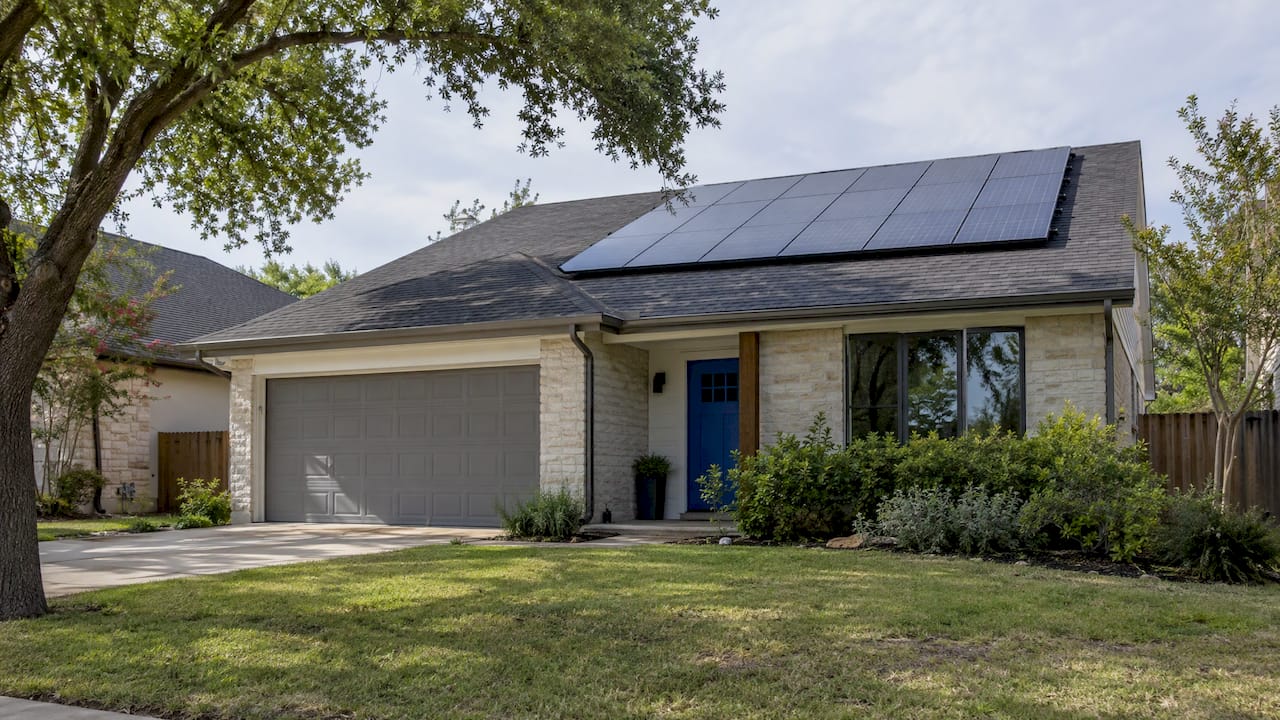
If your home gets electricity from Austin Energy, you can claim rebates on air conditioning, heat pump water heaters, whole-home efficiency work, smart thermostats, pool pumps, solar and home EV chargers. The largest are whole-home improvements (averaging $3,000) and solar ($4,000). Nearly every program requires a participating contractor and paperwork filed in the right order. Below I walk through each rebate, the rules that trip people up, and what to check if you are buying or selling a home in Austin.
TL;DR
- Austin Energy lists residential rebates for AC, heat pump water heaters, whole-home upgrades, smart thermostats, pool pumps and solar.
- Whole-home upgrades through Home Energy Savings average $3,000, and the home must be at least 10 years old. A new AC averages $800 and replaces equipment at least 10 years old.
- Solar carries a $4,000 rebate, but you need a confirmation letter before installation.
- A participating contractor usually has to do the work and file the application, so choose the contractor before you sign anything.
- Rebates affect more than your utility bill: they change repair budgets, offers and negotiation points on both sides of a home sale.
Table of Contents
- Who qualifies for Austin Energy rebates
- Rebates at a glance
- Whole-home upgrades: the biggest average rebate
- Air conditioning rebates
- Water heaters, thermostats and pool pumps
- Solar: the $4,000 rebate and the letter you need first
- Home EV charger rebate
- Can you combine rebates?
- How to apply without losing the money
- What this means if you are buying or selling
- Our perspective
- Work with ATXCasa on your Austin-area move
- FAQ
- Sources
Who qualifies for Austin Energy rebates
The first test is simple: the property must receive Austin Energy residential electric service. Homes in the Austin area served by another electric provider, which happens in parts of Round Rock, Cedar Park and Georgetown, are outside these programs. Check the electric company on your bill before you plan any project.
For the Home Energy Savings program, eligible property types include single-family homes, condos, townhomes, duplexes, triplexes, fourplexes and rentals. The property must receive Austin Energy residential electric service and be at least 10 years old, and a participating contractor must perform the assessment and improvements. The program page describes owners as eligible but separately requires renters to obtain the owner’s written permission. If you rent, confirm with the program who should apply before arranging the work.
The age rule matters if you are buying new construction. A recently built home usually will not qualify for whole-home improvements, while a 1990s house in a mature neighborhood often will. I covered how that tradeoff plays out in Austin builder incentives vs. resale homes.
Rebates at a glance
| Upgrade | Amount Austin Energy lists | Key condition |
|---|---|---|
| Whole-home improvements (Home Energy Savings) | Averaging $3,000; advertised 0% financing is time-limited and subject to eligibility, pre-approval, credit and energy-savings criteria, and available funding. Confirm current loan terms. | Home at least 10 years old, participating contractor |
| New energy-efficient AC | Averaging $800 | Replaces equipment at least 10 years old |
| ENERGY STAR Hybrid Electric Water Heater | $1,000 | Certified model |
| Residential solar | $4,000 | Solar Rebate Quiz, confirmation letter before install |
| Home EV charger | 50% of purchase and installation cost | Approved charging stations only |
Amounts are the figures the utility and the City publish. They are averages in some cases, so your actual rebate depends on the work done. Confirm current numbers on the official pages before you commit, since programs are adjusted from time to time.
Whole-home upgrades: the biggest average rebate
Austin Energy describes Home Energy Savings as a whole-house approach to efficiency. Rather than paying for one product, it looks at the house as a system: insulation, air sealing, ductwork, cooling equipment and similar measures. According to the utility, homeowners can receive rebates averaging $3,000 with access to 0% financing for whole-home improvements.
Here is how a typical project runs:
- Confirm your home is served by Austin Energy and is at least 10 years old.
- Choose a participating contractor, who performs the home assessment.
- Review the recommended improvements and their cost.
- Complete the work through the contractor.
- For a rebate-and-loan project, estimated rebates may reduce the project cost and total loan amount. If you need financing, obtain pre-approval and confirm eligibility and current terms with Velocity Credit Union before committing to the work.
The rule people miss is the 10-year lookback. A measure is ineligible for a rebate or loan if it already received a rebate or loan within the past 10 years. If you are buying a home, ask the seller whether prior owners used the program. A previous rebate on the attic insulation, for example, can block a new one on that same measure.
Air conditioning rebates
Austin Energy’s residential overview lists an average $800 rebate for a new, qualifying air conditioning system. The actual rebate depends on the equipment’s qualifying efficiency tier: central split and mini-split AC rebates range from $600–$800, while heat-pump and mini-split heat-pump rebates range from $650–$950. The air conditioning page requires both the home and the equipment being replaced to be at least 10 years old. A participating contractor must submit the application within 90 days of installation. Additional equipment and installation requirements apply, funding is limited, and approval is not guaranteed until Austin Energy reviews the application.
Three practical points follow from those rules:
- Timing of the paperwork. The 90-day window runs from installation, so ask your contractor in writing who files and by when.
- Age of the old unit. Look for the manufacture date on the data plate of the existing equipment. If it is under 10 years old, the replacement will not qualify, however efficient the new system is.
- Contractor status. A contractor who is not participating cannot submit the application on your behalf.
If your system is on the edge, the question of repair versus replacement comes up quickly. A guide on when to replace your AC explains how age, repair frequency and seasonal timing affect the cost of replacing a unit. In Austin, the rebate adds a further reason to replace a qualifying 10-year-old system on your own schedule rather than in the middle of August.
Water heaters, thermostats and pool pumps
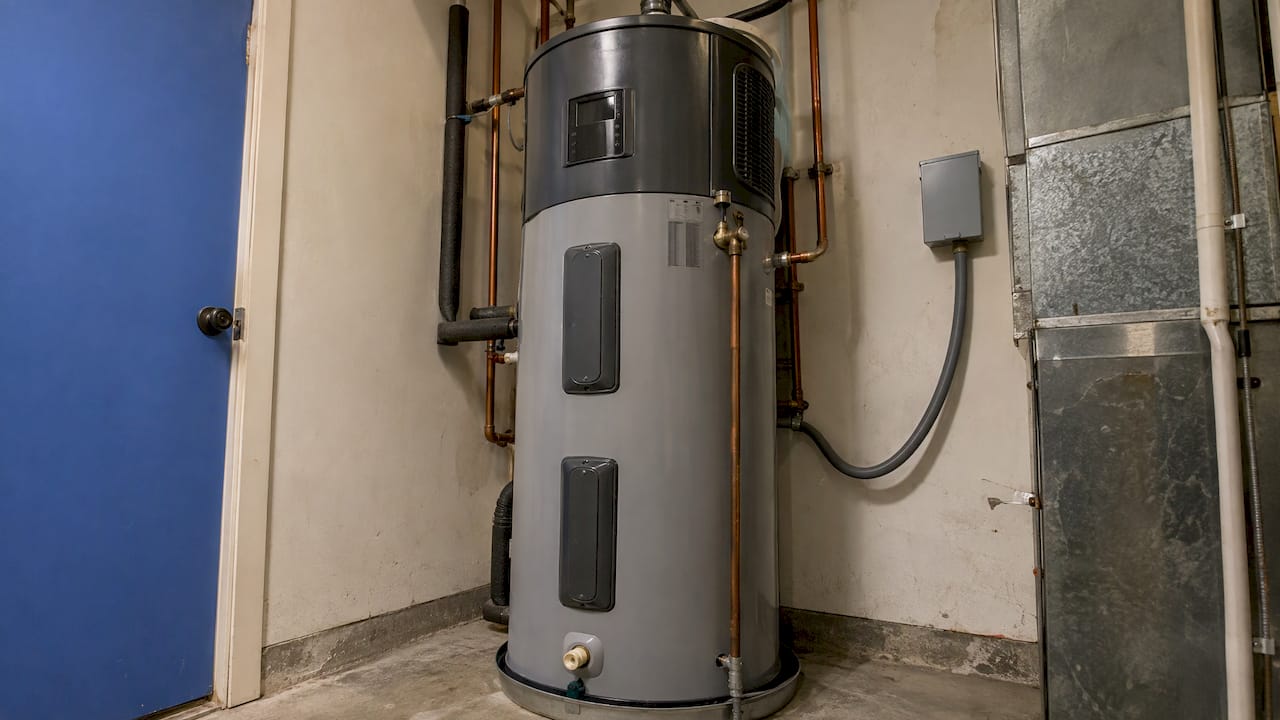
Austin Energy offers a $1,000 rebate for installing an ENERGY STAR certified Hybrid Electric Water Heater. These units are heat pump water heaters, so they use less electricity than a standard electric tank. The rebate is large relative to the equipment cost, which makes it worth pricing out when a tank fails.
The same residential rebate page also lists smart thermostats and pool pumps. I do not repeat the amounts here because they are the kind of figure the utility revises, and the official page is the one to trust on the day you buy. If you are replacing a pool pump anyway, check the current listing before purchase, because you generally want the model’s qualification confirmed before it is installed.
Solar: the $4,000 rebate and the letter you need first
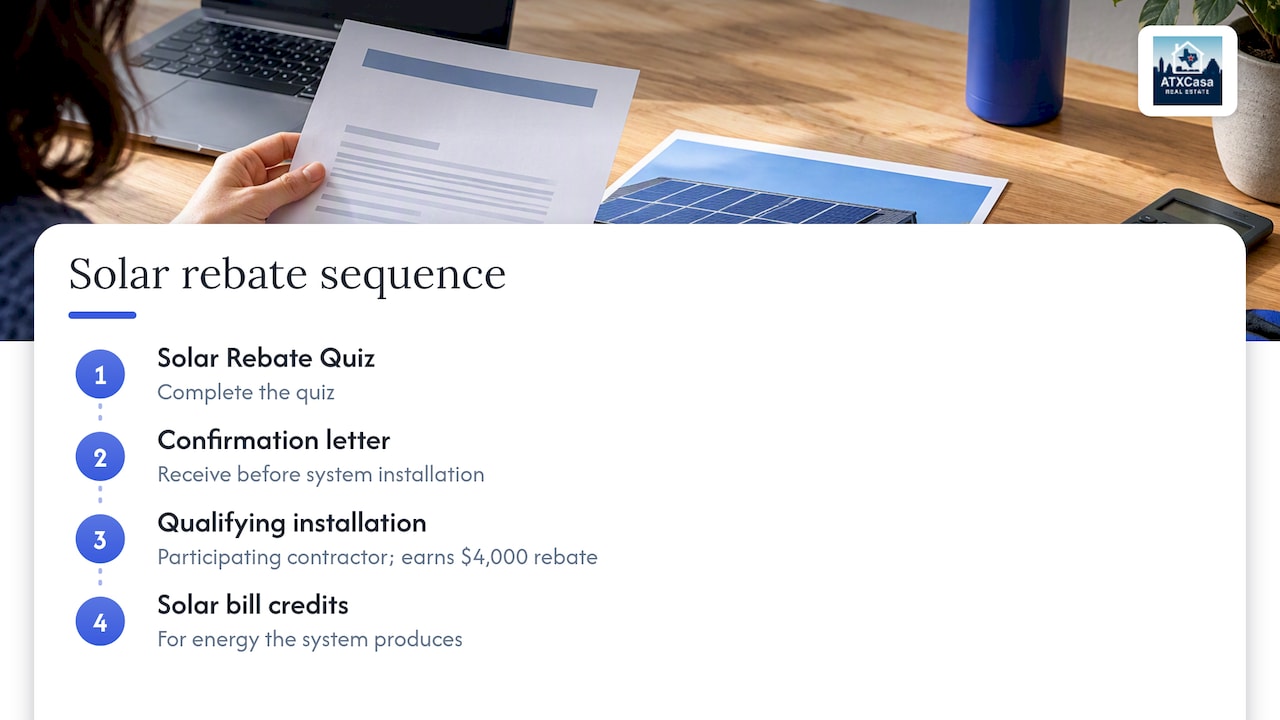
Austin Energy says eligible home solar projects may receive a $4,000 rebate. Only participating solar contractors can offer Austin Energy solar rebates and incentives. Residential solar customers also receive monthly Value of Solar bill credits for the energy their systems produce.
The sequencing is the part to respect. Solar applicants must apply for and receive an Austin Energy Solar Rebate Confirmation Letter before system installation. A system installed first and documented later risks missing out on the rebate. Ask any installer to show you where the confirmation letter sits in their schedule before you sign a contract.
If you are buying a house that already has panels, the rebate is not the main question. Ownership, lease terms and what transfers at closing are. My checklist is in Buying an Austin Home With Solar: 3 Deal Checks.
Home EV charger rebate
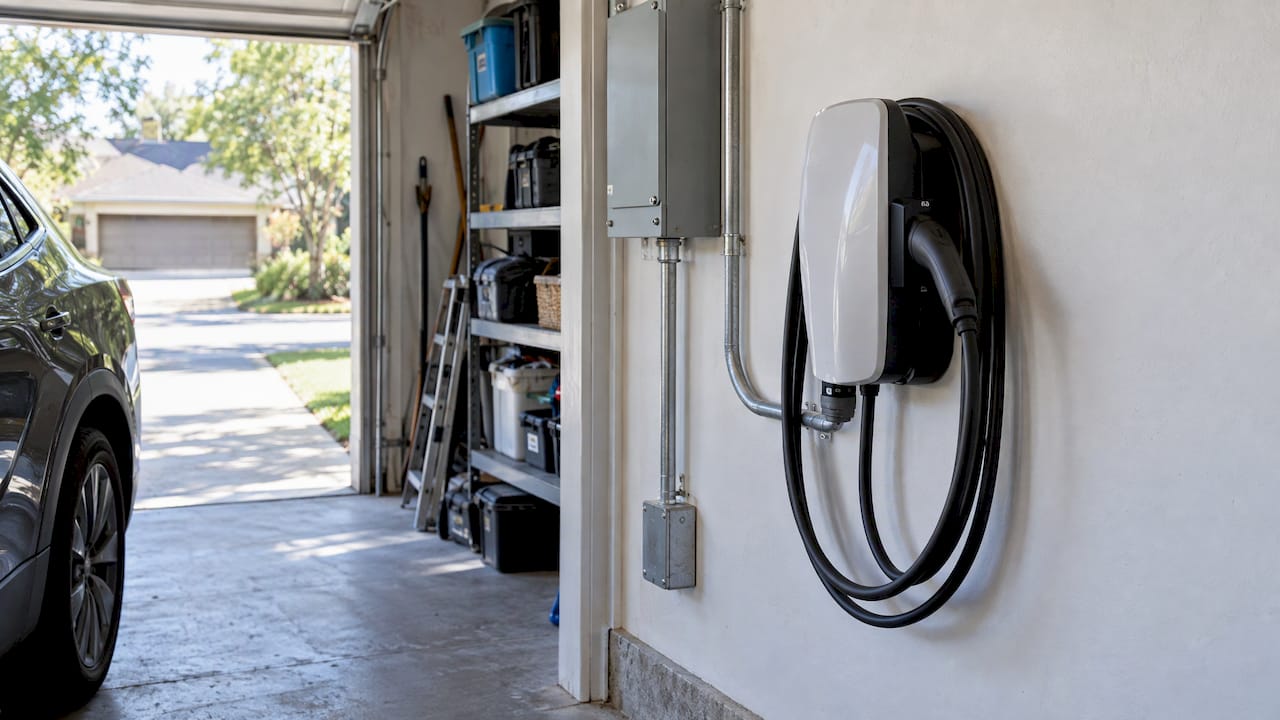
The City of Austin’s green resources page states that the Home EV Charger Rebate covers 50% of the purchase and installation cost of certain approved charging stations. It also says existing charger owners may earn a $50 bill credit, plus $25 per year for using less energy during periods of high demand.
Two details are worth noting. The rebate applies to approved stations, so check the model against the list before you buy. And the percentage covers installation, so a quote that itemizes the electrical work helps you document the cost.
Can you combine rebates?
Different upgrades may qualify under separate programs, but check each program’s terms before combining incentives. The repeat-use restriction cited here applies to Home Energy Savings: an energy-efficiency measure that received a rebate or loan in the last 10 years is ineligible for another loan or rebate under that program. Do not apply that restriction to solar, EV charging or every Austin Energy incentive. A federal or other incentive has its own eligibility and combination rules; confirm those before including it in your budget, and ask a tax adviser about any tax treatment.
How to apply without losing the money
- Verify your utility. Look at the electric provider on your latest bill.
- Check age rules. Home at least 10 years old for Home Energy Savings; existing AC at least 10 years old.
- Pick a participating contractor first. Ask for their participation status in writing.
- Get approval where required. For solar, that means the quiz and the confirmation letter before installation.
- Confirm who files. For AC, the contractor submits the application within 90 days of installation.
- Keep records. Save invoices, equipment data plates and model numbers, especially if you plan to sell.
What this means if you are buying or selling
Buyers. During inspection, note the age of the AC, water heater and insulation. A 10-year-old AC is a negotiating point and a rebate opportunity at once. Also look at the utility history, not just the list price. Monthly electric costs affect your real housing payment, and my piece on what to check when an Austin utility bill is suddenly higher shows where the surprises come from. For the financing side, see Buying, Selling & Financing.
Sellers. Efficiency upgrades can be worth doing, but not every project returns its cost at sale. Before you spend, read what not to fix before selling your Austin home in 2026. If an aging system is likely to come up in a buyer’s inspection, the rebate can reduce the cost of replacing it. Our Home Improvements & Staging section has more on choosing projects.
Investors. Rentals are eligible property types under Home Energy Savings, with the owner’s written permission needed when the applicant is a renter. Lower operating costs help a rental’s net income, and the 10-year lookback is worth checking on any property you acquire.
Our perspective
Rebate programs are easy to describe and surprisingly easy to lose. In our experience at ATXCasa, the money is rarely lost because a home does not qualify. It is lost because of order of operations: an AC installed before someone checked the age of the old unit, solar signed before the confirmation letter, or a contractor who was never a participant.
That is why we treat rebates as part of the property’s due diligence, not an afterthought. Our approach is data-driven: we look at the age of major systems, utility service and prior program use alongside the price, the neighborhood and the inspection results. A home with a 12-year-old AC and original insulation can be a better value than its list price suggests, if the buyer knows what is available.
We would rather you ask these questions before you write an offer than after closing. If you want help weighing a specific Austin-area home, we can build the picture with you.
Vladimir
Work with ATXCasa on your Austin-area move
Whether you are buying, selling or investing in Austin, Cedar Park, Round Rock or Georgetown, we help you see the full cost of a property, including the systems that may qualify for rebates, before you commit.

Start at ATXCasa to talk through your plans. You can also read more on new construction and investment when you compare new and resale homes.
FAQ
Do I need to own the home to get an Austin Energy rebate?
Not always. Home Energy Savings covers rentals as an eligible property type, but renters need the owner’s written permission. A participating contractor must still perform the assessment and improvements. Ask the program or your contractor how a landlord’s approval should be documented.
How old does my AC need to be to qualify for a replacement rebate?
Austin Energy’s AC rebate requires replacing existing equipment that is at least 10 years old. Check the manufacture date on the unit’s data plate before you get quotes. Your contractor must submit the application within 90 days of installation.
How much is the Austin Energy solar rebate?
The utility lists a $4,000 rebate for homeowners who complete the Solar Rebate Quiz and install a qualifying system with a participating contractor. You must receive a Solar Rebate Confirmation Letter before installation. Residential solar customers also receive bill credits for the energy their systems produce.
Can I get a rebate for the same upgrade twice?
Not within 10 years. Home Energy Savings states that a measure is ineligible for a rebate or loan if it received one in the past 10 years. That is worth asking about when you buy a home that previous owners may have upgraded.
Sources
- Residential Rebates, Austin Energy
- Home Energy Savings, Austin Energy
- Air Conditioning rebate, Austin Energy
- Solar for your home, Austin Energy
- Green Resources, City of Austin