
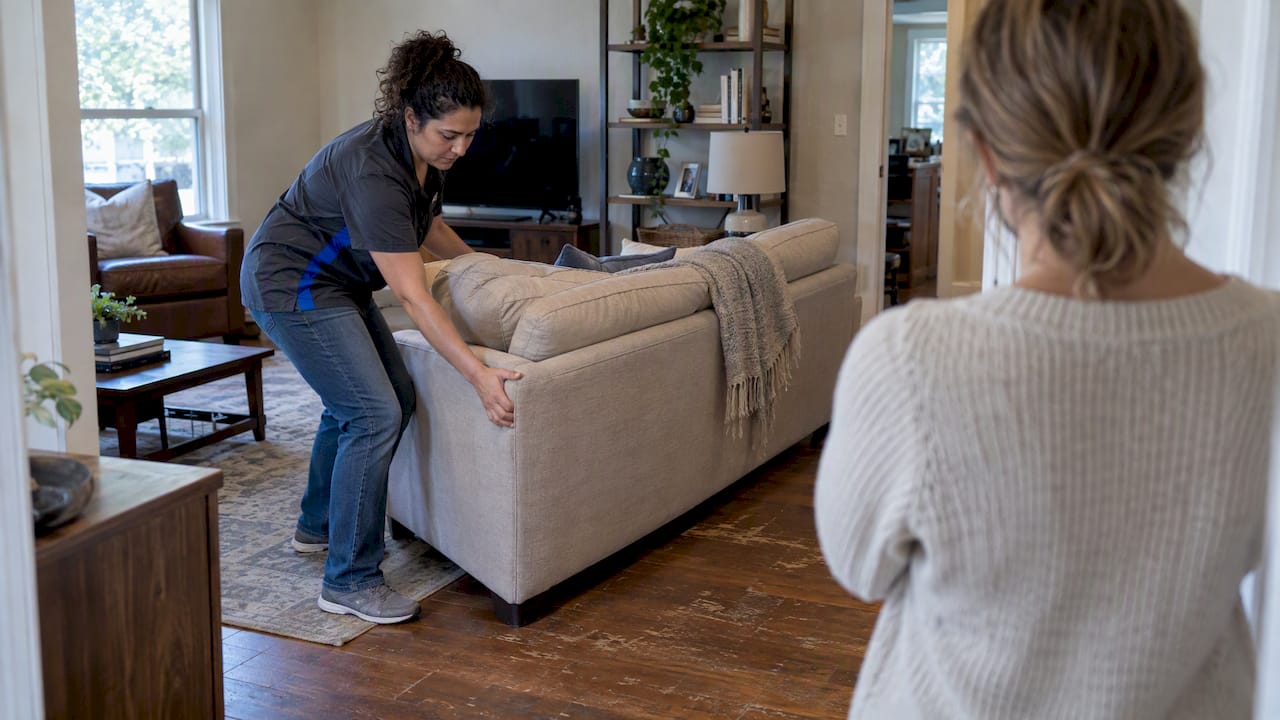
Home staging is worth the investment for most Austin sellers, especially when it focuses on the living room, primary bedroom, and kitchen. According to the 2025 Profile of Home Staging, 29% of agents reported that staging increased offer value by 1% to 10%. If your budget is tight, virtual staging for photos is a reasonable substitute. Either way, book a consultation with a local stager or ask your agent for a referral before your listing photos go live.
TL;DR:
- Most Austin homes benefit from staging, especially in the living room, primary bedroom, and kitchen, which influence buyer impressions most.
- Virtual staging offers a low-cost online listing boost, but full physical staging remains more effective for in-person showings and buyer experience.
- Scheduling logistics like elevator reservations and delivery timing are critical, especially for downtown condos and during peak spring and summer months.
- Typical staging costs align with the national median and should be prioritized for key rooms to maximize return on investment.
- Choosing a reputable Austin stager involves verifying local experience, insurance, clear scope, and timely coordination with photos and closing schedules.
Table of Contents
- What home staging in Austin includes
- Typical costs and estimated ROI for Austin sellers
- How to pick a reputable Austin home stager
- Staging timeline and what to expect on setup day
- DIY, soft staging, and virtual staging: lower-cost options
- ATXCasa perspective: neighborhood signals and practical staging advice
- What the data actually supports for Austin sellers
- FAQ
- Sources
What home staging in Austin includes
Staging companies in the Austin market typically offer four distinct services, and knowing the difference helps you ask for the right one.
Vacant staging furnishes an empty property from scratch, which matters most for new construction or investment flips with no existing furniture. Occupied staging works with what you already own, rearranging, editing, and adding accent pieces to improve flow and photos. Virtual staging skips physical furniture entirely and digitally adds furnishings to listing photos, which keeps costs low but only affects the online listing, not in-person showings. Move-in design and consult-only engagements sit at opposite ends of the spectrum: one is a full styling package, the other is a single walkthrough where a stager gives you a punch list to execute yourself.
Most full-service packages include furniture rental, styling, coordination with your photographer, and delivery plus pickup on both ends of the listing period. Local stager directories show that Austin providers commonly advertise all four formats, often bundling photography coordination into the project fee.
A few Austin-specific logistics matter more than sellers expect:
- Downtown high-rise condos often require booking a freight elevator or loading dock slot days in advance, so it’s helpful to consult with specialized Austin high-rise movers experienced in elevator scheduling and logistics.
- Street parking and loading zones near older midtown bungalows can slow down furniture delivery without advance planning.
- Spring and early summer bring peak demand for stagers, so scheduling two to three weeks out is safer than waiting until your listing date is locked.
Pro Tip: Ask your stager whether elevator or loading dock reservations are included in their quoted timeline, not added as a surprise delay later.
Typical costs and estimated ROI for Austin sellers
Staging costs in Austin generally follow three pricing models: a flat consult fee for a single walkthrough, a flat project fee covering styling and light furniture, or a monthly rental fee when vacant staging is needed for an extended marketing period.
Median spend when hiring a staging service is generally around the typical national median., according to the 2025 Profile of Home Staging. That figure covers a typical project rather than a per-room charge, so a small condo refresh often costs less while a full vacant-home staging runs higher.
The same report found that staging most commonly covers the living room (91% of staged homes) and primary bedroom (83%), which lines up with NAR’s press release noting these rooms carry the most weight with buyers forming a first impression. Nearly half of sellers’ agents reported that staging reduced time on market, though the effect varies by price band and local demand.
A few practical guidelines for budgeting:
- NAR’s 2025 national survey found that buyers’ agents most often rated the living room (37%), primary bedroom (34%), and kitchen (23%) as very important rooms to stage. If funds are limited, consider these rooms first; this is a budgeting recommendation, not evidence of an Austin return on investment.
- Use 0.5% to 1% of your expected sales price as a rough staging budget heuristic when a full project is justified.
- Confirm whether photography coordination is bundled into the project fee or billed separately.
How to pick a reputable Austin home stager
A good stager should feel more like a vetted contractor than a decorator you found on social media. Before signing anything, confirm these basics: a portfolio that matches your property type and neighborhood, local references from Austin agents, proof of insurance, and a written contract spelling out scope, timeline, and removal terms. Texas REALTORS® staging tips recommend asking your own agent for a referral, since most working Austin stagers build relationships through repeat agent business rather than advertising alone.
During your consultation, ask these questions:
- How many Austin listings similar to mine have you staged in the past year?
- Can you share before-and-after photos from a comparable property or neighborhood?
- What is included in your flat fee versus billed separately?
- How do you coordinate staging setup with my listing photographer’s schedule?
- Do you carry liability insurance for furniture or property damage?
- What is your minimum rental term if the home doesn’t sell quickly?
- Who handles elevator or loading dock reservations for condo or high-rise properties?
- What is your removal timeline after closing or contract expiration?
- Do you provide a written contract outlining scope and cancellation terms?
- Can you provide references from Austin-area real estate agents?
Red flags worth walking away from: no local references, a vague scope of work, reluctance to put terms in writing, or pressure to sign before seeing a sample portfolio.
Pro Tip: A stager who can’t name a recent Austin project in your price range likely hasn’t worked your market segment recently.
Staging timeline and what to expect on setup day
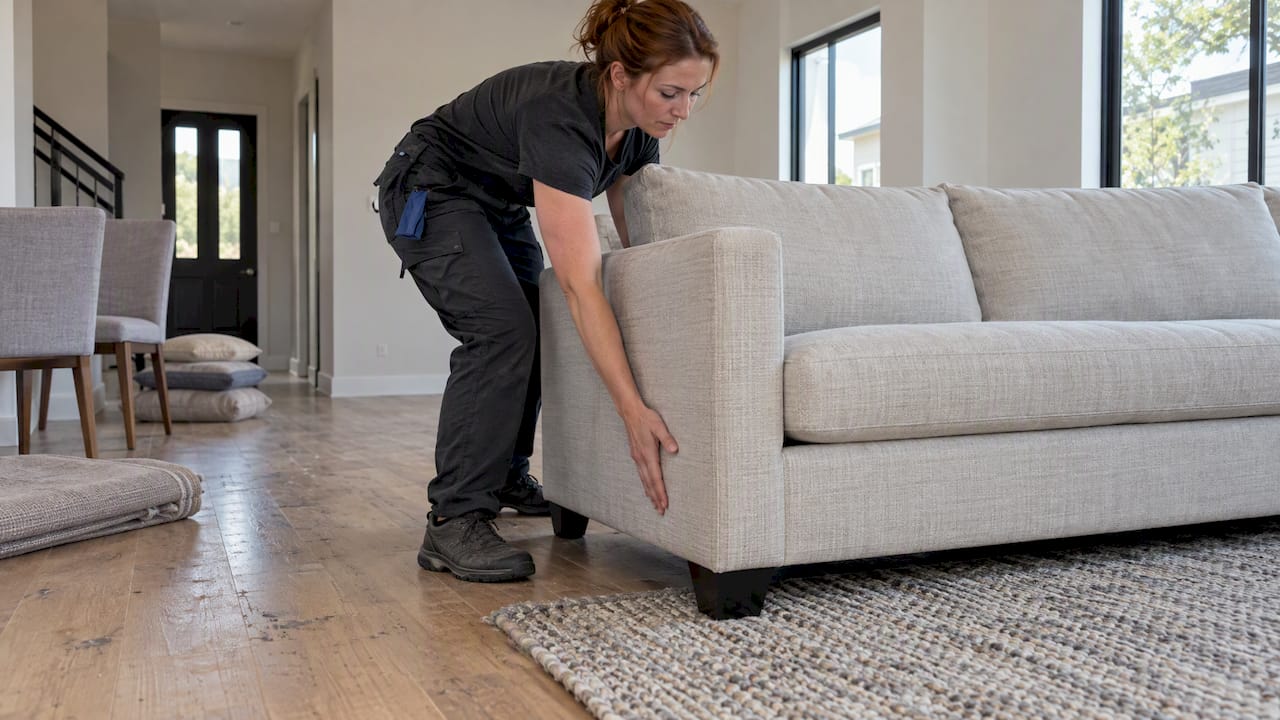
A typical staging timeline runs in four phases. The initial consultation takes one to two hours, followed by prep work like decluttering and small repairs that can stretch from a few days to a few weeks depending on the home’s condition. Full staging setup itself usually takes one to three days, after which your photographer shoots the listing and showings begin. Removal is scheduled either at a set rental term or shortly after closing.
To keep the process moving, you’ll need to provide clear access for delivery crews, confirm parking or loading availability, and handle any pre-cleaning before furniture arrives. Your agent or stager typically coordinates the photography date directly with you.
- Downtown high-rise properties need freight elevator reservations booked early, sometimes a week or more ahead.
- Summer months are peak scheduling season, so book setup dates as soon as your listing date is set.
- Confirm removal timing in writing to avoid storage fees if your home sells faster than expected.
Our Austin seller checklist walks through this timeline alongside the rest of your pre-listing prep.
DIY, soft staging, and virtual staging: lower-cost options
Not every Austin seller needs full-service staging, and three lower-cost paths fill different gaps. Soft staging adds textiles, pillows, and accessories to a home that already has furniture, improving photos without a full furniture swap. Virtual staging adds digital furnishings to photos of an empty room, which helps online listings but does nothing for in-person showings. DIY staging relies on decluttering, rearranging, and borrowing decor, which costs the least but takes the most of your own time.
Virtual staging tends to work best for vacant homes in a fast-moving price band where online photos drive most of the traffic. Soft staging suits occupied homes that just need editing rather than a full redesign. According to a Realtor.com cost breakdown, soft and virtual staging both trade upfront savings for a weaker in-person experience, so pairing virtual photos with clear disclosure before showings avoids buyer disappointment at the door.
- Soft staging: best for occupied homes needing a light refresh.
- Virtual staging: best for vacant homes relying mainly on online traffic.
- DIY staging: best for sellers on a tight timeline and tighter budget.
Pro Tip: If you go virtual, stage at least the living room and primary bedroom in person for your open house, since buyers notice the gap between photos and reality.
ATXCasa perspective: neighborhood signals and practical staging advice
Property type drives staging priority more than budget alone. Downtown high-rise condos sell on lifestyle and view, so staging the living area and balcony pays off disproportionately. Midtown bungalows benefit from warming up smaller rooms so buyers don’t perceive the square footage as cramped. Family homes in Round Rock and Cedar Park tend to show best when the primary bedroom and kitchen get the most attention, since that’s where move-up buyers linger longest.
Staging timing often aligns with listing photography and pricing strategy to launch a home’s visual presentation and pricing in a coordinated way.
Staging a home well means matching the effort to what a specific buyer pool actually responds to, not applying a generic checklist to every property type.
What the data actually supports for Austin sellers
The strongest case for staging isn’t a guaranteed price jump. It’s the combination of faster buyer visualization and a measurable chance at a better offer, which is a more honest way to read the NAR numbers than treating staging as a sure path to a higher sale price. Conventional advice often pushes full-home staging regardless of budget, but the data suggests the living room, primary bedroom, and kitchen carry most of the influence, so spending there first makes more sense than spreading a modest budget thin across every room.
What gets overlooked is logistics. An Austin seller juggling a freight elevator reservation, a photography deadline, and a stager’s rental term without a clear contract loses more value to delays than to a mediocre throw pillow choice. Prioritize a stager who treats scheduling as seriously as styling, confirm the contract terms before furniture arrives, and treat staging as one part of a pricing and marketing strategy rather than a stand-alone fix.
— Vladimir
FAQ
What are some reputable home staging companies in Austin, Texas?
Austin has a range of stagers offering vacant, occupied, and virtual services, and local stager directories list many active providers by service type. Your best starting point is asking your real estate agent for a referral, since most reputable Austin stagers build their business through repeat agent relationships rather than public advertising.
Are home prices dropping in Austin, TX?
Austin’s market has shifted over the past few years, and price trends vary significantly by neighborhood and price band rather than moving uniformly. Check current local listing data or ask your agent for a neighborhood-specific comparison before assuming a citywide trend applies to your property.
Why are people moving away from Austin?
Reasons for relocation vary by household and aren’t tied to a single citywide cause, though cost of living and job changes are commonly cited factors nationally. If you’re selling because of a move, our guide on timing your Austin home sale covers how to plan around your own timeline.
How much does home staging typically cost in Austin?
In NAR’s 2025 national survey of REALTORS®, the reported median spent when using a staging service was $1,500. This is a national benchmark, not an Austin cost estimate. Costs vary based on whether you need vacant staging, occupied staging, or a consult-only visit.
Is virtual staging as effective as physical staging?
Virtual staging improves online listing photos at a lower cost but has no effect on in-person showings, since the furniture only exists in the image. Physical staging still matters most for properties that rely heavily on walk-through impressions, like high-rise condos or open houses in competitive neighborhoods.
Sources
- 2025 Profile of Home Staging
- NAR report reveals home staging boosts sale prices and reduces time on market