
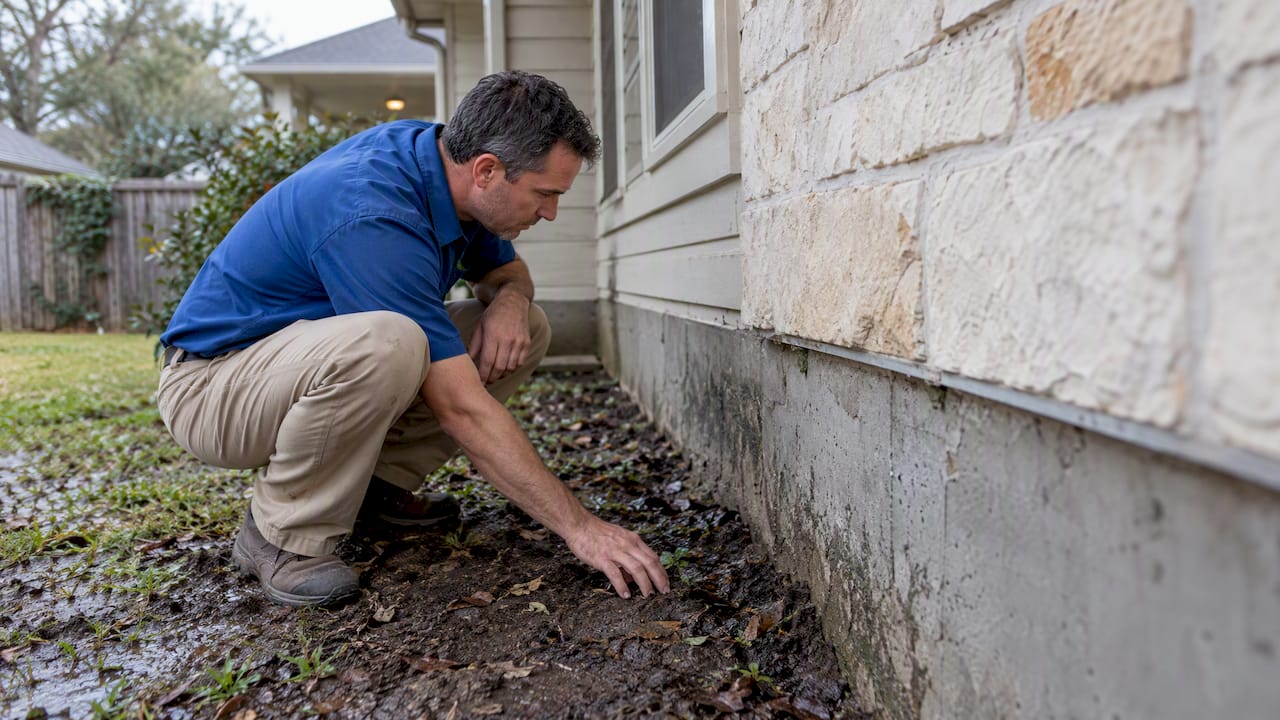
Yes, most Austin sellers benefit from a pre-listing inspection, and we recommend booking one 2 to 4 weeks before you plan to list, unless you are selling as-is to a cash investor or flipper. This window gives you time to review findings, line up contractors, and decide what to fix, disclose, or price into your offer. The payoff is control: you negotiate from a position of knowledge instead of reacting to a buyer’s inspector mid-contract.
TL;DR:
- Standard reports usually arrive the same day or within 48 hours; allow contractors 1 to 2 weeks, and order specialty checks after reviewing findings.
- Prioritize drainage and foundation warning signs: Austin’s clay soils shift with moisture, and only a licensed structural engineer can diagnose suspected movement.
- A $2,000 HVAC repair may prevent a $6,000 buyer credit, while cosmetic flaws can be priced in; fix safety hazards before listing.
- For sellers of previously occupied single-family residences, TREC says its Seller’s Disclosure Notice is required with a real-property sale contract and includes the material-fact and physical-condition information required by Texas Property Code §5.008. Confirm whether the form applies to your transaction; a pre-listing inspection does not itself complete the disclosure form.
Table of Contents
- Why a pre-listing inspection helps Austin sellers
- Austin-specific inspection issues: foundation, drainage, HVAC, roof, plumbing, electrical
- Cost, timing, and scope: local price ranges and scheduling advice for Austin sellers
- Repair, disclose, or price it in: a decision framework for Austin sellers
- Choosing the right inspector in Austin: credentials, questions to ask, and red flags
- Reading the inspection report, negotiating with buyers, and Texas disclosure basics
- ATXCasa’s local tips and common seller mistakes
- What actually matters in a pre-listing inspection
- Plan your Austin listing with inspection-informed pricing
- FAQ
- Sources
Why a pre-listing inspection helps Austin sellers
A pre-listing inspection shifts negotiating leverage back to you. When you already know what is wrong with your house, a buyer’s inspection report cannot surprise you into a rushed concession during the option period. You walk into negotiations with repair estimates in hand, which tends to produce fewer last-minute renegotiations and more confident buyers who feel they are getting an honest deal.
We have seen this play out consistently: sellers who address foundation cracks, drainage issues, or aging HVAC systems before listing avoid the scramble that happens when a buyer’s inspector finds the same problems a week before closing. At that point, you have less leverage, a tighter timeline, and a buyer who may now doubt the rest of the house.
A pre-listing inspection is not universally necessary, though. It tends to make less sense in a few situations.
- You are selling to a cash investor or wholesaler who has already priced in renovation costs.
- The home is a flip or teardown candidate where buyers expect to gut and rebuild.
- You are selling under extreme time pressure and plan to price well below market to compensate.
For nearly everyone else selling a traditional resale home in Austin, the inspection pays for itself in avoided surprises and stronger negotiating footing.
Austin-specific inspection issues: foundation, drainage, HVAC, roof, plumbing, electrical
Central Texas has its own set of recurring defects, and knowing which ones carry the most weight helps you triage repairs before a buyer’s inspector ever sets foot on the property.
Austin sits on expansive clay soils that swell and shrink with moisture changes, which puts constant stress on foundations. Poor grading and drainage are commonly cited by local experts as the leading contributors to foundation movement in the area, often more than the soil itself. A grading correction that costs a few hundred dollars now can prevent a foundation issue that costs tens of thousands later.
Common defects we see across Austin inspection reports include:
- Foundation stress signs: hairline cracks in slabs, sticking doors, or uneven floors, often tied to drainage rather than structural failure.
- Drainage mistakes: downspouts dumping water next to the foundation, negative grading toward the house, and clogged French drains.
- HVAC wear: units showing reduced efficiency due to age, typically over a decade old, a common issue given Central Texas summers that run systems nearly year-round.
- Roof damage: hail and wind damage from spring storms, granule loss on aging asphalt shingles, and flashing issues around chimneys or vents.
- Plumbing red flags: slab leaks, aging polybutylene or galvanized pipe in older homes, and water heaters near the end of their service life.
- Electrical concerns: outdated panels, missing GFCI protection in wet areas, and amateur wiring from unpermitted additions.
For drainage and grading questions, checking local floodplain maps and permitting rules through the City of Austin official site can clarify whether a fix requires a permit before you start work.
Pro Tip: Walk your yard after a heavy rain before you ever schedule an inspection. Standing water near the foundation is often the cheapest problem to spot and the most expensive to ignore.
Cost, timing, and scope: local price ranges and scheduling advice for Austin sellers
Budgeting for the inspection itself is straightforward, but the scheduling decisions around it matter just as much as the line item cost.
A standard pre-listing inspection for an average single-family home typically runs in a range that scales with square footage, age, and foundation type. Larger or older homes, and those needing add-on scopes like sewer camera inspections or WDI (termite) reports, push toward the higher end of that range. Specialty inspections such as structural engineering evaluations or sewer scopes usually add their own separate fee and turnaround time on top of the standard inspection.
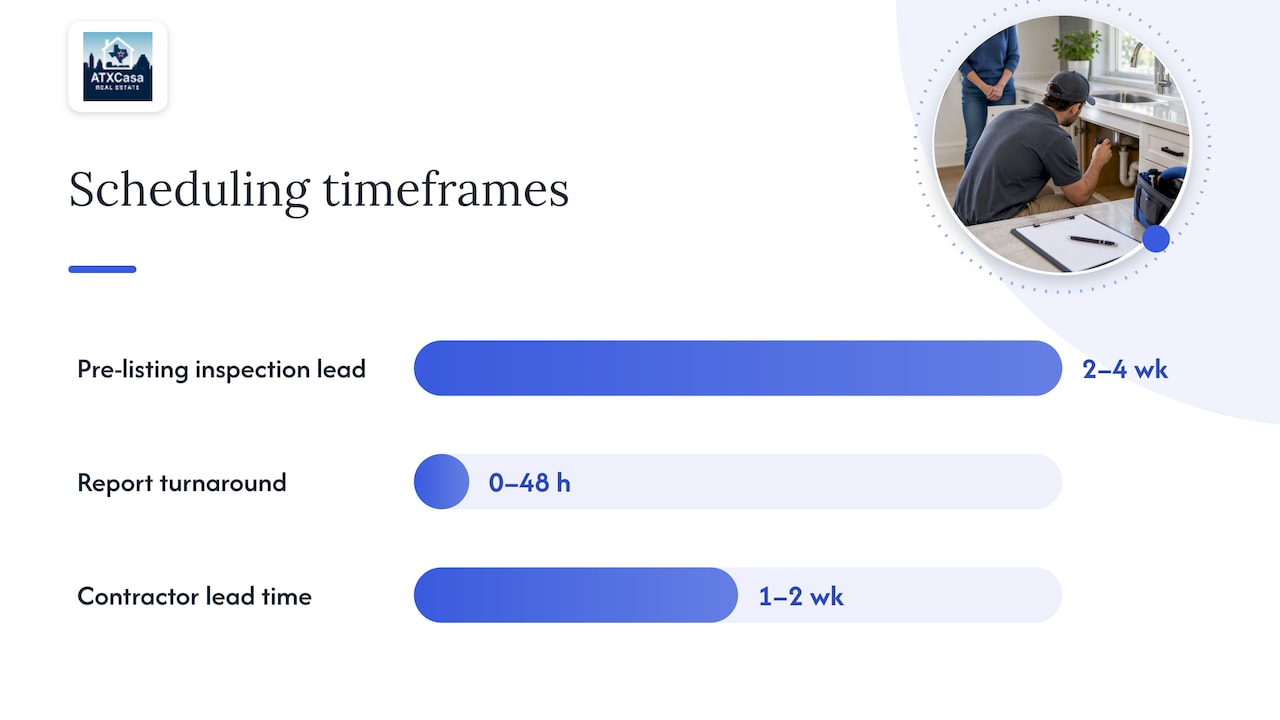
Report turnaround for a standard inspection is usually same-day to 48 hours after the visit, which gives you time to review findings before deciding on repairs. Specialty reports, particularly structural engineering assessments, can take longer since they often involve soil or elevation analysis.
For scheduling, we recommend this general sequence:
- Order the standard inspection several weeks before your target list date to leave room for repairs.
- Schedule specialty inspections (engineer, sewer scope, WDI) immediately after reviewing the standard report, since these often reveal the need for them.
- Build in 1 to 2 weeks of contractor lead time for common repairs like HVAC servicing, roof patching, or drainage corrections.
- Finalize your listing photos and marketing only after major repairs are complete, so the home shows at its best.
This timeline gives you enough runway to fix what matters without delaying your listing by months.
Repair, disclose, or price it in: a decision framework for Austin sellers
Once your inspection report is in hand, every finding falls into one of three buckets: fix it, disclose it, or price it into your listing. The goal is matching the response to the actual impact on sale value, not fixing everything reflexively.
- Compare repair cost to sale-value impact. A $2,000 HVAC repair that prevents a buyer from requesting a $6,000 credit is worth doing. A cosmetic flaw that costs more to fix than it affects perceived value is often better left alone or reflected in price.
- Separate safety and structural items from cosmetic ones. Electrical hazards, major foundation movement, and roof leaks tend to kill deals or trigger renegotiation. Faded paint or dated fixtures rarely do.
- Prioritize for return in Austin’s market. HVAC function, roof condition, and visible foundation or drainage issues carry outsized weight with Austin buyers because they signal ongoing cost and risk.
- A Texas standard inspection can report visible indicators of adverse foundation performance, including binding doors, sloping floors, and cracks or separations. Its minimum scope is a limited visual survey; inspectors are not required to determine the cause or effect of deficiencies, recommend engineering services, or provide repair-cost estimates. If the report identifies a concern beyond that scope, discuss the appropriate next step and qualified specialist with the relevant professional.
Pro Tip: If a repair decision is close, lean toward fixing anything safety-related and pricing in anything purely cosmetic. Buyers forgive dated finishes far more easily than they forgive a surprise electrical hazard.
Choosing the right inspector in Austin: credentials, questions to ask, and red flags
Not every inspector brings the same depth of scrutiny, and the quality of your pre-listing report depends heavily on who you hire.
For a one-to-four-family home, start by confirming that the inspector is licensed in Texas and ask what scope will be included. TREC’s Standards of Practice set minimum requirements for a limited visual survey and basic performance evaluation, and services beyond that minimum scope require the inspector to have the competency for them.
Before booking, a short set of questions helps you gauge quality:
- How many pre-listing inspections do you perform in a typical month?
- Does your report include photos and clear severity ratings for each finding?
- Can you recommend when a specialty inspection (structural engineer, sewer scope, WDI) is warranted?
- What is your typical turnaround time for the written report?
Red flags include vague verbal summaries instead of a detailed written report, reluctance to explain severity ratings, or pressure to skip specialty add-ons that your home’s age or condition clearly warrants. A strong sample report should rate issues by severity, include photos, and explain the likely cause, not just the symptom.
Ask the inspector to explain what the standard inspection covers and what it does not. Under TREC’s minimum standards, an inspector is not required to determine the presence of pests or termites, inspect subsurface drainage, use sewer-line cameras, perform elevation measurements, or determine the cause or effect of a deficiency. Discuss whether a separately scoped evaluation is appropriate for the property and the specific concern.
Reading the inspection report, negotiating with buyers, and Texas disclosure basics
Most inspection reports rank findings by severity, typically separating safety hazards and major system failures from minor maintenance items. Reading the report with that hierarchy in mind tells you where to focus first.
When it comes time to negotiate with a buyer, a pre-listing report gives you several paths instead of one reactive scramble:
- Complete the repair yourself before listing, with receipts ready to show buyers.
- Offer a closing cost credit in lieu of repairs.
- Adjust the list price upfront to reflect known condition.
- Hold funds in escrow for a repair to be completed after closing, when timing does not allow it before.
For sellers of previously occupied single-family residences, TREC says its Seller’s Disclosure Notice is required with a real-property sale contract and includes the material-fact and physical-condition information required by Texas Property Code §5.008. Confirm whether the form applies to your transaction; ordering an inspection does not itself complete the disclosure form. See the Consumer Financial Protection Bureau for the form and its stated applicability.
Sharing a pre-listing report with buyer agents can increase buyer confidence and reduce lowball offers, particularly in competitive Austin neighborhoods where buyers are comparing multiple similar listings and weighing perceived risk. A seller who hands over a clean, recent report signals transparency that a buyer’s own inspector later confirms rather than contradicts.
ATXCasa’s local tips and common seller mistakes
We routinely see Austin sellers overlook a handful of items that a buyer’s inspector will catch immediately: improper grading near the foundation, irrigation heads spraying directly onto siding, and attic ventilation that was never updated after a roof replacement. None of these cost much to fix, but all three show up repeatedly in option-period renegotiation requests.
We have watched sellers avoid a price reduction entirely by correcting a $400 drainage issue that a previous buyer’s inspector had flagged as a foundation risk. Once corrected and documented with photos, the concern disappeared from the conversation.
Inspection findings can feed directly into a pricing and marketing strategy. A home with a fresh HVAC service record and corrected drainage supports a stronger asking price and a cleaner marketing narrative, backed up with documentation rather than assurances.
What actually matters in a pre-listing inspection
The conventional advice treats a pre-listing inspection like a checkbox: order one, fix what comes up, list the house. That misses the point. The real value is sequencing, deciding what to fix now, what to disclose honestly, and what to simply price into the listing, rather than treating every finding as equally urgent.
Austin’s clay soils and drainage patterns mean foundation-adjacent issues deserve disproportionate attention compared to cosmetic items that generic seller checklists emphasize. A sticking door matters less than where your downspouts drain. Texas disclosure law also means you cannot inspect your way out of honesty, you can only inspect your way into fewer surprises and better-informed decisions. Prioritize the structural and mechanical basics first. Everything else is negotiable.
— Vladimir
Plan your Austin listing with inspection-informed pricing
We help Austin sellers turn inspection findings into a concrete listing plan, from scheduling the right specialty inspections to connecting with vetted local contractors through our network and marketplaces like PNV Leads for fast turnaround on pre-listing fixes. When a roof finding calls for a repair-versus-replace decision, resources like this Central Texas roofing guide help you weigh the cost before we finalize your pricing strategy.

What sets our approach apart is data-driven pricing that accounts for exactly what your inspection report shows, not generic comparables. Schedule a consult with ATXCasa to map out your inspection timeline and listing date together.
FAQ
Is a pre-listing inspection a good idea?
Yes, for most Austin sellers a pre-listing inspection is a good idea because it reveals defects before a buyer’s inspector does, giving you time to repair, disclose, or price around issues on your own schedule. The main exceptions are as-is sales to cash investors or flippers who have already priced in renovation costs.
How much does an inspection cost in Austin?
Pricing scales with the size, age, and condition of the home, along with any specialty add-ons like sewer scopes or WDI inspections. Your exact cost depends on these factors, so getting a quote directly from a local, InterNACHI trained inspector gives you the most accurate figure for your property.
Are Austin real estate prices dropping?
Austin’s market has shifted over recent years with more months of inventory and slower price growth compared to the rapid run-up seen earlier in the decade, though conditions vary by neighborhood and price point. We track these shifts closely and factor current local trends into pricing strategy for each listing rather than relying on citywide averages alone.
What is the biggest red flag in a home inspection?
Safety and structural issues carry the most weight, particularly electrical hazards, major roof leaks, and signs of significant foundation movement like sloping floors or wide cracking. These findings tend to trigger the most serious buyer renegotiation, far more than cosmetic or minor maintenance items.