
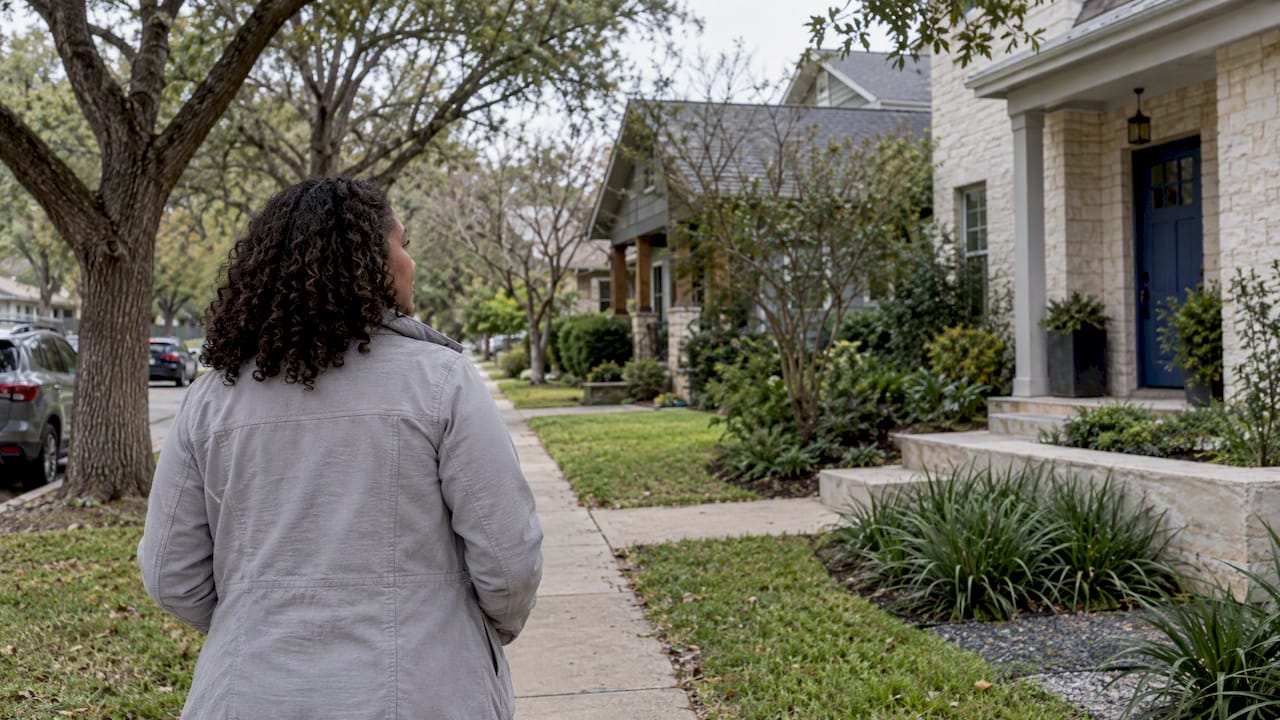
The areas most often named as the safest in Austin sit on the west and northwest side: Circle C Ranch, Steiner Ranch, Northwest Hills, Tarrytown and Mueller, along with the independent cities of West Lake Hills and Rollingwood. Those names come up repeatedly, but a neighborhood’s reputation is only a starting point. I will walk you through where the lower-crime areas are, what the citywide numbers say, and how to verify any specific street before you make an offer or sign a lease.
TL;DR
- Crime in Austin tends to be lower in the western and northwestern parts of the city and higher in central, east and southeast areas, according to a neighborhood safety roundup.
- Circle C Ranch, Steiner Ranch, Northwest Hills, Tarrytown and Mueller appear most consistently on safe-neighborhood lists.
- Violent and property crime both fell in Austin in 2025, and homicides dropped to 55 from 66 the year before, per KUT’s reporting on APD figures.
- Use the City of Austin’s CrimeViewer to search APD police-report information by address, neighborhood, crime type, or other geographic boundaries, then visit the area at different times of day.
- A safe neighborhood on paper can still have a risky pocket, and a mixed-reputation area can have very quiet streets. Check at the street level.
Table of Contents
- What “safe” means when you are choosing where to live
- Where Austin’s lower-crime areas are
- What the citywide numbers say
- How to check a specific address with CrimeViewer
- What to check beyond the statistics
- Safety and price: what you pay for it
- Our perspective
- Working with ATXCasa on your search
- FAQ
- Sources
What “safe” means when you are choosing where to live
Before comparing names, it helps to decide which kind of safety you care about. A family with young children may care most about traffic speed, sidewalks and street lighting. A buyer worried about car break-ins is looking at property crime. Someone moving to a condo downtown may care about late-night activity. These are different measurements, and no single ranking captures all of them.
In my work with buyers, the question usually arrives in one of three forms:
- “Which part of Austin has the least crime overall?”
- “Is this specific neighborhood okay for my family or for a first home?”
- “Will I regret this choice in two years?”
The first question can be answered with geography and data. The second needs block-level research. The third depends on trends, such as new development, commercial growth and how well homes and common areas are maintained. The rest of this guide is organized in that order.
Where Austin’s lower-crime areas are
The broad pattern is consistent across the sources I reviewed. Crime in Austin tends to be lower in the western and northwestern portions of the city, while higher concentrations are often reported in central, east and southeast areas. One roundup puts the estimated chance of becoming a crime victim at about 1 in 24 in the central neighborhoods versus about 1 in 47 in the west, a near two-to-one gap (source). Treat that figure as an estimate from a third-party summary, not a precise measure, but the direction matches what local police data shows.
The Austin Police Department used to organize crime data by patrol sector and now breaks it down by City Council district. That matters when you read older articles, because the labels no longer line up. As one local outlet explains, for example, the Rundberg area falls within District 4 (Decibel).
Neighborhoods that appear most often on safe lists
The table below summarizes the areas most frequently cited, why they tend to rank well, and what trade-offs come with them. The reasons come from the same roundup, which points to residential layouts, HOA oversight and separation from high-traffic commercial corridors for the master-planned communities.
| Area | Part of Austin | Why it tends to rank well | Trade-off to weigh |
|---|---|---|---|
| Circle C Ranch | Southwest | Master-planned, mostly residential, HOA oversight | HOA rules and fees; longer drives to the urban core |
| Steiner Ranch | Northwest | Master-planned layout, away from major crime corridors | Tax and assessment differences from pocket to pocket |
| Northwest Hills | Northwest | Established residential streets, quieter traffic | Older housing stock, so inspections matter |
| Tarrytown | West, central-west | Established, high-value, close to downtown | Highest price tier on this list |
| Mueller | Northeast-central | Planned redevelopment with parks and mixed uses | Commercial areas bring more foot traffic |
| West Lake Hills / Rollingwood | West, independent cities | Small, separate municipalities with their own services | Premium pricing; limited inventory |
A few notes on each, because the details change the decision.
Circle C Ranch. This is a master-planned community in far southwest Austin. Its safety reputation is tied to a mostly residential layout and HOA oversight. The same structure that supports that reputation can surprise buyers, so I wrote up the HOA questions to ask before buying in Circle C Ranch.
Steiner Ranch. Another master-planned community, on the northwest side near Lake Travis. The area is divided into pockets that differ in price and tax treatment, so the right pocket depends on your budget. My notes on choosing the right pocket of Steiner Ranch cover how those differences show up.
Northwest Hills and Tarrytown. Both are established areas with mature trees and quieter streets. If you are weighing west-side options more broadly, the West Austin neighborhoods buyer’s guide compares them by lifestyle and housing type.
Mueller. It stands out because it is a newer, planned community closer to the center of town. That is useful if you want lower reported crime but a shorter commute, though you should check the blocks next to retail and the surrounding corridors.
West Lake Hills and Rollingwood. These are independent cities surrounded by Austin rather than neighborhoods within it. That distinction matters for property taxes, services and which police department responds, so confirm the jurisdiction of any address you consider.
If you are looking at the north side instead, I covered options from the urban core to the suburbs in North Austin neighborhoods.
What the citywide numbers say
The context for any neighborhood ranking is the trend for the city as a whole, and the recent trend is encouraging. According to APD, all violent crime and property crime in Austin decreased in 2025, bringing levels back to pre-pandemic norms. Homicides fell to 55 in 2025 from 66 in 2024, and the decline lines up with a national drop in violent crime (KUT).
For perspective, a University of Texas at Austin law and public policy expert told Decibel that, compared with similarly sized U.S. cities, Austin consistently maintains relatively low crime rates (Decibel).
The same reporting shows why neighborhood-level checks still matter. As of September 2025, APD observed that District 4 still had higher crime than other parts of the city, accounting for 23% of homicides and 22% of aggravated assaults in 2024 (Decibel). The city is also testing targeted approaches. A 2025 APD presentation describes Place Network Investigations around E. Braker Lane and a month-long, multi-department effort on safety at local encampments (City of Austin).
One more figure explains why property crime feels different from violent crime to residents. In APD’s January through November 2025 data, homicides had a clearance rate of about 83%, while larceny and theft had a clearance rate of about 8% (City of Austin). In practical terms, if your concern is car break-ins or package theft, assume that prevention, such as lighting, cameras, locked vehicles and attentive neighbors, matters more than investigation after the fact.
How to check a specific address with CrimeViewer
The City of Austin’s CrimeViewer accesses APD’s police reports database. The city’s crime statistics page describes searches by neighborhood, crime type and other geographic boundaries; its search tips also identify address, intersection and street search. The City says the data are updated monthly. For additional search instructions, see the CrimeViewer quick start guide.
Here is how I would use it:
- Enter the address, not just the neighborhood name. Neighborhood boundaries are loose, and a single area can include very different blocks.
- Look at the three-year window. One incident can be noise. A repeated pattern on the same block is a signal.
- Separate crime types. Vehicle break-ins, burglaries and assaults tell different stories. Filter or read the categories rather than counting dots.
- Compare two or three finalists side by side. Look at the same time window and the same radius for each.
- Note where the incidents cluster. Clusters near a shopping center, a gas station or a major road mean something different from incidents spread across residential streets.
Limits you should know about
CrimeViewer represents calls for police service where a formal written APD report was made; it does not include calls that did not result in a written report. It includes some offenses later found unfounded and is updated monthly as a point-in-time view. Its totals should not be compared with national Uniform Crime Report statistics because totals and categorization can differ after investigation (City of Austin). The City also cautions that commercial locations can appear high-crime because of minor shoplifting cases.
A high concentration of reports near a shopping center or other commercial property does not by itself establish the safety of nearby residential streets: the City notes that minor shoplifting can make commercial locations appear high-crime. Review offense types and the location of reports, while recognizing that CrimeViewer reflects formal written APD reports rather than all calls for service.
What to check beyond the statistics
The City advises gathering a variety of information rather than relying on statistics alone, including visiting neighborhoods, observing surroundings, and talking with residents or neighborhood associations (City of Austin). Here are checks to consider during a visit:
- Maintenance. Well-kept homes and yards usually signal engaged owners.
- People outside. Residents walking, jogging or talking on porches are a good sign. Empty streets at 6 p.m. on a weekday tell you something too.
- Physical security. Burglar bars and heavy security on many homes can indicate that residents have experienced crime recently.
- Neighborhood associations. Contact them. Ask what residents actually worry about, whether there are recurring problems and how responsive the city has been.
To this list I add a few practical steps from showings:
- Visit at three times: a weekday morning, a weekday evening and a Saturday night.
- Walk the block rather than driving it. You notice lighting, noise and sightlines.
- Check how far the home is from major roads, bars, big-box retail and apartment complexes, and decide whether that is a convenience or a concern for you.
- Ask the seller’s agent about HOA enforcement, security patrol arrangements if any, and any recent neighborhood issues. Sellers have disclosure obligations on some matters, but neighborhood crime is not usually one of them, so ask directly and verify independently.
- Talk to a neighbor. Two minutes at a mailbox is worth more than a page of statistics.
Safety and price: what you pay for it
The safest-reputation areas are also frequently among the more expensive. Tarrytown, West Lake Hills and Rollingwood sit at the top of the price range, while master-planned communities in the southwest and northwest often give more house for the money but add HOA fees and, in some cases, special district assessments. If you are trying to balance budget and location, it is worth looking at what homes actually sold for rather than asking prices. Our analysis of Austin neighborhood prices and what sold homes reveal is a good place to start.
If the top-tier areas are out of reach, two approaches often work:
- Widen the search to the suburbs. Many families find comparable quiet residential streets in nearby suburbs with lower prices, at the cost of a longer commute.
- Pick the block, not the zip code. A quiet cul-de-sac in a mixed-reputation area can be a better fit than a busy street in a famous one. CrimeViewer and a few evening visits will tell you which you are looking at.
You can browse more area write-ups in our Neighborhoods & Lifestyle section.
Our perspective
We get this question from first-time buyers, relocating families and investors, and we answer it the same way each time: safety is a spectrum you measure, not a label you inherit. Rankings, including the list above, are useful for narrowing the search, but they are built from broad averages, and an average hides the block you would actually live on.

The approach we recommend is data first, then ground truth. Use the official records to remove obvious mismatches, then visit at different hours, then talk to people who live there. Our background is in technology, and we like numbers, but we have also seen buyers skip the evening visit because the spreadsheet looked good, and regret it later. The reverse happens as well: buyers rule out a perfectly calm street because of the name of the zip code.
For investors, the same logic applies with a different goal. Lower-crime areas generally attract stable, long-term tenants, but they come with higher purchase prices and tighter yields. Higher-crime areas can offer better numbers on paper, with more vacancy risk, more turnover and higher maintenance exposure. We would rather you see both sides with figures than choose on a reputation.
— Vladimir
Working with ATXCasa on your search
If you are narrowing down where to live, we can help you compare specific addresses, not just neighborhoods, using local market data and the official crime records described above. That includes the practical questions that rarely show up in listings: HOA terms, tax differences between pockets of the same community, and what comparable homes actually sold for.

Tell us your budget, commute and what safety means for your household, and we will shortlist streets worth visiting. Start at ATXCasa to get in touch about buying, selling or investing in the Austin area.
FAQ
What is the safest part of Austin?
The west and northwest sides of the city generally report the lowest crime, while central, east and southeast areas report higher concentrations. Within those broad patterns, areas such as Circle C Ranch, Steiner Ranch, Northwest Hills, Tarrytown and Mueller are cited most often. Always confirm the specific blocks you are considering.
Is Austin a safe city overall?
APD reported that violent and property crime both fell in 2025, returning to pre-pandemic levels, and homicides dropped to 55 from 66 in 2024. A UT Austin policy expert has noted that Austin compares favorably with similarly sized U.S. cities. Crime still varies a great deal by area.
Where can I find a crime map of Austin?
The City of Austin publishes CrimeViewer through its crime statistics page. It updates daily and covers the past three years. The city advises using it together with firsthand observation, since it counts only formal written reports.
Can I trust online neighborhood safety rankings?
Use them to build a shortlist, not to make the final decision. Rankings rely on averages, different data sources and different definitions of crime, and the city warns that its own data should not be compared directly with national Uniform Crime Report figures. Check any address against official records and visit it yourself.
Are the neighborhoods near shopping centers less safe?
Not necessarily. The city notes that areas near shopping centers and commercial property can show higher report counts because of minor incidents such as shoplifting. Look at the type of incidents and whether they cluster at the retail site or spread across residential streets.
Sources
- Safest and Most Dangerous Neighborhoods in Austin, TX
- Crime in Austin dropped below pre-pandemic highs in 2025 (KUT)
- Is Rundberg Safe? (Decibel)
- City of Austin: View crime statistics
- CrimeViewer quick start guide
- APD presentation on Place Network Investigations
- APD clearance rates, January to November 2025