
TL;DR
- Separate overnight sleeping needs from meal seating and counter space. Another bedroom may not solve a crowded dinner.
- A den can suit occasional guests if it can sleep them safely and privately. Longer or more frequent stays, or valuable daily use of a dedicated room, can favor an extra bedroom.
- Compare layouts at the same location and budget priorities, then obtain property-specific price, financing, tax, insurance, and utility estimates before paying for more space.
If holiday hosting makes your home feel cramped, start your Austin-area home search by naming what failed: sleeping arrangements, dinner seating, or space to prepare and serve food. Prioritize the layout that solves that problem and works after guests leave. Otherwise, you could take on a larger housing commitment without making hosting easier.
Compare the same guests in different layouts
Consider this hypothetical comparison, not an Austin market-price example. Buyer A is considering a dedicated guest bedroom that sleeps 2. Buyer B is considering a den that can sleep the same 2 guests on an air mattress. Each buyer expects 3 one-night stays a year, and both layouts meet their meal-hosting needs. Keep location and budget priorities the same.
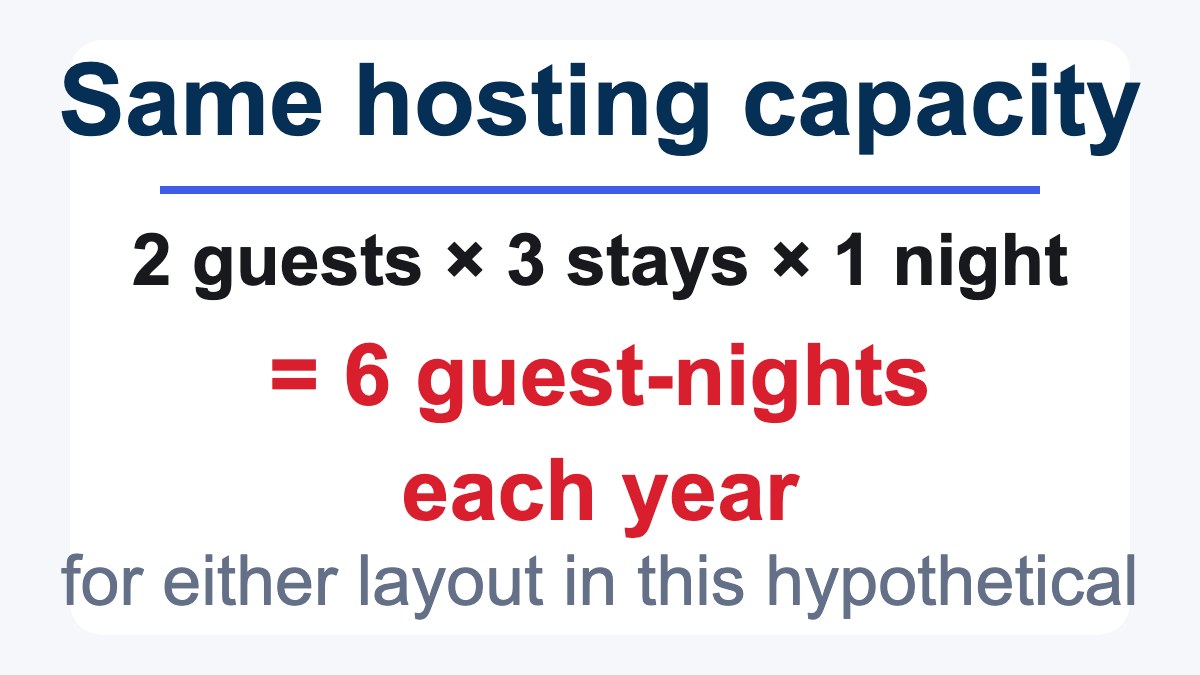
Each option accommodates 6 guest-nights per year: 2 guests × 3 stays × 1 night. A guest-night means lodging for one person for one night. The dedicated bedroom does not increase sleeping capacity under these assumptions; it changes the experience of hosting.
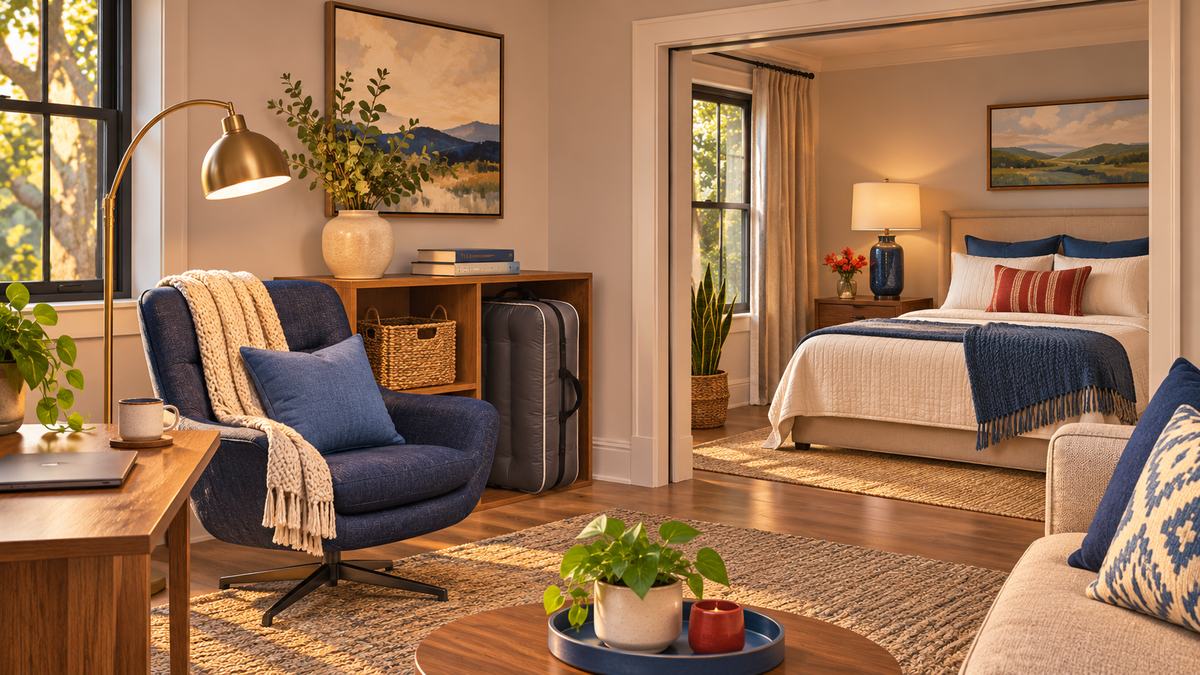
Buyer A gains a room that can stay ready for visitors, with less setup and no need to displace the den’s everyday activities. Buyer B keeps a den available for daily use between visits, but must set up and put away the sleeping arrangement and give up that room while guests stay.
If Buyer B uses the den regularly and it can sleep guests safely and privately, that flexibility may be a better fit for occasional visits. Change the conclusion if the den cannot sleep guests safely or privately, if stays are longer or more frequent, or if the dedicated room has valuable daily use. An air mattress also has to work for the particular guests; equal capacity does not guarantee equal comfort.
No dollar saving follows from this example. Without the homes’ prices and full property-specific costs, neither layout can be called cheaper.
Identify whether you need beds, dining space, or both
A flex room is a room that serves different purposes at different times, such as a den used for guests during a visit. Its usefulness depends on whether those purposes can coexist. If someone needs the den for work while visitors are sleeping there, that conflict belongs in the buying decision.
Before narrowing your home search, write a hosting brief with these details:
- Overnight guests: Record how many people stay, the sleeping arrangement they need, and how often and how long they visit.
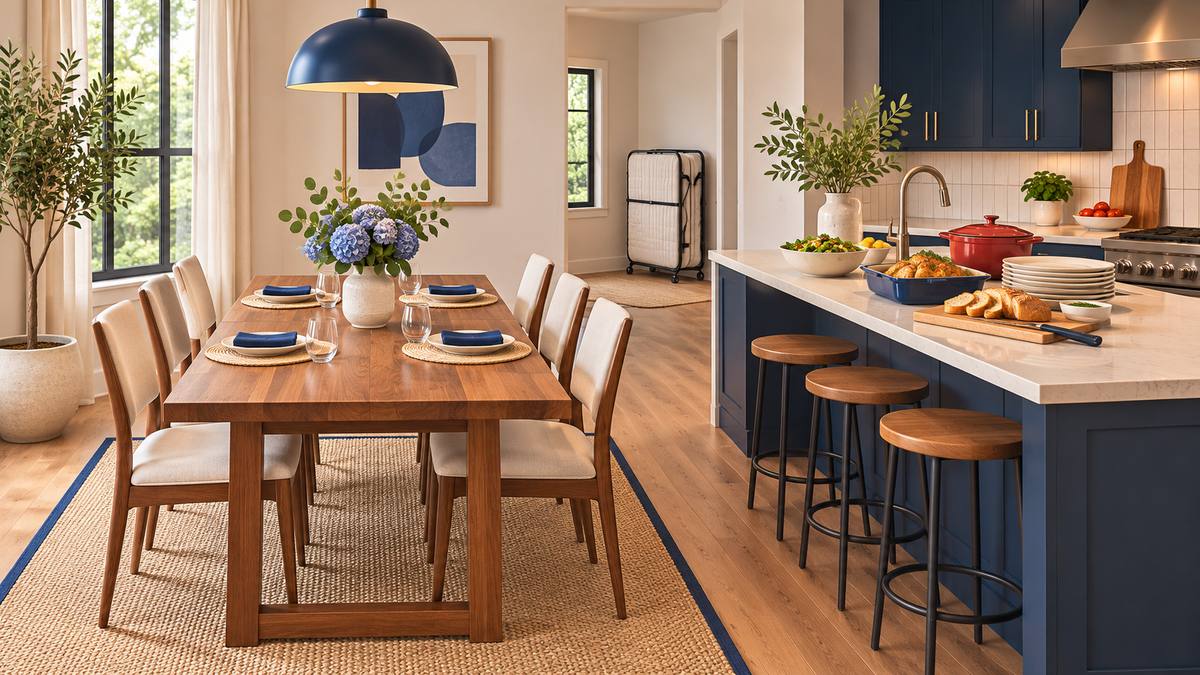
- Meals: Record seating and counter needs. Identify whether the problem is fitting the table, preparing food, or moving between occupied chairs.
- Everyday use: Name what the guest room or den will do between visits and what activity stops when guests arrive.
- Privacy and setup: Identify whether guests can sleep privately and whether the temporary bed leaves usable access through the room.
Use that brief during a tour. Picture the bed fully opened and the dining chairs occupied, rather than judging only the empty floor area. If everyone goes home after dinner, prioritize the meal layout; an unused bedroom does not create more counter space. If overnight visits are the recurring problem, dining space alone will not supply a workable sleeping arrangement.
Compare Austin-area homes without changing every priority
For an Austin-area buyer, the useful local application is to compare actual layouts within the locations and budget already chosen for everyday life. A home elsewhere in the metro may offer different space, but changing location introduces another decision. Do not attribute the entire difference between those homes to the guest bedroom.
Before an offer, compare property-specific price, financing, tax, insurance, and utility estimates. Separate upfront purchase and setup costs from recurring ownership costs. Include any other applicable property costs, such as association dues, and leave room in the household budget for maintenance. These are comparison inputs, not costs measured by the hosting survey.
Then ask what the additional spending buys you throughout the year. A dedicated room that supports daily work and frequent visits may justify more spending within your budget. A room reserved for rare visits may not, especially when a safe, private den meets the same sleeping need. If neither option fits the budget and daily routine, keeping your current space and changing the hosting arrangement can be sensible.
After the holiday, setup work ends, but ownership costs continue. On later visits, the den must become guest space again. Choose an arrangement you are willing to repeat, and make the purchase decision using the full cost difference rather than a hoped-for resale benefit.
What the national hosting survey actually tells buyers
In a release dated November 19, 2026, Zillow reported that 16% of surveyed U.S. adults had considered buying a home with more bedrooms to make holiday overnight hosting easier. Another 17% had considered converting unused space into a guest room.
The Harris Poll conducted the online survey for Zillow on November 11–13, 2026, among 2,006 U.S. adults age 18 and older. It describes considerations and experiences, not completed purchases. It provides no Austin subgroup and does not establish Austin buyer demand, housing costs, or resale value.
The practical takeaway is a question to test against your household: does hosting reveal a recurring need, or a temporary inconvenience? Buyers whose layouts already work do not need to change their search because of a national survey.
Frequently asked questions
Should I count visits I hope to host after moving?
Keep expected visits separate from aspirational ones. Make a version of your hosting brief using visits you can reasonably anticipate, then another including the gatherings you would like to add. If only the aspirational version requires stretching the budget, decide whether the room’s everyday use would still justify that commitment if those visits never happen.
Does using a den for guests make it an additional bedroom?
This comparison does not establish that a den qualifies as a bedroom. Before relying on an additional bedroom designation, verify the property’s room status and suitability. Using existing space temporarily is a different question from undertaking a conversion, addition, or structural change; this guide does not establish that such work is feasible or approved.
Sources
- Zillow: “1 in 4 Americans have hidden in the bathroom to survive the holidays”, released November 19, 2026. National survey conducted by The Harris Poll; source checked November 22, 2026.
Recommended reading
- Austin Home Buyers: Is Zillow’s $16.5K “Hidden Costs” Figure Your Budget?
- An Austin Home Payment May Fit on Paper. Does It Still Fit With Your Other Debt?
Bring your expected guest stays, meal needs, and everyday room uses to Vladimir Baibus · ATXCasa, with LPT Realty. I can help turn that hosting brief into search criteria and compare layouts within your location and budget priorities before you make an offer.